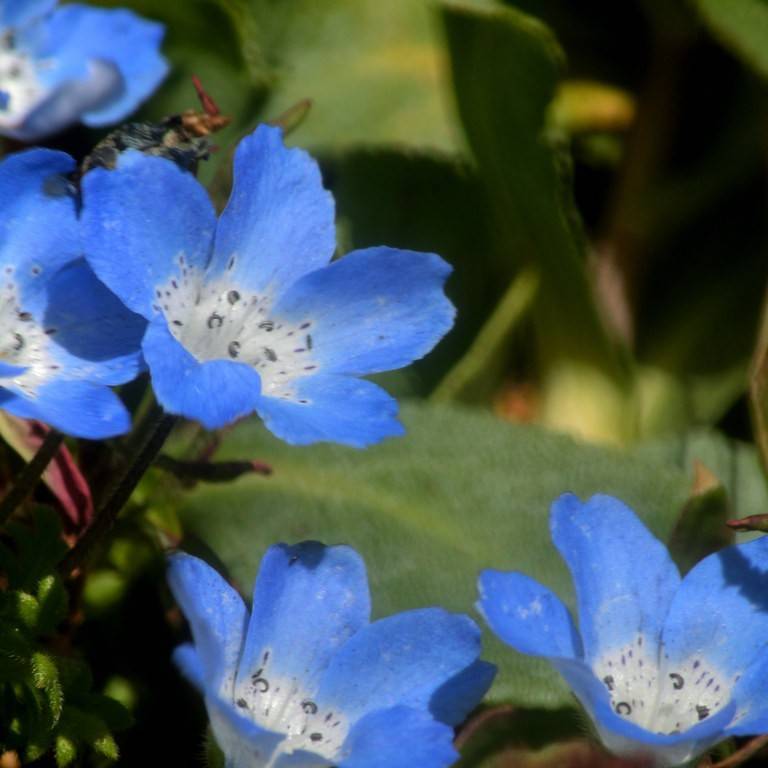
Baby Blue Eyes
Nemophila menziesii
Overview
Baby Blue Eyes is a beloved wildflower native to western North America, known for its soft, cup-shaped blooms that feature vivid sky-blue petals surrounding a crisp white center with delicate dark spots at the base of each petal. It forms a low, spreading mat of fuzzy, light green foliage, making it ideal for filling gaps in garden beds, lining walkways, or spilling over container edges. This cool-season annual thrives in mild climates, often blooming prolifically in spring and early summer before the hottest weather arrives.
Care Guide
Watering
Keep soil consistently moist but not waterlogged, as overwatering can cause root rot; water deeply at the base of plants to avoid wetting foliage, and reduce watering once blooms begin to fade at the end of the growing season. During periods of light spring rain, supplemental watering may not be needed, but provide extra moisture during extended dry spells to support continuous blooming.
Light
Grow in full sun to partial shade; in cooler coastal climates, full sun encourages the most abundant flowering, while in hotter inland regions, provide afternoon shade to prevent foliage scorch and extend the bloom period. Avoid dense, full shade, as this will lead to leggy growth and reduced flower production.
Soil
Prefers well-draining, loamy or sandy soil with a neutral to slightly acidic pH between 6.0 and 7.0; it can tolerate poor, low-nutrient soil as long as drainage is adequate. Heavy clay soils should be amended with compost or coarse sand to improve drainage and prevent water from pooling around the shallow root system.
Fertilizer
Baby Blue Eyes generally does not require heavy fertilization; if soil is extremely poor, apply a balanced, slow-release 10-10-10 fertilizer at half strength once at planting time to support early growth. Avoid overfertilizing, as this will lead to excess foliage growth at the expense of blooms and can cause weak, floppy stems.
Temperature
Thrives in cool temperatures between 50–75°F (10–24°C), and can tolerate light frosts down to 25°F (-4°C) without damage. It does not tolerate high heat and humidity well, and will die back once temperatures consistently exceed 80°F (27°C), making it best planted in early spring or fall in mild winter regions.
Pruning
No regular pruning is required, but you can deadhead spent blooms periodically to encourage additional flowering and keep the planting looking tidy. Once the plant has finished blooming and dies back at the end of the season, pull up the entire plant and add it to compost if it is free of disease.
Propagation
Easily propagated from seed, which can be sown directly outdoors in early spring 1–2 weeks before the last frost date, or in fall in mild winter climates where temperatures rarely drop below 20°F (-7°C). Scatter seeds thinly on the surface of prepared soil, press them lightly into the soil (they need light to germinate), and keep moist until seedlings emerge in 7–14 days; thin seedlings to 6–12 inches apart to prevent overcrowding.
Humidity
Prefers moderate humidity levels between 40–60%, typical of its native coastal and foothill habitats. It does not perform well in high, prolonged humidity, which can increase the risk of fungal foliage diseases, so ensure plants have good air circulation if grown in more humid regions.
Repotting
As a fast-growing annual, Baby Blue Eyes is rarely repotted; if growing in containers, plant seeds directly in their final pot to avoid root disturbance, as it does not transplant well. If seedlings become overcrowded in a container, thin them carefully rather than transplanting individual plants to new pots.
Uses & Symbolism
Baby Blue Eyes is widely used as an ornamental ground cover, edging plant, and filler in wildflower meadows, cottage gardens, and pollinator gardens, where its nectar-rich blooms attract bees, butterflies, and other beneficial insects. It is also a popular choice for hanging baskets, window boxes, and container gardens, where its low, spreading habit allows it to spill gracefully over the edges of planters. Due to its low-growing form and ability to tolerate light foot traffic, it is sometimes used as a living mulch between taller garden plants to suppress weeds and retain soil moisture.
Diseases & Pests
Baby Blue Eyes is relatively pest and disease resistant, but can be susceptible to aphids and spider mites, especially when grown in hot, dry conditions; these can be controlled with a strong spray of water or insecticidal soap. Overwatering or poor air circulation can lead to fungal diseases such as powdery mildew and root rot, which can be prevented by ensuring well-draining soil and spacing plants appropriately to allow air flow between them. Slugs and snails may occasionally feed on young, tender foliage, particularly in damp, shaded areas, and can be managed with organic bait or handpicking.
Related plants
Other plants you might like if you grow Baby Blue Eyes.