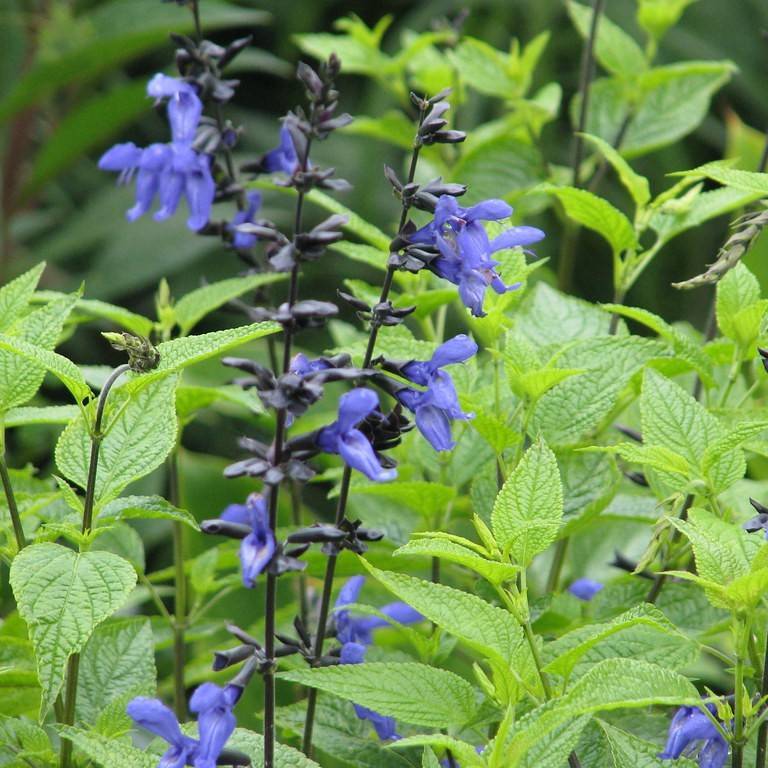
Anise Scented Sage
Salvia guaranitica
Overview
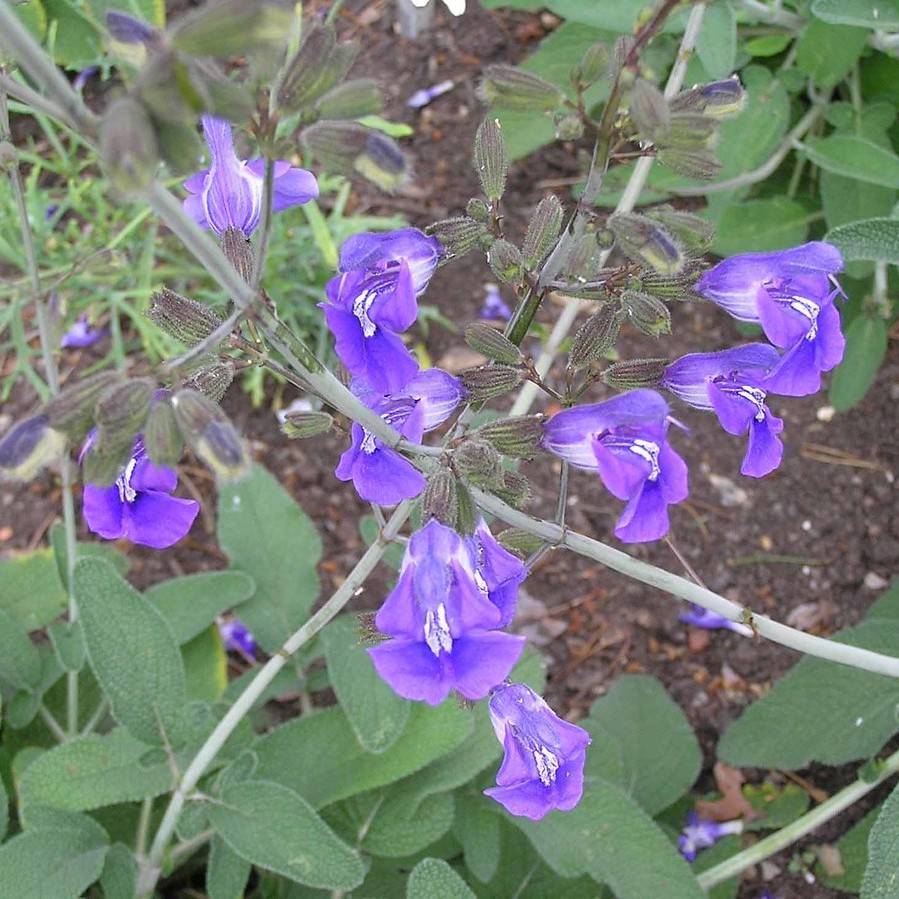
Anise Scented Sage, also called anise sage or blue anise sage, is a lush, semi-woody perennial named for the distinct licorice-like aroma its leaves release when crushed. It produces long, upright spikes of tubular, deep blue-purple flowers from mid-summer through fall, which are highly attractive to hummingbirds, bees, and butterflies. In regions with harsh winters, it is often grown as an annual, as it only tolerates light, short-lived freezes. It has a bushy, upright growth habit that works well as a border plant, container specimen, or focal point in herb and wildlife gardens.
Care Guide
Watering
Water anise scented sage regularly during its first growing season to establish a deep, robust root system, keeping the soil consistently moist but not waterlogged. Once established, it is moderately drought tolerant, requiring supplemental water only during extended periods of hot, dry weather, as overwatering increases risk of root rot. Reduce watering frequency in late fall as growth slows, and keep the soil barely moist if overwintering the plant indoors.
Light
Anise scented sage thrives in full sun, requiring a minimum of 6 hours of direct, unfiltered sunlight daily to produce the most abundant blooms and maintain a compact, bushy growth habit. It can tolerate partial shade, especially in regions with very hot, intense summer afternoons, but plants grown in too much shade will become leggy, produce fewer flowers, and have a weaker anise scent. If grown indoors as an overwintering specimen, place it in a south-facing window or under grow lights to meet its light needs.
Soil
This sage grows best in fertile, well-draining soil with a neutral to slightly alkaline pH ranging from 6.0 to 7.5, though it can adapt to most average garden soils as long as they do not stay saturated for long periods. Heavy clay soils should be amended with compost, perlite, or well-rotted manure to improve drainage and prevent root rot, the most common issue for this species. For container-grown plants, use a high-quality, all-purpose potting mix with added perlite or coarse sand to enhance drainage.
Fertilizer
Feed anise scented sage once in early spring, just as new growth emerges, with a balanced, slow-release 10-10-10 fertilizer formulated for flowering perennials, to support healthy foliage and consistent bloom production throughout the growing season. Avoid over-fertilizing, especially with high-nitrogen formulas, as this will encourage excessive, leggy leaf growth at the expense of flowers and dilute the plant’s characteristic anise scent. Container-grown plants can be given a diluted liquid balanced fertilizer once every 4 to 6 weeks during the active growing season, but stop feeding entirely in late summer to prepare the plant for dormancy.
Temperature
Anise scented sage is hardy in USDA zones 7 through 10, preferring average summer temperatures between 65 and 85°F (18 to 29°C) for optimal growth and flowering. It can tolerate light, brief dips down to 25°F (-4°C) if mulched heavily in winter, but prolonged freezing temperatures will kill the above-ground growth, and below 20°F (-7°C) will kill the root system entirely. In cooler regions outside its hardiness range, it can be grown as an annual, or potted and brought indoors to overwinter in a cool, bright location with temperatures between 50 and 60°F (10 and 15°C).
Pruning
Prune anise scented sage back by one-third to one-half its height in early spring, just before new growth emerges, to encourage a bushier, more compact form and remove any winter-damaged or dead stems. Deadhead spent flower spikes regularly throughout the blooming season to promote continuous new flower production and prevent the plant from putting energy into seed development. In late fall, after the first frost kills back the foliage in cooler regions, cut the stems down to 2 to 3 inches above the soil line and apply a 2 to 3 inch layer of mulch over the root zone to insulate it through winter.
Propagation
Anise scented sage is most commonly propagated from softwood cuttings taken in late spring or early summer, from healthy, non-flowering stems 4 to 6 inches long, stripped of lower leaves, and rooted in moist, well-draining potting mix with bottom heat for faster results. It can also be grown from seed, though seeds require a 30-day cold stratification period to germinate, and seedlings may not retain the exact scent or flower color of the parent plant. Established clumps can be divided in early spring every 3 to 4 years, carefully splitting the root ball into smaller sections with at least 2 to 3 growing points each, to create new plants and prevent overcrowding.
Humidity
Anise scented sage adapts well to average ambient humidity levels between 40 and 60%, which are typical of most temperate garden and indoor environments. It does not require extra humidity, and high humidity combined with poor air circulation can increase the risk of fungal leaf spots and powdery mildew, so ensure plants are spaced adequately to allow airflow around the foliage. If overwintering indoors, avoid placing the plant near humidifiers or drafty, overly dry heating vents, as extreme swings in humidity can cause leaf drop.
Repotting
Container-grown anise scented sage should be repotted every 1 to 2 years in early spring, just before new growth begins, moving it to a pot one size larger than the current one with ample drainage holes to prevent waterlogging. If the plant has become root bound, gently loosen the outer roots before placing it in fresh potting mix amended with a small amount of compost to provide slow-release nutrients. For plants being overwintered indoors, repotting is best done when you move the plant back outdoors in spring, after the last risk of frost has passed.
Uses & Symbolism
Anise scented sage is widely grown as an ornamental plant in pollinator gardens, perennial borders, and container displays, valued for its long-lasting vibrant blue blooms and ability to attract hummingbirds, bees, and butterflies. Its fragrant leaves can be used fresh or dried to make herbal teas, add a mild anise flavor to baked goods, jams, and savory dishes, or infused into oils and vinegars for culinary use. The foliage and flowers are also popular for cut flower arrangements, as they retain their scent and color well when cut, and dried leaves can be added to potpourri blends for a natural, sweet aroma.
Diseases & Pests
Anise scented sage is relatively pest and disease resistant, but overwatering or poorly draining soil can lead to root rot, the most common and serious issue for this plant, which causes yellowing foliage, wilting, and eventual death if left unaddressed. In high humidity or crowded growing conditions with poor air circulation, it may develop fungal issues such as powdery mildew or leaf spot, which present as white powdery coating or brown spots on foliage, and can be treated with neem oil or copper fungicide, plus improved spacing for airflow. Common occasional pests include aphids, whiteflies, and spider mites, which cluster on new growth and undersides of leaves; these can be controlled with insecticidal soap, neem oil, or by introducing natural predators such as ladybugs to the garden.
Related plants
Other plants you might like if you grow Anise Scented Sage.