Common Pipsissewa
Chimaphila umbellata
Overview
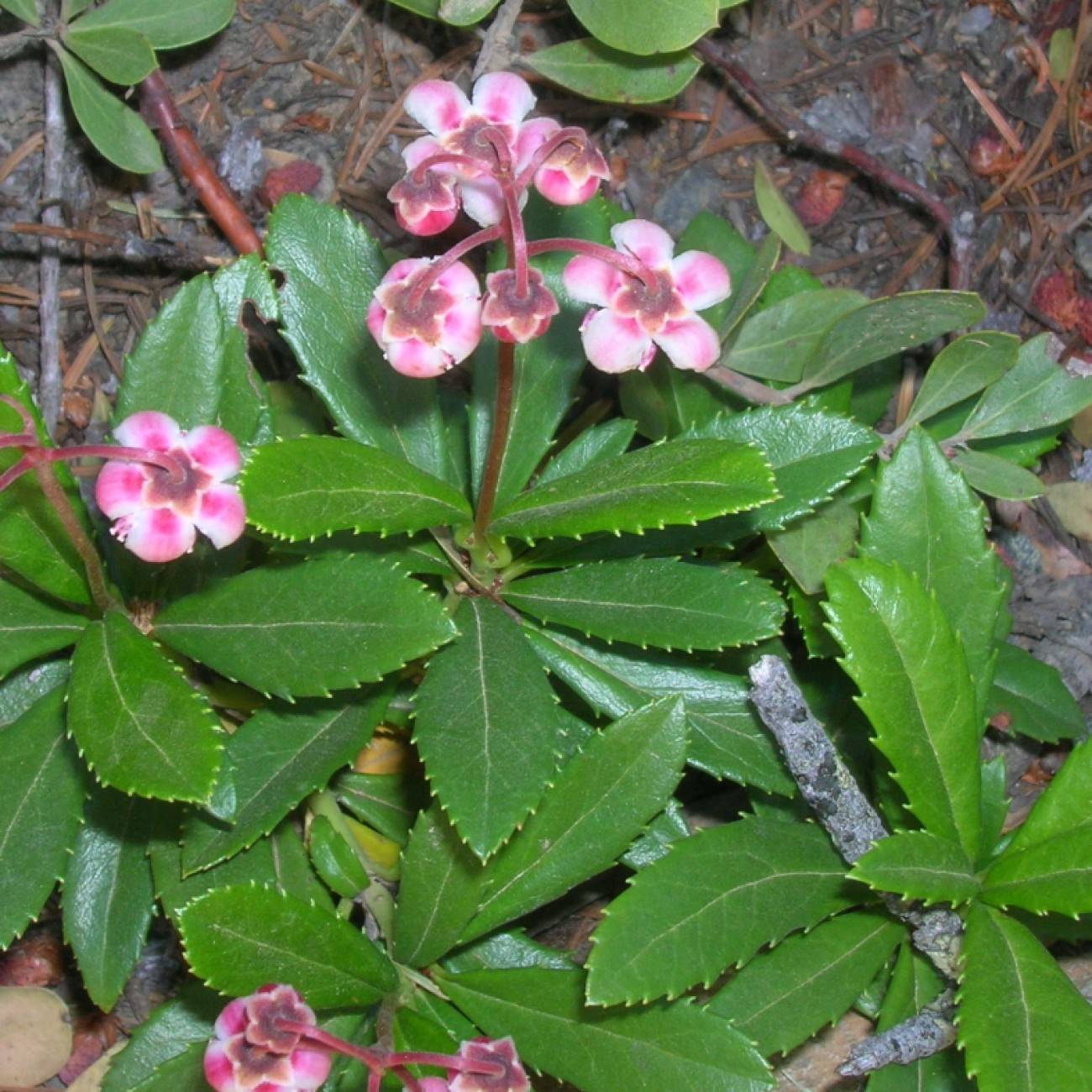
Common pipsissewa, also called prince's pine, is a creeping evergreen that thrives in acidic, nutrient-poor forest understories, often growing beneath coniferous trees. It produces clusters of small, nodding, pink or white bell-shaped flowers in summer, followed by dry brown seed capsules that persist through winter. Its glossy, serrated leaves have a mild wintergreen scent when crushed, thanks to their methyl salicylate content, and stay green year-round, making it a subtle ground cover in shaded native plant gardens.
Care Guide
Watering
Common pipsissewa prefers consistently moist but well-drained soil, as it is sensitive to both drought and waterlogged conditions. Water regularly during dry periods, reducing frequency in winter when growth slows, and avoid overhead watering to prevent fungal leaf issues. It is adapted to the moderate rainfall of temperate forest habitats, so avoid letting the root zone dry out completely.
Light
It thrives in partial to full shade, mimicking its native understory habitat beneath tree canopies. Avoid direct midday sun, which can scorch its delicate evergreen leaves and cause leaf drop. It can tolerate very low light levels, but will produce more flowers if given dappled, indirect sunlight for a few hours each day.
Soil
This species requires highly acidic, well-drained soil with a pH between 4.0 and 6.0, rich in organic matter like decomposed conifer needles or peat moss. It forms mycorrhizal relationships with soil fungi, so it grows best in soil collected from its native woodland habitat or amended with aged pine bark to replicate those conditions. Heavy clay or alkaline soils will cause root rot and poor growth, so amend planting sites heavily with acidic organic material before planting.
Fertilizer
Common pipsissewa is adapted to low-nutrient forest soils, so it requires very little supplemental fertilization, if any. Over-fertilization, especially with nitrogen-rich products, can burn its delicate roots and disrupt its mycorrhizal associations, leading to decline. If growth is very slow, apply a dilute, acidic, slow-release fertilizer designed for ericaceous plants once in early spring, at half the recommended strength.
Temperature
It is a cold-hardy species, tolerating winter temperatures as low as -40°F (-40°C) in USDA hardiness zones 3 through 7. It prefers cool summer temperatures between 60°F and 75°F (15°C and 24°C), and will struggle in prolonged heat above 85°F (29°C), especially if exposed to direct sun. In warmer parts of its range, plant it in deep shade to keep the root zone cool during summer months.
Pruning
Pruning is rarely needed for common pipsissewa, as it grows slowly and maintains a compact, low form naturally. Remove any brown, damaged, or diseased leaves at the base of the stem in early spring to improve air circulation and encourage new growth. If it spreads beyond its desired planting area, trim back creeping stems at the root line in late fall to control its spread.
Propagation
It is most easily propagated by dividing established clumps in early spring, carefully separating the creeping rhizomes and replanting them in acidic, organic-rich soil at the same depth they were previously growing. Propagation from seed is very difficult, as seeds require stratification for several months and depend on specific mycorrhizal fungi in the soil to germinate and grow. Cuttings of semi-hardwood stems can be taken in late summer, but rooting rates are low even with rooting hormone and acidic growing medium.
Humidity
Common pipsissewa prefers moderate to high humidity between 50% and 70%, matching the moist, humid conditions of its native forest understory. In dry indoor or garden environments, mist the leaves occasionally or place a tray of pebbles and water beneath potted specimens to raise ambient humidity. Low humidity can cause leaf browning at the edges and reduced flower production.
Repotting
Potted common pipsissewa grows very slowly, so it only needs repotting every 3 to 4 years, when roots begin to emerge from the drainage holes of the container. Repot in early spring, using an acidic potting mix designed for ericaceous plants, amended with pine bark or decomposed needles to support its mycorrhizal relationships. Avoid damaging the delicate root system during repotting, and water thoroughly after moving to a new container.
Uses & Symbolism
Historically, common pipsissewa was used by Indigenous peoples and early herbalists to treat urinary tract infections, rheumatic pain, and skin conditions, though modern medicinal use is limited due to its toxic methyl salicylate content. It is sometimes planted as a low, evergreen ground cover in shaded native plant gardens, especially in areas with acidic soil beneath coniferous trees. Its leaves have also been used to flavor candy, drinks, and herbal teas in small, dilute quantities, though large amounts are unsafe for consumption.
Diseases & Pests
Common pipsissewa is relatively resistant to most pests and diseases in its native habitat, but it can develop fungal leaf spot if exposed to prolonged wet foliage and poor air circulation. Root rot is the most common issue, caused by overwatering or poorly drained soil, which leads to yellowing leaves, wilting, and eventual plant death. It may also be affected by aphids and spider mites in dry, warm conditions, which can be treated with insecticidal soap or neem oil, applied carefully to avoid damaging its delicate leaves.
Related plants
Other plants you might like if you grow Common Pipsissewa.