Common Pear
Pyrus communis
Overview
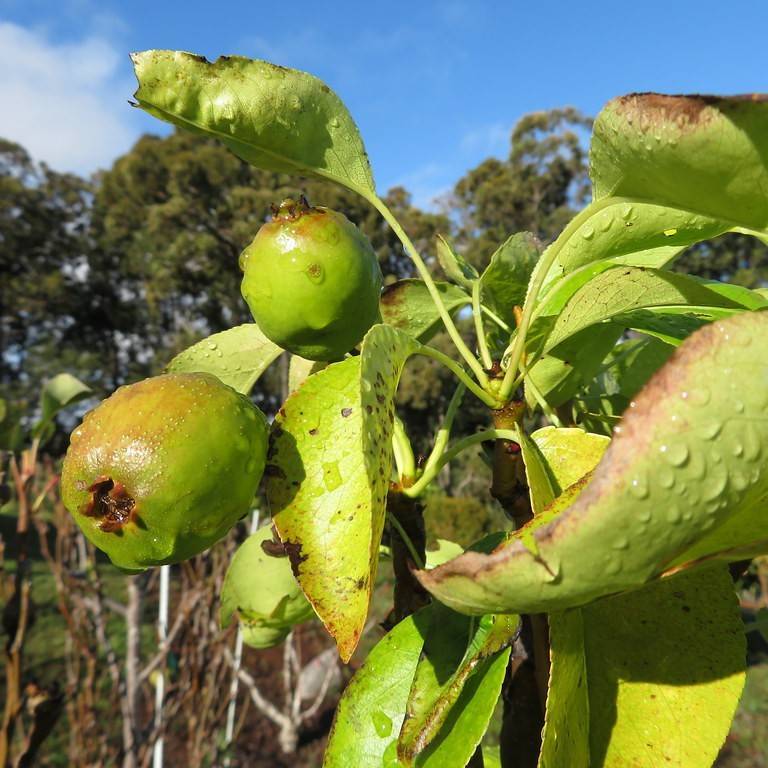
The common pear is a long-lived deciduous tree with glossy, oval-shaped green leaves that turn warm yellow to red in autumn. It produces clusters of delicate white, 5-petaled flowers in early spring, which are pollinated by bees and other insects to develop into the iconic pear-shaped fruits that ripen from late summer to early fall, depending on the cultivar. Thousands of cultivars exist, ranging from crisp, tart cooking varieties to soft, sweet dessert types suited for fresh eating.
Care Guide
Watering
Young common pear trees require regular, deep watering 1-2 times per week to establish a strong root system, especially during dry periods. Mature trees are moderately drought-tolerant, but consistent moisture during fruit development prevents fruit drop and cracking, so water deeply every 10-14 days during extended dry spells. Avoid overwatering or allowing soil to stay waterlogged, as this promotes root rot.
Light
Common pear trees require full sun, meaning a minimum of 6-8 hours of direct, unfiltered sunlight daily to produce abundant flowers and fruit. Insufficient sunlight reduces fruiting yield, increases susceptibility to fungal diseases, and leads to weak, leggy growth. Plant in an open, unshaded location away from tall structures or other large trees that block light.
Soil
These trees thrive in well-drained, loamy soil with a pH range of 6.0 to 7.0, though they can adapt to sandy or clay soils as long as drainage is adequate. Heavy, compacted soils that hold standing water will cause root rot, so amend heavy clay with compost or well-rotted manure prior to planting to improve drainage. Avoid very acidic soils, as this can limit nutrient uptake and stunt growth.
Fertilizer
Apply a balanced, slow-release 10-10-10 fertilizer in early spring before new growth emerges, spreading it evenly around the drip line of the tree rather than directly against the trunk to avoid burning. Young growing trees benefit from a second light application of nitrogen-rich fertilizer in late spring to support leaf and stem development, while mature fruiting trees do not need additional feeding unless growth is stunted or leaves appear pale. Avoid fertilizing after mid-summer, as this can encourage tender new growth that is vulnerable to frost damage.
Temperature
Common pear trees are cold-hardy, thriving in USDA zones 4 through 8, requiring 800-1500 hours of winter chill temperatures between 32-45°F (0-7°C) to break dormancy and produce fruit in spring. They can tolerate winter temperatures as low as -20°F (-29°C) once established, but spring frost during bloom can damage flowers and reduce fruiting yield, so avoid planting in low-lying frost pockets. Summer temperatures between 60-85°F (15-29°C) are ideal for fruit development, though mature trees can tolerate brief periods of extreme heat if adequately watered.
Pruning
Prune common pear trees annually during late winter dormancy to maintain an open, vase-shaped structure that allows sunlight and air circulation to reach inner branches, reducing disease risk. Remove any dead, damaged, or crossing branches, as well as suckers growing from the rootstock below the graft union, to direct energy to fruiting wood. Thin excess fruit clusters 4-6 weeks after bloom, leaving one fruit every 4-6 inches along branches, to prevent branch breakage and promote larger, higher-quality fruit.
Propagation
Common pear trees are most commonly propagated via grafting onto hardy, disease-resistant rootstocks to ensure consistent fruit quality, controlled tree size, and improved stress tolerance, as seed-grown trees do not grow true to the parent cultivar and take much longer to produce fruit. For grafting, take scion wood from healthy, fruiting branches in late winter and graft onto compatible rootstock (often Pyrus betulifolia or quince rootstock for dwarf varieties) in early spring just as buds begin to swell. Softwood cuttings can be taken in early summer, treated with rooting hormone, and grown in a humid, well-drained medium, though this method has a lower success rate than grafting and produces trees without the benefits of specialized rootstocks.
Humidity
Common pear trees adapt to a wide range of humidity levels, but high humidity during the spring bloom and fruit development periods increases the risk of fungal diseases such as fire blight, scab, and powdery mildew. Good air circulation around the tree, achieved through proper pruning and spacing from other plants, reduces moisture buildup on leaves and fruit even in humid conditions. Very low, dry humidity rarely harms the tree, though it may lead to increased water needs during hot, dry spells.
Repotting
Dwarf common pear cultivars grown in containers require repotting every 2-3 years in late winter before new growth emerges, moving to a pot 2-3 inches larger in diameter each time to accommodate root growth. Use a well-draining, loamy potting mix amended with compost, and gently loosen compacted roots before repotting to encourage healthy spread. Mature container-grown trees that have reached their desired size can be root-pruned every 3-4 years and replanted in the same pot with fresh potting mix to restrict growth and maintain productivity.
Uses & Symbolism
Common pear trees are primarily cultivated for their edible fruit, which is eaten fresh, used in baked goods, preserves, jams, ciders, and fermented pear spirits such as perry. They are also planted as ornamental landscape trees for their attractive spring blooms, vibrant autumn foliage, and dense shade canopy, with dwarf varieties suitable for container growing on patios or small yards. The hard, dense wood of the common pear tree is used for woodworking, carving, and making musical instruments and fine kitchen utensils.
Diseases & Pests
The most serious disease affecting common pear trees is fire blight, a bacterial infection that causes blackened, scorched-looking branches and fruit, which requires immediate pruning of affected parts and disposal away from the orchard to prevent spread. Pear scab, a fungal disease, causes dark, scabby lesions on fruit and leaves, reducing fruit quality and yield, and can be managed with proper air circulation, regular pruning, and fungicide applications during wet spring weather. Common pests include pear psylla, codling moths, and aphids, which feed on leaves, stems, and fruit; these can be controlled with horticultural oils, insecticidal soaps, or targeted organic pesticides, as well as by introducing beneficial predatory insects such as ladybugs and lacewings.
Related plants
Other plants you might like if you grow Common Pear.