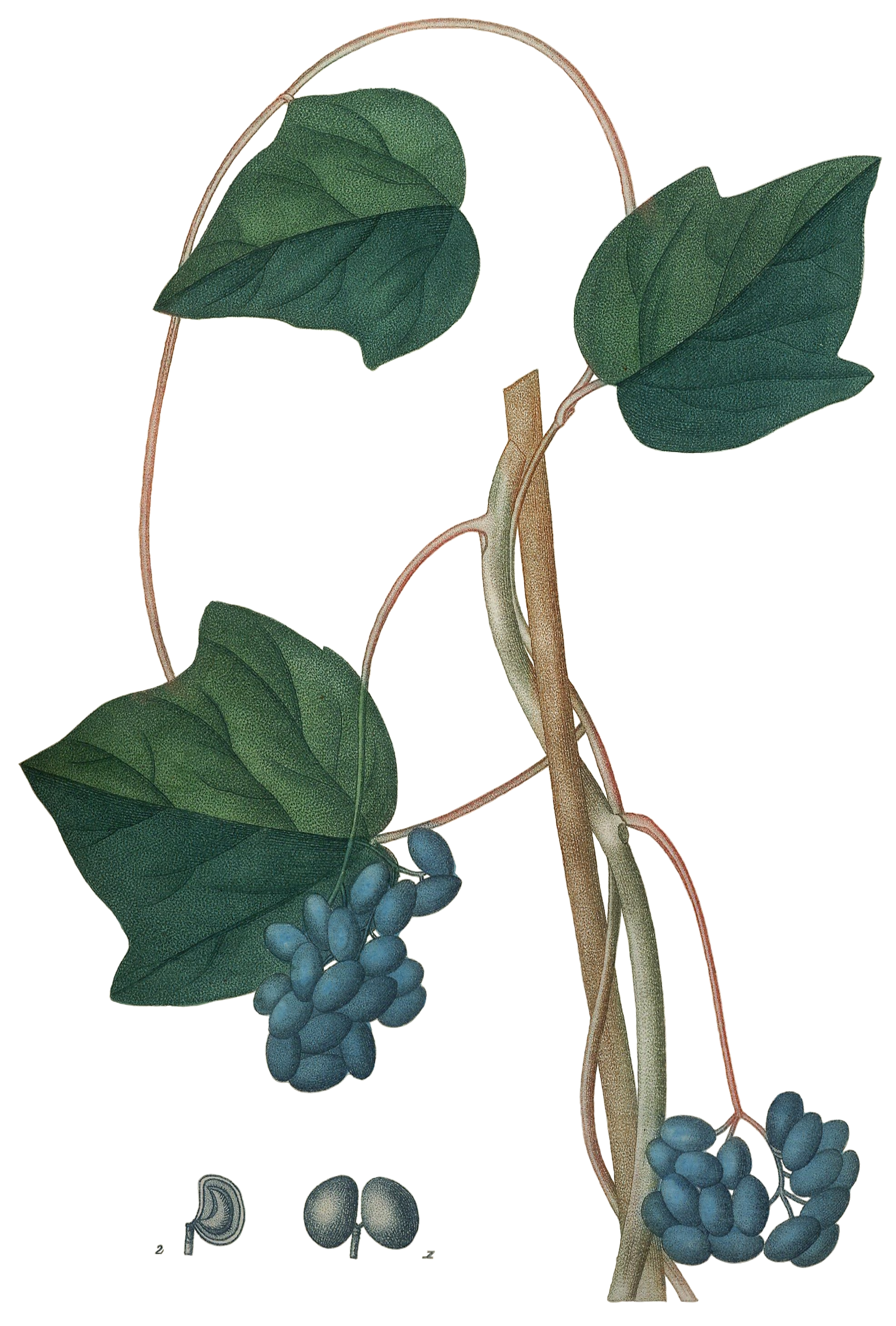
Common Moonseed
Menispermum canadense
Overview
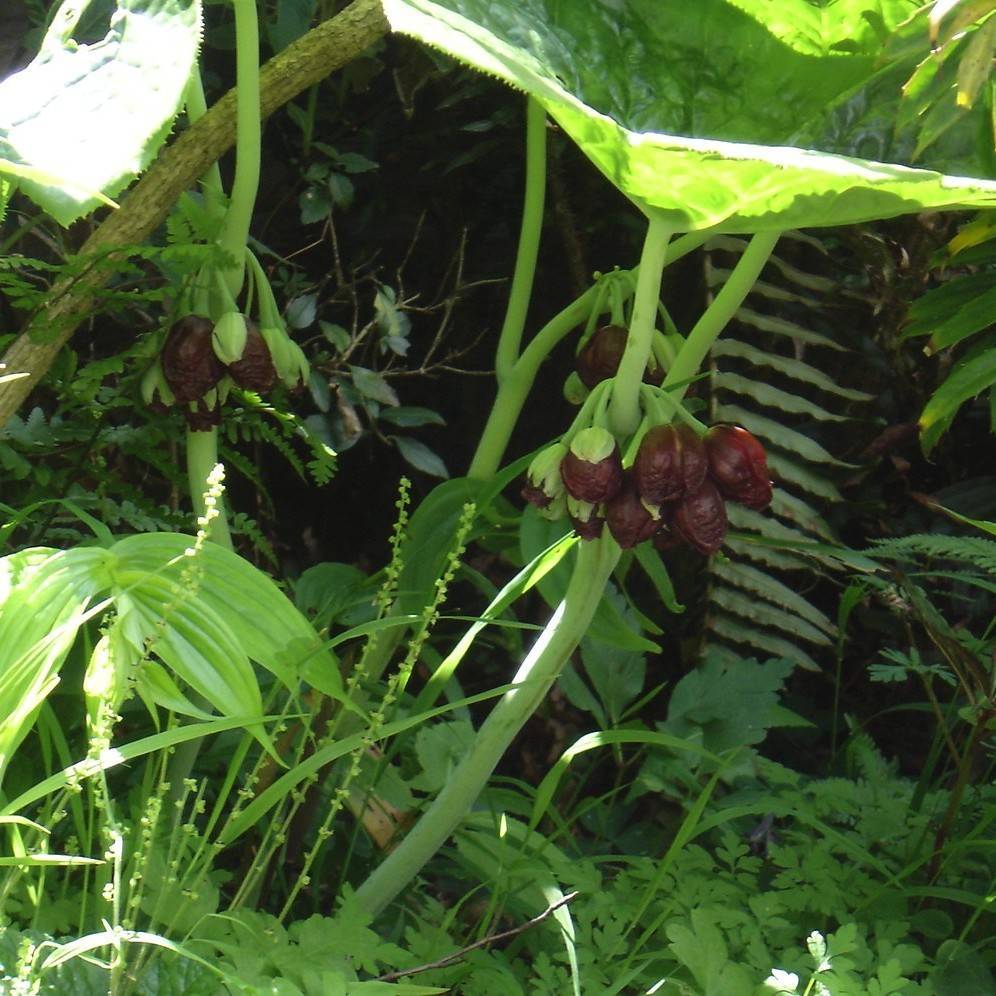
Common Moonseed is a twining woody vine that climbs over shrubs, trees, and fence lines in moist woodland edges, stream banks, and thickets across its native range. Its broad, lobed leaves have a distinctive curved notch at the base, resembling a crescent moon, which gives the plant its common name. Female vines produce clusters of small, greenish-yellow flowers in late spring, followed by glossy, dark blue fruit clusters that ripen in late summer and are often mistaken for wild grapes. It spreads via rhizomatous root systems and bird-dispersed seeds, forming dense colonies in favorable conditions.
Care Guide
Watering
Common Moonseed prefers consistently moist, well-drained soil, requiring regular watering during dry periods to prevent wilting, especially when young. Established vines have moderate drought tolerance, but prolonged dryness will reduce foliage density and fruit production; avoid waterlogged soil, which can cause root rot.
Light
This vine thrives in full sun to partial shade, with the most vigorous growth and heaviest fruit production occurring in locations with at least 6 hours of direct sunlight daily. It will tolerate deep shade, but growth will be sparse, flowering will be minimal, and it may spread more aggressively via rhizomes to seek brighter light.
Soil
It adapts to a wide range of soil types, including loam, sandy loam, and clay, as long as the medium is rich in organic matter and has good drainage. It prefers a slightly acidic to neutral pH range of 5.5 to 7.0, and will benefit from a 2 to 3 inch layer of organic mulch applied around the base each spring to retain moisture and suppress weeds.
Fertilizer
Established Common Moonseed vines rarely require supplemental fertilization, as they obtain sufficient nutrients from organic matter in the soil. Young vines can be fed once per year in early spring with a balanced, slow-release 10-10-10 fertilizer to support vigorous root and foliage growth, but over-fertilization will lead to excessive leaf growth at the expense of flowering.
Temperature
It is hardy in USDA zones 3 through 8, tolerating winter temperatures as low as -40°F (-40°C) without protective measures. It prefers average summer temperatures between 60°F and 85°F (15°C to 29°C), and will exhibit temporary leaf wilting during extended heatwaves above 90°F (32°C) if not sufficiently watered.
Pruning
Prune in late winter or early spring while the vine is dormant to remove dead, damaged, or overcrowded stems, and to control its spread away from desired growing areas. Cut back unwanted rhizome sprouts at ground level regularly to prevent the vine from forming dense, invasive colonies that outcompete native understory plants; always wear gloves when handling pruned material to avoid contact with toxic sap.
Propagation
Common Moonseed is most easily propagated via root division in early spring, when dormant rhizome sections with at least one healthy bud are separated from the parent plant and replanted at the same depth as they grew originally. It can also be grown from seed, which requires 3 months of cold stratification to break dormancy; seeds should be sown in containers in fall and left outdoors over winter to germinate the following spring.
Humidity
This vine tolerates a wide range of humidity levels, thriving in the moderate to high humidity common to its native eastern North American woodland and riparian habitats. It will adapt to average indoor humidity levels if grown as a container plant, but may develop brown leaf tips if exposed to prolonged, extremely dry air below 30% relative humidity.
Repotting
If grown in containers, repot every 2 to 3 years in early spring before new growth emerges, using a large, deep pot with drainage holes to accommodate its extensive rhizome root system. Use a rich, well-draining potting mix amended with compost, and trim back up to one-third of the root ball during repotting to prevent the vine from outgrowing its container too quickly.
Uses & Symbolism
Common Moonseed is occasionally planted in native wildlife gardens to provide cover and nesting sites for songbirds, which are tolerant of its fruit toxins and feed on the ripe berries in late fall. Historically, Indigenous North American communities used very small, carefully prepared doses of the root to treat digestive issues and rheumatic pain, though medicinal use is no longer recommended due to its high toxicity. Its dense, fast-growing foliage makes it effective for erosion control on steep, moist stream banks where other plants struggle to establish.
Diseases & Pests
Common Moonseed is relatively pest and disease resistant, though it may be affected by powdery mildew in humid, poorly ventilated growing conditions, which presents as a white, powdery coating on leaf surfaces. Aphids and spider mites may occasionally infest new growth, sucking sap from leaves and causing yellowing and distortion; these can be controlled with insecticidal soap or horticultural oil sprays. Root rot may occur in heavy, waterlogged soil, leading to wilting, yellowing foliage, and eventual death of the vine if drainage is not improved.
Related plants
Other plants you might like if you grow Common Moonseed.