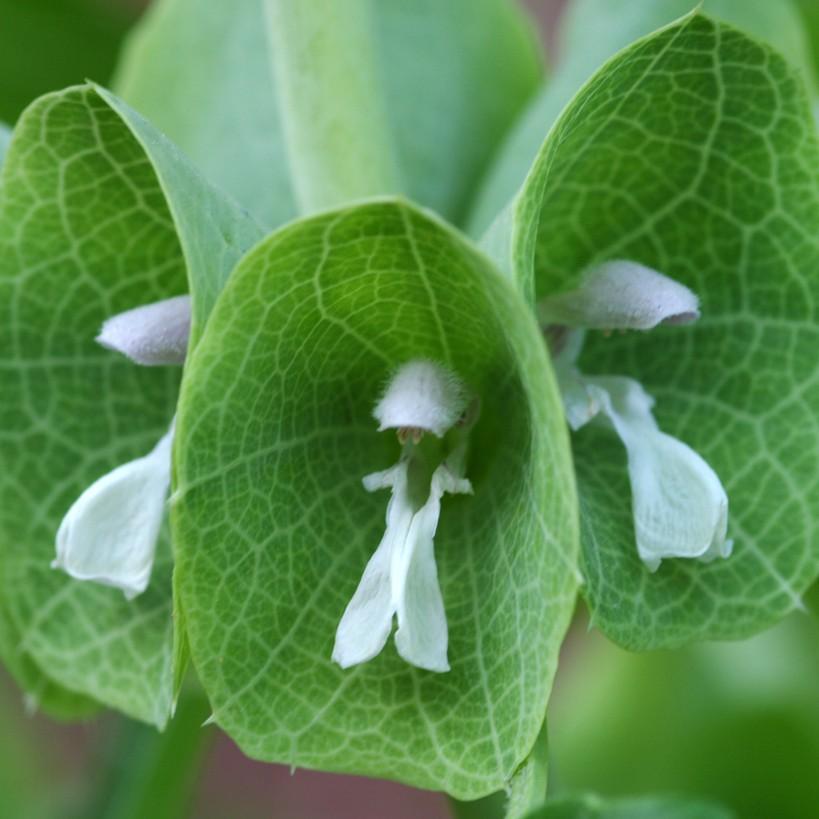
Bells Of Ireland
Moluccella laevis
Overview
Bells of Ireland, also called shellflower, produces tall, upright stems lined with cupped, papery pale green calyxes that hold tiny, fragrant white flowers at their center. Though its common name references Ireland, it has no native ties to the region; the moniker likely stems from its association with good luck and St. Patrick’s Day traditions. It is a beloved addition to cottage gardens and cutting gardens, prized for its long vase life and ability to retain color and structure when dried.
Care Guide
Watering
Water Bells of Ireland regularly to keep soil consistently moist but not waterlogged, especially during hot, dry spells. Avoid overhead watering to reduce the risk of fungal diseases, targeting water directly at the base of the plant instead. Reduce watering frequency once plants are well-established, though prolonged drought will cause wilting and stunted growth.
Light
Plant Bells of Ireland in full sun, which encourages strong, upright stem growth and abundant bloom production. It can tolerate partial shade in very warm climates, though shaded plants may become leggy and require staking for support. Provide at least 6 hours of direct sunlight daily for the best performance.
Soil
This adaptable annual grows best in well-drained, loamy soil with a neutral to slightly alkaline pH level. It can tolerate poor, sandy soils as long as drainage is adequate; heavy, waterlogged clay soils will cause root rot and plant death. Amend heavy soils with compost or coarse sand before planting to improve drainage.
Fertilizer
Apply a balanced, all-purpose granular fertilizer at planting time to support early root and stem development. Avoid over-fertilizing with high-nitrogen formulas, as this will encourage excess foliage growth at the expense of bloom production. Potted specimens can be fed with a diluted liquid fertilizer every 4 to 6 weeks during the growing season.
Temperature
Bells of Ireland prefers cool growing conditions, thriving in temperatures between 60–75°F (15–24°C). It is frost-tolerant and can survive light freezes, making it suitable for early spring planting in most temperate regions. High summer temperatures above 85°F (29°C) will cause plants to decline and stop producing new blooms.
Pruning
Deadhead spent calyxes regularly to encourage continuous bloom production throughout the growing season. If growing for dried arrangements, cut stems when the calyxes are fully formed but still firm, before they start to brown at the edges. Cut back entire plants to the ground once they finish blooming and decline in late summer.
Propagation
Bells of Ireland is most commonly grown from seed, sown directly outdoors in early spring as soon as the soil can be worked, or started indoors 8–10 weeks before the last frost date. Seeds require light to germinate, so press them into the soil surface rather than covering them, and keep the medium consistently moist until sprouts emerge, which typically takes 14–21 days. It develops a long taproot, so avoid disturbing the roots when transplanting to prevent transplant shock.
Humidity
This plant tolerates average ambient humidity levels between 40–60%, which is typical of most temperate growing regions. High humidity combined with poor air circulation increases the risk of powdery mildew and other fungal diseases, so space plants 12–18 inches apart to allow for adequate airflow. It does not require additional misting or humidity adjustments in outdoor or greenhouse settings.
Repotting
Bells of Ireland is rarely grown in containers long-term, as its deep taproot prefers unobstructed soil and it completes its life cycle in a single growing season. If transplanting seedlings from starter pots, move them to their final location as soon as they develop 2–3 true leaves to avoid damaging the taproot. Potted specimens should be planted in containers at least 12 inches deep to accommodate root growth, and do not require repotting during their single growing season.
Uses & Symbolism
Bells of Ireland is a staple in cut flower arrangements, adding unique texture, height, and a soft green neutral hue that complements both bright and muted floral palettes. Dried stems retain their shape and green color for months, making them a popular choice for everlasting wreaths, dried bouquets, and craft projects. In the garden, it adds vertical interest to cottage borders, pollinator gardens, and cutting plots, as its small inner flowers attract bees and other beneficial insects.
Diseases & Pests
Bells of Ireland is relatively pest-resistant, though it can be susceptible to aphids and spider mites that feed on tender new growth, especially during hot, dry conditions. Fungal diseases including powdery mildew and root rot are common in poorly drained soils or crowded plantings with limited air circulation. Crown rot can occur if plants are grown in consistently waterlogged soil, so proper drainage is critical to prevent this fatal condition.
Related plants
Other plants you might like if you grow Bells Of Ireland.