Common Centaury
Centaurium erythraea
Overview
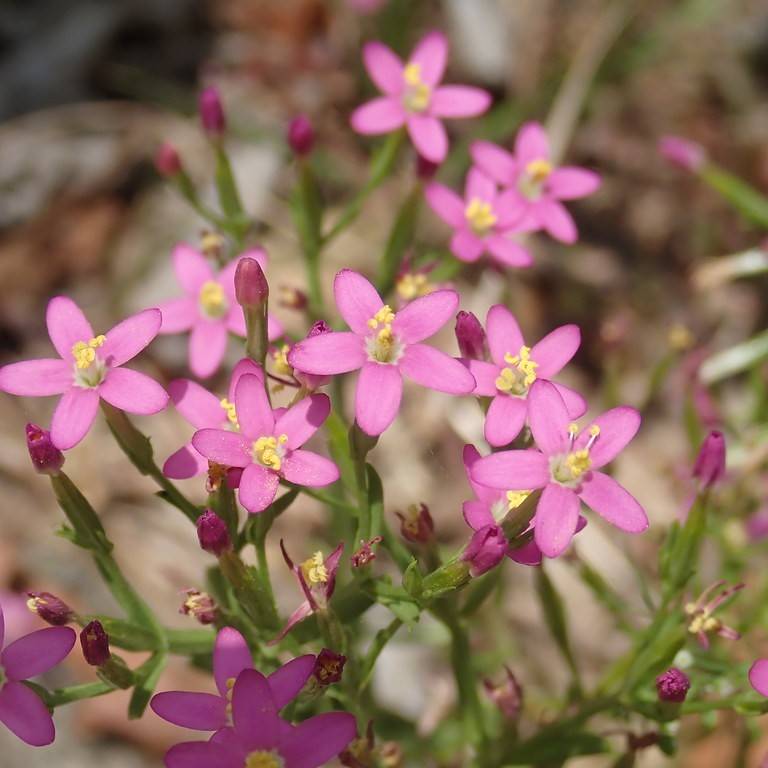
Common centaury is a low-growing annual herb recognizable by its clustered, star-shaped bright pink flowers and opposite, oval-shaped green leaves. It thrives in well-drained, low-fertility soils, often colonizing grasslands, heaths, coastal dunes, and disturbed open sites across its native range. The plant has a long history of use in traditional herbal medicine, primarily as a digestive aid due to its intensely bitter compounds.
Care Guide
Watering
Common centaury prefers consistently moist but not waterlogged soil, requiring regular light watering during dry periods to prevent drought stress. Avoid overwatering, as saturated soil will quickly cause root rot and kill the delicate root system. Reduce watering frequency once the plant begins to set seed in late summer.
Light
This species requires full, direct sunlight for at least 6 hours per day to thrive and produce abundant flowers. It will not grow well in shaded conditions, producing weak, spindly growth and few blooms if light levels are insufficient. Plant in open, unobstructed locations for best performance.
Soil
Common centaury grows best in light, well-drained, low-fertility sandy or loamy soils with a neutral to slightly alkaline pH. It tolerates poor, nutrient-deficient soils that many other herbaceous plants cannot, and will struggle in rich, heavily fertilized substrates. Ensure the soil has excellent drainage to prevent root rot.
Fertilizer
Fertilization is generally not required for common centaury, as it is adapted to low-nutrient environments. Excess nitrogen will encourage lush foliage growth at the expense of flowers and may reduce the concentration of the plant's valuable bitter medicinal compounds. If grown in extremely poor soil, a single light application of a balanced, low-nitrogen fertilizer in early spring is sufficient.
Temperature
This cool-season annual grows best in temperatures between 50-75°F (10-24°C), and is tolerant of light frost in early spring and late fall. It will decline rapidly once summer temperatures consistently exceed 85°F (29°C), setting seed and dying back as conditions become too hot. It is hardy to USDA zones 3 through 9 when planted at the appropriate time.
Pruning
Pruning is rarely needed for common centaury, though spent flowers can be deadheaded to encourage additional blooming throughout the growing season. If you wish to prevent self-seeding and spread, cut back the entire plant before seed capsules mature and split open in late summer. No regular pruning schedule is required for this short-lived annual.
Propagation
Common centaury is almost exclusively propagated from seed, which can be sown directly outdoors in fall or early spring. Seeds require a period of cold stratification to germinate, so fall sowing is often the most successful method, as natural winter temperatures satisfy this requirement. Surface sow seeds, as they need light to germinate, and keep the soil moist until seedlings emerge in 2-4 weeks after spring thaw.
Humidity
This species adapts well to a wide range of humidity levels, thriving in both the dry, sunny conditions of coastal dunes and the moderate humidity of inland grasslands. It has no specific humidity requirements, though high humidity combined with poor air circulation and wet soil increases the risk of fungal diseases. Average outdoor humidity levels across its native range are perfectly suitable for growth.
Repotting
Repotting is not applicable for common centaury, as it is a short-lived annual typically grown directly in outdoor garden beds or wild meadow plantings. If grown in containers, it will complete its entire lifecycle in a single season, so no repotting is needed during its growth period. Discard plants after they set seed and die back in late summer or fall.
Uses & Symbolism
Common centaury is a valued medicinal herb, used to make teas, tinctures, and bitters that stimulate appetite, aid digestion, and relieve mild gastrointestinal discomfort, due to its high concentration of secoiridoid glycosides. It is also planted in wildflower meadows and pollinator gardens to support bees, butterflies, and other beneficial insects that feed on its nectar. In some regions, it is used as a natural dye plant, producing a soft yellow-green hue from its leaves and stems.
Diseases & Pests
Common centaury is relatively pest and disease resistant when grown in appropriate conditions, though it may be susceptible to root rot if planted in poorly drained, waterlogged soil. Fungal leaf spots and powdery mildew can occur in high humidity conditions with poor air circulation, especially if plants are overcrowded. Aphids may occasionally feed on young, tender growth, though infestations are rarely severe and can be controlled with a strong spray of water or insecticidal soap.
Related plants
Other plants you might like if you grow Common Centaury.