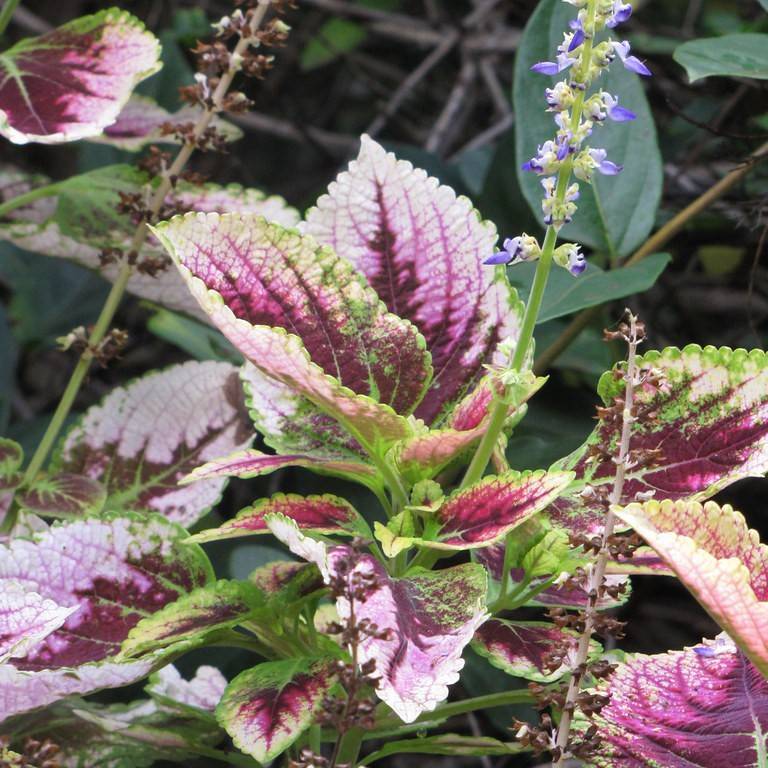
Coleus
Plectranthus scutellarioides (syn. Solenostemon scutellarioides)
Overview
Coleus is a tender perennial most often grown as an annual in temperate climates, celebrated for its incredible diversity of leaf colors, patterns, and shapes that far outshine its small, insignificant spikes of blue or white flowers. Thousands of cultivated varieties exist, ranging from compact trailing types perfect for hanging baskets to upright, bushy forms suited for garden borders or indoor display. While it thrives in warm, humid conditions, its adaptability to different light levels and low maintenance needs make it a favorite among beginner and experienced gardeners alike.
Care Guide
Watering
Water coleus regularly to keep the soil consistently moist but not waterlogged, as soggy roots can quickly lead to root rot; allow the top 1 inch of soil to dry out slightly between waterings in cooler months or for indoor specimens. Reduce watering frequency during winter when growth slows, taking care not to let the soil dry out completely, which can cause leaf drop and stress.
Light
Coleus grows best in bright, indirect light to maintain its vibrant leaf coloration; varieties with darker, more saturated foliage can tolerate partial sun, while paler, variegated types may scorch under direct, intense midday sunlight. Indoor plants should be placed near a bright east or west-facing window, with supplemental grow lights used if natural light is insufficient to prevent leggy growth and faded leaf color.
Soil
Plant coleus in loose, well-draining, fertile soil with a slightly acidic to neutral pH between 6.0 and 7.0 to support healthy root development. A standard potting mix amended with perlite, vermiculite, or compost works well for container-grown plants, while garden beds should be loosened and enriched with organic matter to improve drainage and nutrient content.
Fertilizer
Feed outdoor coleus every 2-4 weeks during the active growing season (spring through summer) with a balanced, water-soluble fertilizer diluted to half strength to avoid over-fertilization, which can cause leggy growth and dull leaf color. Indoor coleus only requires fertilization once every 6-8 weeks during the growing season, with no feeding needed in fall and winter when growth is dormant.
Temperature
Coleus prefers warm temperatures between 65-85°F (18-29°C) and is highly sensitive to frost, with temperatures below 50°F (10°C) causing leaf damage and eventual plant death. Indoor plants should be kept away from cold drafts, air conditioning vents, and heating sources to prevent sudden temperature fluctuations that stress the plant.
Pruning
Pinch back the growing tips of young coleus plants regularly to encourage bushier, more compact growth and prevent the plant from becoming leggy. Remove any flower spikes as soon as they appear to redirect the plant’s energy toward foliage production, as allowing the plant to flower can reduce leaf vibrancy and lead to a sparser overall form.
Propagation
Coleus is easily propagated from stem cuttings; snip a 3-4 inch cutting just below a leaf node, remove the lower leaves, and place the cutting in water or moist potting mix, where roots will typically develop within 1-2 weeks in warm, bright conditions. Seeds can also be sown indoors 8-10 weeks before the last expected frost, though seed-grown plants may not retain the exact leaf coloration of the parent plant, unlike cuttings.
Humidity
Coleus thrives in moderate to high humidity levels between 40-60%, which supports lush foliage growth and prevents leaf browning at the edges. Indoor plants in dry, heated environments can benefit from regular misting, a pebble tray filled with water placed under the pot, or a small humidifier nearby to raise ambient humidity levels.
Repotting
Indoor coleus should be repotted every 1-2 years in spring, or when roots start growing out of the drainage holes, using a slightly larger pot with fresh, well-draining potting mix to support continued growth. Take care not to damage the delicate root system during repotting, and water the plant thoroughly after transplanting to help it settle into its new container.
Uses & Symbolism
Coleus is primarily grown as an ornamental plant for colorful foliage displays, used in garden borders, container plantings, hanging baskets, and as a vibrant indoor houseplant to add pops of color to any space. In some traditional medicine systems in its native range, coleus extracts have been used to treat a variety of ailments including respiratory issues, digestive problems, and skin conditions, though these uses are not widely medically validated. It is also a popular choice for educational gardening projects due to its ease of propagation and fast growth rate.
Diseases & Pests
Coleus is relatively pest-resistant, but can be affected by common houseplant and garden pests including aphids, whiteflies, spider mites, and mealybugs, which can be controlled with insecticidal soap, neem oil, or regular wiping of leaves to remove infestations. Overwatering or poor drainage commonly leads to root rot, fungal leaf spots, and powdery mildew, which can be prevented by allowing the top layer of soil to dry between waterings, providing good air circulation around the plant, and avoiding wetting the leaves when watering.
Related plants
Other plants you might like if you grow Coleus.