Earth Star
Cryptanthus bivittatus
Overview
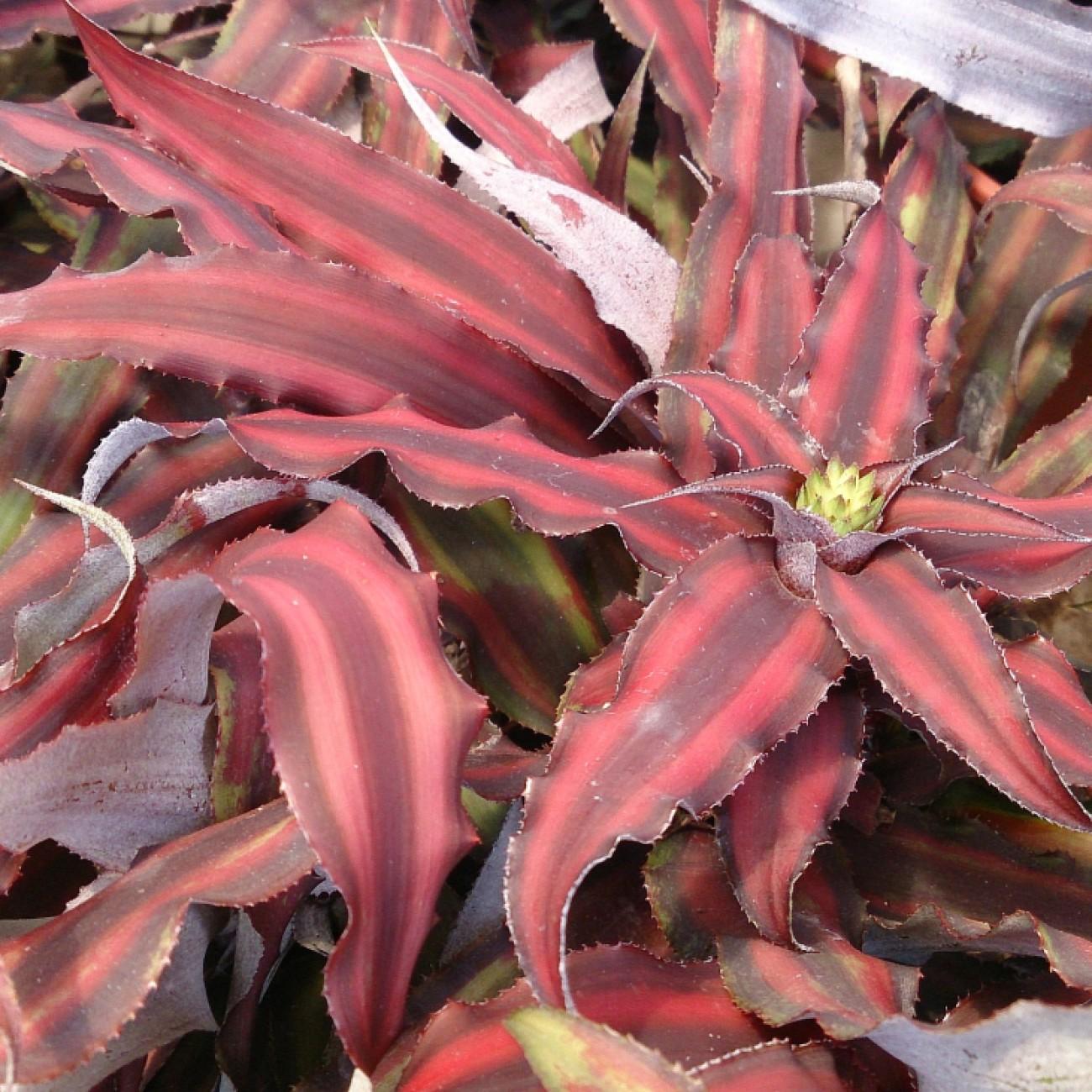
Earth star is a terrestrial bromeliad prized for its striking, flat rosettes of striped leaves, which range in color from green and pink to deep red depending on light exposure. Unlike many epiphytic bromeliads, it grows in soil in its native tropical forest understory, and only produces flowers once before producing offsets and dying back. Its compact size and tolerance for lower light make it a popular choice for terrariums, desk planters, and shaded indoor garden spaces.
Care Guide
Watering
Water earth star when the top 1 inch of soil feels dry, taking care not to overwater to avoid root rot; you may also add a small amount of water to the central cup of the rosette, though this is not required for terrestrial growth. Use filtered or rainwater if possible, as hard water can cause mineral buildup on foliage and damage the plant’s delicate roots. Reduce watering frequency in winter when growth slows, allowing the soil to dry out slightly more between sessions.
Light
Earth star thrives in bright, indirect light, such as that from a north-facing or filtered east-facing window, which brings out the most vibrant leaf coloration. Avoid prolonged direct midday sun, which can scorch the thin leaves and cause brown, crispy edges. It can tolerate low light conditions for short periods, though leaf color may fade and growth will slow significantly in dim locations.
Soil
Use a well-draining, airy potting mix designed for bromeliads or a mix of regular potting soil, perlite, and orchid bark to mimic its native loose, organic forest soil. The soil should retain slight moisture but drain quickly, as heavy, compacted soil will lead to root rot very quickly. Avoid heavy garden soils or mixes with large amounts of water-retentive peat that stay soggy for long periods.
Fertilizer
Fertilize earth star sparingly, only once every 2-3 months during the spring and summer growing season with a diluted, balanced liquid houseplant fertilizer. Apply fertilizer directly to the soil, not to the central rosette, to avoid burning the tender inner leaves. Do not fertilize in fall or winter when the plant is dormant, as excess nutrients will build up in the soil and damage roots.
Temperature
Earth star prefers warm temperatures between 60-85°F (15-29°C), which matches typical indoor household conditions perfectly. It cannot tolerate temperatures below 50°F (10°C), so keep it away from cold drafts, air conditioning vents, and unheated windowsills in winter. Sudden temperature fluctuations can cause leaf drop or stunted growth, so place it in a location with consistent, mild temperatures.
Pruning
Pruning for earth star is minimal, only requiring the removal of brown, dead outer leaves by gently pulling them away from the base or cutting them with clean, sharp scissors. Once the main rosette flowers and dies back, remove the dead parent plant to make space for the small offsets (pups) growing at its base. Do not cut away green, healthy foliage, as this can damage the plant’s central growing point.
Propagation
Earth star is most easily propagated by separating the small offsets (pups) that grow at the base of the parent plant after it finishes flowering. Wait until pups are at least 1/3 the size of the parent plant before gently detaching them with a clean knife, then plant them in their own small pots with well-draining bromeliad mix. Keep the soil slightly moist and provide bright, indirect light until the pups establish roots, which usually takes 4-6 weeks.
Humidity
Earth star prefers moderate to high humidity levels between 50-70%, which helps keep its foliage plump and prevents brown leaf edges. If indoor humidity is low, especially in winter, mist the plant lightly a few times a week, place it on a pebble tray filled with water, or group it with other humidity-loving plants. It can tolerate average household humidity around 40%, but will grow more vigorously and have better color with higher moisture in the air.
Repotting
Repot earth star only once every 2-3 years, or when it has outgrown its current pot and roots are growing out of the drainage holes, as it prefers to be slightly root-bound. Choose a shallow pot only 1-2 inches larger than the current one, as deep pots can hold excess moisture around the roots and cause rot. Repot in spring during the active growing season, taking care not to bury the base of the rosette too deeply in the soil to prevent crown rot.
Uses & Symbolism
Earth star is most commonly grown as a decorative indoor houseplant, perfect for small spaces, terrariums, and dish gardens due to its compact, low-growing habit. Its colorful foliage makes it a popular choice for adding texture and color to shaded indoor plant displays, and it is often used in commercial interior landscaping for low-maintenance, high-impact decor. In its native Brazil, it is sometimes used as a groundcover in shaded, warm climate garden beds where temperatures do not drop below freezing.
Diseases & Pests
Earth star is relatively pest-resistant, but can be affected by common houseplant pests such as mealybugs, scale, and spider mites, which usually appear when conditions are too dry or the plant is stressed. Overwatering is the most common issue, leading to root rot and crown rot, which present as mushy, brown bases and yellowing, wilted leaves. Mineral buildup from hard water or over-fertilizing can cause brown, crispy leaf tips, which can be prevented by using filtered water and diluting fertilizer to half strength.
Guides that mention Earth Star
Related plants
Other plants you might like if you grow Earth Star.