Centipede Plant
Muehlenbeckia platyclada
Overview
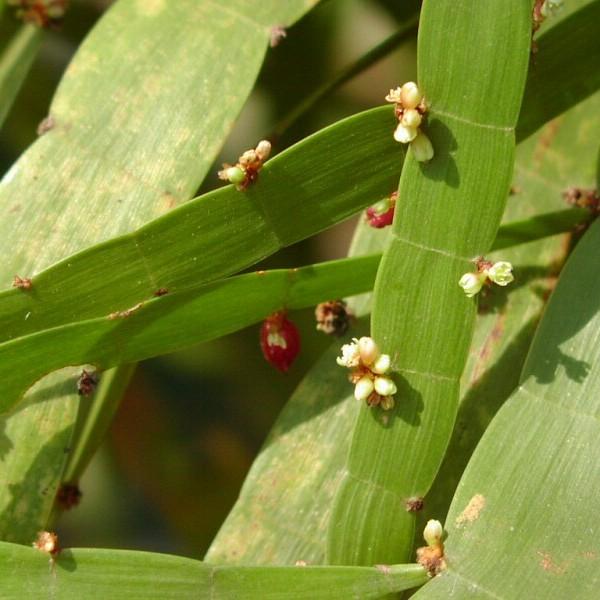
The centipede plant, also called ribbon bush, is recognizable for its flattened, jointed, green stems that bear tiny, ephemeral leaves that drop quickly, leaving the stems to perform photosynthesis. Its unusual, segmented growth habit gives it a crawling, centipede-like appearance, making it a popular quirky choice for indoor hanging baskets or trailing container displays. In its native tropical habitat, it grows as a sprawling ground cover in moist, shaded forest understories.
Care Guide
Watering
Allow the top 1 to 2 inches of soil to dry out between waterings, reducing frequency in the winter months when growth slows. Overwatering can lead to root rot, so ensure the pot has adequate drainage holes to prevent standing water at the root zone.
Light
Thrives in bright, indirect light, such as that from an east-facing window, but can tolerate low light conditions for extended periods. Avoid prolonged direct midday sun, which can scorch the flat stems and cause unsightly yellow or brown discoloration.
Soil
Prefers a well-draining, fertile potting mix with a slightly acidic to neutral pH between 6.0 and 7.0. A standard houseplant mix amended with perlite or coarse sand to improve drainage works well, as it prevents soggy soil around the delicate root system.
Fertilizer
Feed once a month during the spring and summer growing season with a balanced, diluted all-purpose houseplant fertilizer. Skip fertilization entirely in fall and winter, when the plant enters a period of slower growth and nutrient needs are minimal.
Temperature
Grows best in temperatures between 65 and 80°F (18 and 27°C), consistent with typical indoor household conditions. It is not frost-tolerant, and temperatures below 50°F (10°C) can cause stem damage or complete plant death.
Pruning
Trim back overlong or leggy stems in early spring to encourage bushier, more compact growth and maintain the desired shape. Pruned stem cuttings can be saved for propagation, and removing any yellowed or damaged stems regularly improves airflow and overall plant health.
Propagation
Easily propagated from stem cuttings taken in spring or summer; simply snip a 3 to 4 inch segment of healthy stem, allow the cut end to callous for 24 hours, then plant in moist, well-draining potting mix. Cuttings typically root within 2 to 3 weeks when kept in warm, bright indirect light, with no rooting hormone required for successful growth.
Humidity
Adaptable to average indoor humidity levels between 40 and 60%, but benefits from occasional misting during very dry winter months to prevent stem tip browning. It tolerates lower humidity better than many tropical houseplants, making it suitable for drier indoor environments without extra humidity setups.
Repotting
Repot every 2 to 3 years in early spring, or when roots begin to grow through the drainage holes of the current pot. Choose a pot only 1 to 2 inches larger in diameter than the current one, as excessively large pots can hold excess moisture and increase the risk of root rot.
Uses & Symbolism
Primarily grown as an ornamental houseplant, often placed in hanging baskets to showcase its trailing stems, or used as a sprawling ground cover in frost-free tropical and subtropical landscapes. In its native range, it has traditional medicinal uses for treating minor skin irritations and inflammation, though these uses are not widely adopted in modern horticulture. Its unusual appearance also makes it a popular choice for novelty plant collections and fairy garden displays.
Diseases & Pests
Generally pest-resistant, but can be affected by common houseplant pests including mealybugs, spider mites, and scale insects, which can be treated with neem oil or insecticidal soap. Overwatering is the most common issue, leading to root rot, yellowing stems, and fungal growth on the soil surface. In very dry conditions, it may develop brown, crispy stem tips, which can be remedied with occasional misting and adjusted watering frequency.
Related plants
Other plants you might like if you grow Centipede Plant.