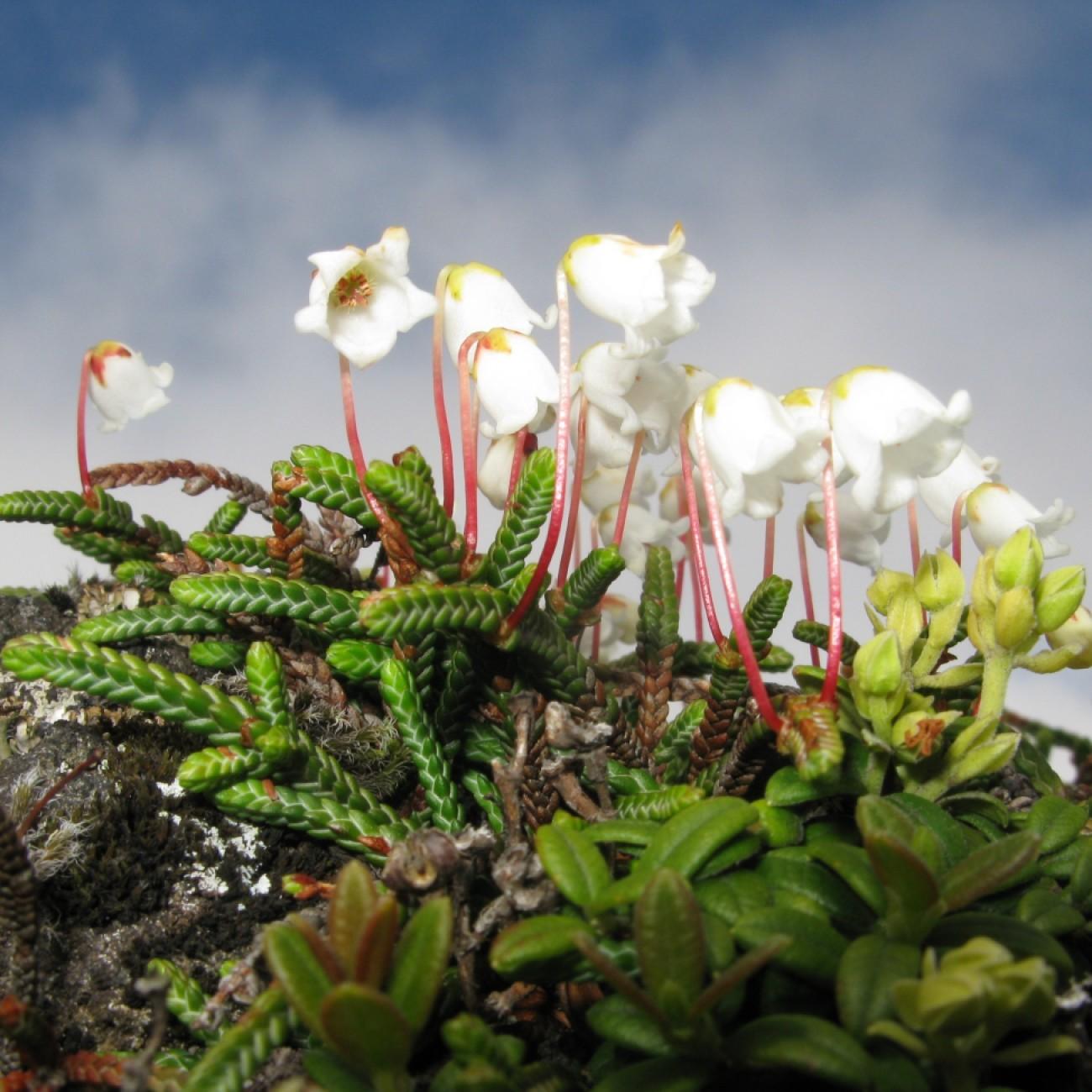
Clubmoss Mountain Heather
Cassiope lycopodioides
Overview
Clubmoss Mountain Heather is a hardy alpine shrub named for its resemblance to both clubmosses (Lycopodium) and heather species. It grows in dense, cushion-like mats in rocky, well-drained tundra and mountain slope habitats, where it withstands extreme cold, wind, and short growing seasons. In late spring to early summer, it produces small, nodding, bell-shaped flowers that attract native pollinators such as bumblebees. Its compact, trailing growth habit makes it a popular choice for rock gardens, alpine troughs, and cold-climate ground cover plantings.
Care Guide
Watering
Keep soil consistently moist but never waterlogged, as soggy conditions quickly cause root rot in this alpine species. During active growth in spring and summer, water when the top 1 inch of soil feels dry, reducing frequency in winter when the plant is semi-dormant. Use rainwater or distilled water if your tap water is high in lime, as this species prefers acidic conditions.
Light
Thrives in full sun to partial shade, requiring at least 6 hours of direct sunlight daily to produce abundant flowers and maintain a dense, compact growth habit. In regions with extremely hot summer sun, provide light afternoon shade to prevent leaf scorch. When grown indoors as a container plant, place it in a south-facing window with bright, indirect light supplemented by grow lights if natural light is insufficient.
Soil
Requires sharply drained, acidic soil with a pH between 4.5 and 5.5, mimicking its native rocky alpine habitat. A suitable mix includes equal parts peat moss, perlite, and coarse sand or fine gravel, with no added lime or alkaline amendments. Avoid heavy, clay-rich soils that retain excess moisture, as these will quickly kill the plant’s shallow, sensitive root system.
Fertilizer
Clubmoss Mountain Heather is adapted to low-nutrient alpine soils, so it requires very little fertilization to thrive. Apply a diluted, acidic, slow-release fertilizer designed for ericaceous plants once annually in early spring, at half the manufacturer’s recommended strength. Do not fertilize in late summer or fall, as this can stimulate tender new growth that will be damaged by cold winter temperatures.
Temperature
Prefers cool temperatures between 50-65°F (10-18°C) during the active growing season, and can withstand winter temperatures as low as -40°F (-40°C) when grown in its hardiness zones (USDA zones 2-6). It does not tolerate high heat and humidity well, and will struggle in regions with prolonged summer temperatures above 80°F (27°C). Indoor-grown plants should be kept away from heating vents and other sources of dry, warm air in winter.
Pruning
Requires minimal pruning to maintain its natural compact, mat-forming shape. After flowering finishes in late summer, lightly trim back any straggly or dead stems to encourage bushier new growth the following season. Avoid heavy pruning into old, woody growth, as this species does not resprout well from severely cut stems.
Propagation
Most commonly propagated from semi-hardwood cuttings taken in late summer, after the current year’s growth has partially hardened off. Root cuttings in a mix of peat and perlite under mist or a plastic dome to maintain high humidity, with roots typically forming in 8-12 weeks. It can also be grown from seed sown in fall in a cold frame, though seed germination is slow and erratic, often taking 6-12 months to occur.
Humidity
Prefers moderate to high humidity levels between 50-70%, consistent with its native cool, moist alpine and subarctic habitats. In dry indoor environments, increase humidity by placing the plant on a pebble tray filled with water, or by using a small room humidifier nearby. Avoid misting the foliage directly for prolonged periods, as this can encourage fungal leaf spot diseases in poorly ventilated spaces.
Repotting
Container-grown Clubmoss Mountain Heather only needs repotting every 3-4 years, when its root system has filled the current pot and growth begins to slow. Repot in early spring before new growth emerges, using a fresh acidic, well-drained potting mix, and choose a pot only 1-2 inches larger than the previous one to avoid excess soil moisture around the roots. Take care not to damage the shallow, delicate root system during repotting, as this can cause the plant to go into shock.
Uses & Symbolism
Clubmoss Mountain Heather is primarily grown as an ornamental plant in alpine gardens, rock gardens, trough plantings, and as a low-growing ground cover for cold, northern regions. Its dense, mat-forming habit helps stabilize soil on rocky slopes and prevent erosion in high-altitude landscapes. It is also sometimes grown in specialized cool-greenhouse collections of alpine and ericaceous plants for its delicate seasonal flowers and unique foliage texture.
Diseases & Pests
The most common issues affecting Clubmoss Mountain Heather are root rot and fungal leaf spots, caused by overwatering, poor drainage, or excessive moisture on foliage in poorly ventilated conditions. It may be attacked by common ericaceous pests including aphids, spider mites, and scale insects, especially when grown in warm, dry indoor environments. In overly alkaline soils, it will develop iron chlorosis, characterized by yellowing leaves and stunted growth, which can be corrected by adjusting soil pH and applying chelated iron supplements.
Related plants
Other plants you might like if you grow Clubmoss Mountain Heather.