Chinese Sumac
Rhus chinensis
Overview
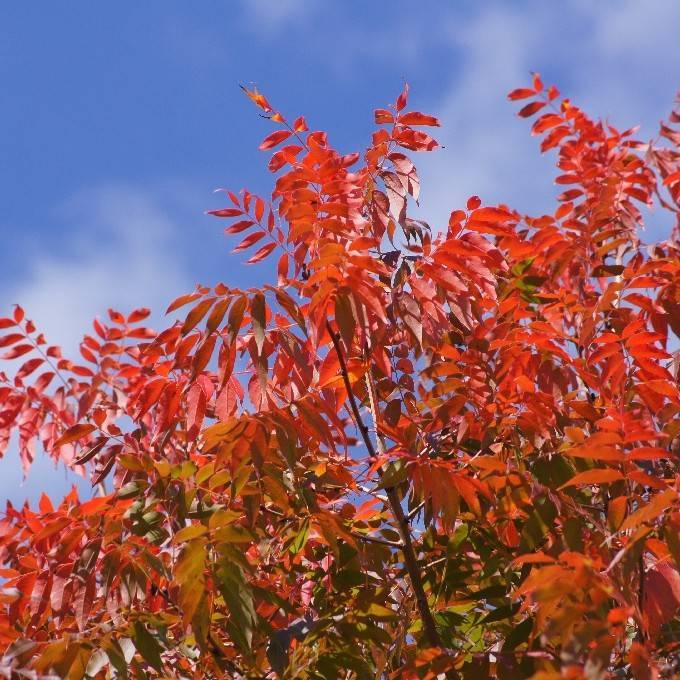
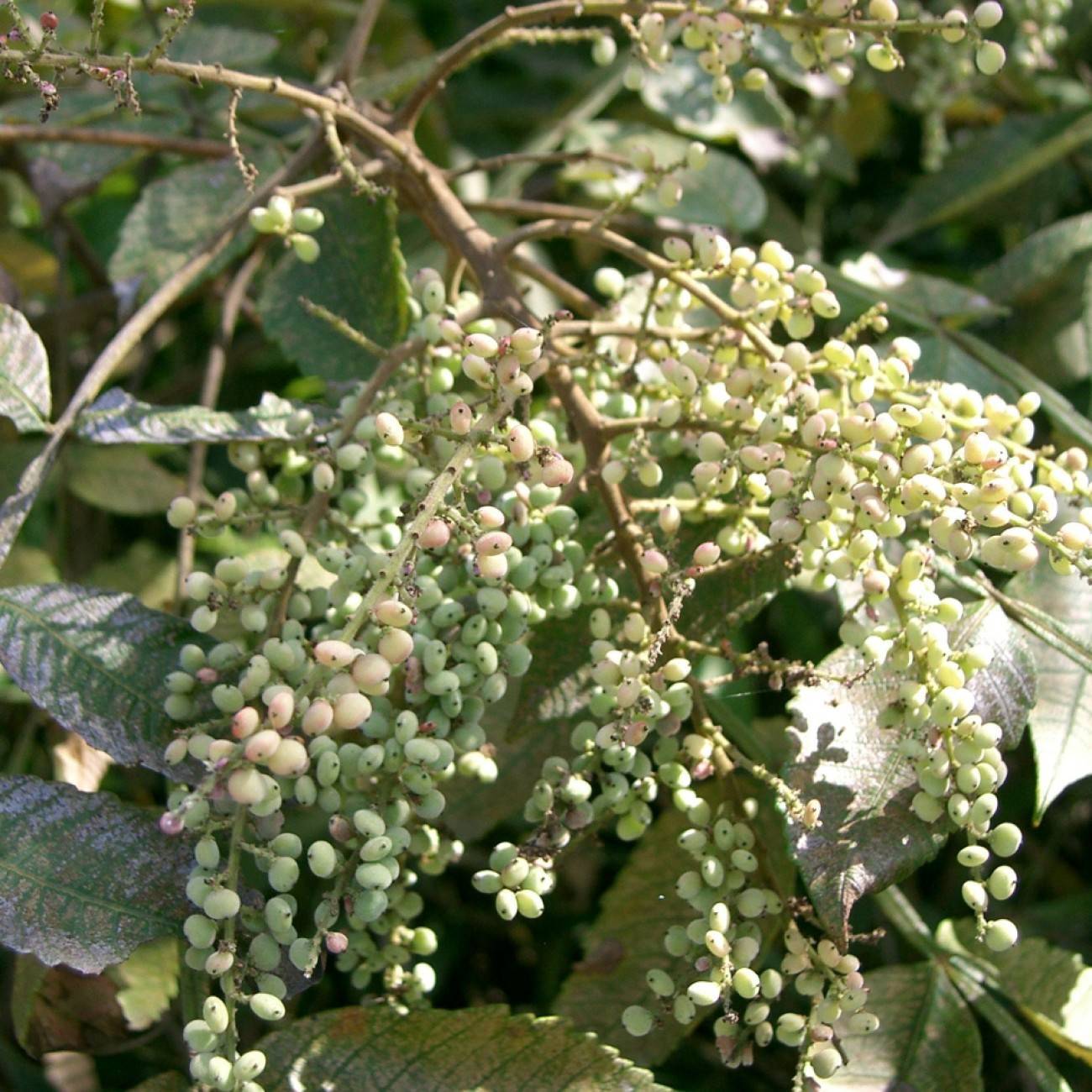
Chinese Sumac is a spreading, deciduous tree or large shrub that features compound, pinnate leaves that turn brilliant crimson in fall, making it a popular seasonal landscape plant. It produces clusters of small, creamy white flowers in late summer, followed by red, fuzzy drupes that persist through winter and provide food for local bird populations. The tree is most famous for hosting gall-forming aphids that create Chinese galls, which are harvested for their high tannin content and medicinal properties.
Care Guide
Watering
Chinese Sumac is highly drought-tolerant once established, requiring only occasional deep watering during prolonged dry spells. Young plants need consistent moisture to develop a strong root system, but overwatering or waterlogged soil will quickly lead to root rot. Avoid frequent shallow watering, as this encourages shallow, weak root growth.
Light
This tree thrives in full sun, which supports the most vigorous growth, best fall color development, and highest flower and fruit production. It can tolerate partial shade, though growth may be sparser, and autumn foliage color will be less intense. In particularly hot climates, it can benefit from light afternoon shade to prevent leaf scorch.
Soil
Chinese Sumac adapts to a wide range of soil types, including poor, rocky, sandy, and clay soils, as long as the site has good drainage. It prefers a slightly acidic to neutral pH range, but can tolerate mildly alkaline conditions as well. Heavy, compacted soils that hold standing water are unsuitable for this species.
Fertilizer
Established Chinese Sumac trees rarely require fertilization, as they can extract sufficient nutrients from even poor quality soils. Young plants can benefit from a balanced, slow-release fertilizer applied in early spring to support initial growth, but over-fertilization will lead to excessive, weak vegetative growth. Avoid fertilizing after mid-summer, as this can stimulate new growth that will be damaged by early frost.
Temperature
This hardy species tolerates temperatures as low as -10°F (-23°C), suitable for USDA hardiness zones 4 through 8. It is highly heat-tolerant, thriving in summer temperatures up to 100°F (38°C) as long as it has adequate root drainage. Late spring frosts can damage new, tender foliage, but the tree will quickly regrow new leaves once temperatures warm consistently.
Pruning
Prune Chinese Sumac in late winter or early spring while the tree is dormant, to remove dead, damaged, or crossing branches and maintain its desired shape. This species has a tendency to spread via root suckers, so regularly remove unwanted suckers at the base to prevent the tree from forming dense, sprawling colonies. Always wear protective gloves and clothing when pruning to avoid contact with urushiol present in the plant’s sap and bark.
Propagation
Chinese Sumac is most easily propagated via root cuttings taken in late winter, before new growth begins, which quickly develop into new plants when planted in well-draining soil. It can also be grown from seed, though seeds require cold stratification for 90 to 120 days to break dormancy, and germination rates are often inconsistent. Suckers that emerge naturally from the root system can be dug up and transplanted in early spring for a high success rate.
Humidity
Chinese Sumac adapts well to a wide range of humidity levels, thriving in both dry, arid regions and moderately humid climates. It does not require any supplemental humidity, even in very dry indoor or outdoor environments. High humidity combined with poor air circulation can increase the risk of fungal leaf spots, so ensure the tree is planted in a site with good airflow.
Repotting
Chinese Sumac is almost exclusively grown as an outdoor landscape plant, so repotting is rarely required. If grown in a large container for a short period, repot every 2 to 3 years in early spring, using a well-draining, loamy potting mix and a container with large drainage holes. Once the tree reaches a mature size, it will need to be planted in the ground, as it cannot thrive long-term in container culture.
Uses & Symbolism
Chinese Sumac is widely planted as an ornamental landscape tree for its spectacular autumn foliage, winter-persistent red fruit clusters, and tolerance of poor site conditions. The galls formed on its leaves by aphids, known as Galla Chinensis, are used in traditional East Asian medicine to treat inflammation, diarrhea, and skin conditions, and are also a commercial source of tannins for leather production. Its dense, spreading root system makes it useful for erosion control on slopes and disturbed sites.
Diseases & Pests
Chinese Sumac is relatively pest and disease resistant, though it can occasionally be affected by fungal leaf spots, powdery mildew, and verticillium wilt in poorly drained, overly humid conditions. Common pests include aphids, scale insects, and sumac flea beetles, which can cause minor leaf damage but rarely threaten the overall health of established trees. Root rot is the most serious issue, occurring almost exclusively in sites with standing water or heavy, compacted soil.
Related plants
Other plants you might like if you grow Chinese Sumac.