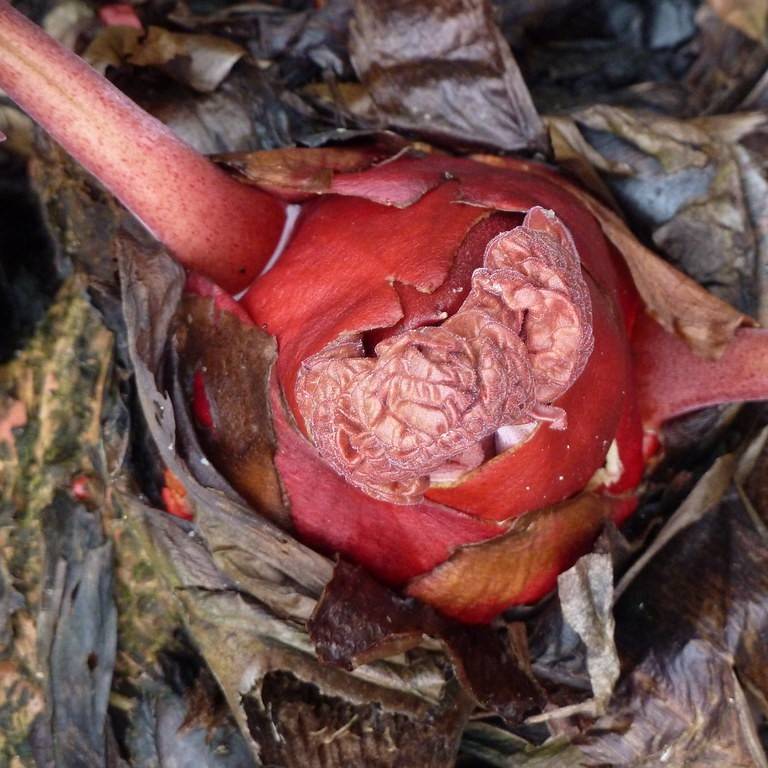
Chinese Rhubarb
Rheum palmatum
Overview
Chinese rhubarb is a hardy, clump-forming perennial prized for both its dramatic ornamental foliage and long history of use in traditional herbal medicine. Its large, jagged, deep green leaves can reach up to 3 feet across, creating a bold textural statement in garden borders, while tall, upright flower spikes bloom in early summer, attracting pollinators. Unlike common culinary rhubarb, it is primarily cultivated for its thick, fleshy roots, which have been used in Chinese medicine for thousands of years to treat digestive and inflammatory conditions.
Care Guide
Watering
Water Chinese rhubarb deeply and regularly during its active growing season in spring and summer, keeping the soil consistently moist but not waterlogged to prevent root rot. Reduce watering frequency in fall as the plant enters dormancy, and keep the soil barely damp throughout the winter months to avoid root decay in cold, wet conditions.
Light
Grow Chinese rhubarb in full sun to partial shade, with at least 6 hours of direct sunlight daily to support robust foliage and root growth. In regions with extremely hot, intense summer sun, provide light afternoon shade to prevent leaf scorch and reduce moisture stress on the plant.
Soil
Chinese rhubarb thrives in deep, fertile, well-drained loamy soil with a slightly acidic to neutral pH between 6.0 and 7.0. Amend heavy clay or sandy soils with generous amounts of organic matter such as compost or well-rotted manure before planting to improve drainage, nutrient content, and moisture retention.
Fertilizer
Feed established Chinese rhubarb plants in early spring with a balanced, slow-release organic fertilizer or a top dressing of well-rotted manure to support vigorous seasonal growth. Avoid over-fertilizing with high-nitrogen products, as this can encourage excessive leaf growth at the expense of root development and may increase oxalate levels in the foliage.
Temperature
Chinese rhubarb is cold-hardy in USDA zones 5 through 9, tolerating winter temperatures as low as -20°F (-29°C) when dormant. It requires a period of winter chill below 40°F (4°C) for several weeks to break dormancy and produce healthy new growth in spring, and may struggle in regions with consistently warm, frost-free winters.
Pruning
Remove spent flower stalks as soon as they fade to redirect the plant’s energy toward root and foliage growth rather than seed production. In late fall after the first frost kills back the foliage, cut all dead leaves down to the ground to reduce overwintering sites for pests and diseases, and dispose of debris away from the garden.
Propagation
Chinese rhubarb is most reliably propagated by root division in early spring before new growth emerges, or in fall after the foliage has died back. Dig up mature clumps, carefully split the root crown into sections each with at least one healthy growth bud, and replant divisions 3 to 4 feet apart at the same depth they were growing previously.
Humidity
Chinese rhubarb adapts well to average outdoor humidity levels between 40% and 70%, and does not require special humidity adjustments when grown in appropriate garden conditions. Excessively high humidity combined with poor air circulation can increase the risk of fungal leaf diseases, so space plants adequately to allow for free airflow around foliage.
Repotting
If grown in large containers, repot Chinese rhubarb every 2 to 3 years in early spring before new growth starts, using a nutrient-rich, well-draining potting mix. Choose a container at least 18 inches deep and wide to accommodate the plant’s extensive root system, and ensure it has ample drainage holes to prevent waterlogging.
Uses & Symbolism
The dried root of Chinese rhubarb is a core ingredient in traditional Chinese medicine, used as a gentle laxative, anti-inflammatory, and digestive aid for thousands of years. Its large, architectural foliage and showy flower spikes make it a popular ornamental plant for cottage gardens, bog gardens, and large border plantings, where it adds dramatic structure and color. While its leaf stalks are technically edible, they are less palatable than those of common culinary rhubarb (Rheum rhabarbarum) and are rarely harvested for food.
Diseases & Pests
Chinese rhubarb is relatively pest-resistant, but may be affected by crown rot, root rot, and fungal leaf spots, particularly in poorly drained soil or overly humid conditions with poor air circulation. Common pests include aphids, slugs, and snails, which feed on young, tender foliage in spring; these can be controlled with organic insecticidal soap, diatomaceous earth, or handpicking. Overly wet winter soil is the most common cause of plant death, so ensuring proper drainage is the key preventative measure for most health issues.
Related plants
Other plants you might like if you grow Chinese Rhubarb.