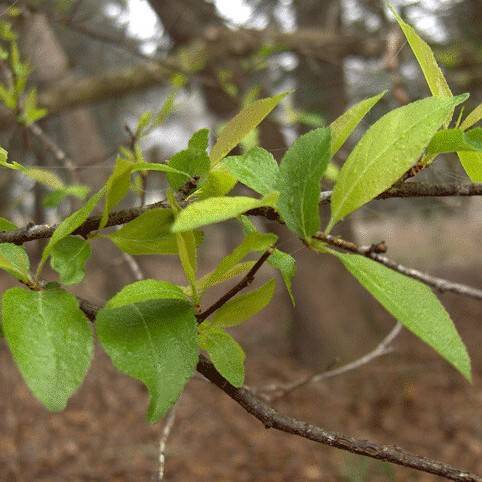
Chickasaw Plum
Prunus angustifolia
Overview
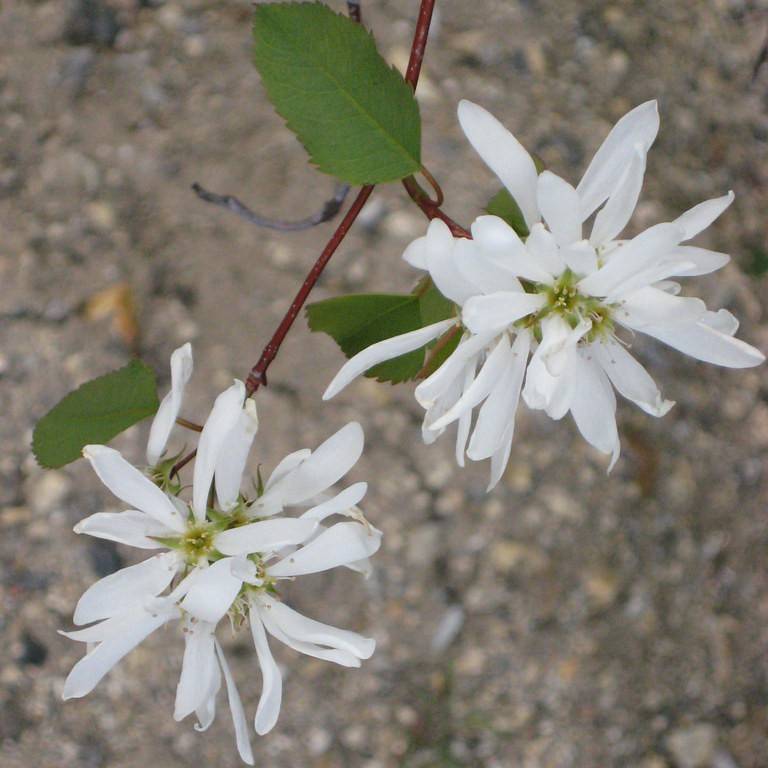
Chickasaw Plum is a thicket-forming small tree or large shrub native to prairies, wood edges, and stream banks of the southern and central U.S. It blooms profusely with fragrant white flowers in early spring before leaves emerge, supporting early pollinators such as native bees. Small, round, ½ to 1-inch red or yellow fruit ripens in mid to late summer, with a tart, tangy flavor well-suited for jams, jellies, and fresh eating when fully ripe. It is a hardy, adaptable species often used for erosion control, wildlife habitat, and ornamental landscaping.
Care Guide
Watering
Established Chickasaw Plum trees are highly drought-tolerant, requiring only occasional deep watering during prolonged dry spells of 3 weeks or more. Newly planted saplings need consistent, moderate watering 1-2 times per week for the first 1-2 growing seasons to establish a strong root system, with soil allowed to dry slightly between waterings to avoid root rot. Avoid overwatering, particularly in heavy, poorly drained soils, as this can increase susceptibility to fungal root diseases.
Light
Chickasaw Plum thrives in full sun, defined as 6+ hours of direct unfiltered sunlight daily, which supports maximum flowering and fruit production. It can tolerate partial shade, but shaded specimens will produce fewer blooms, less fruit, and may develop a sparser, more leggy growth habit. For landscape planting, select a site with unobstructed southern or western exposure for optimal growth.
Soil
This species adapts to a wide range of soil types, including sandy, loam, clay, and rocky soils, as long as drainage is adequate. It tolerates mildly acidic to neutral pH levels (5.5 to 7.5) and can withstand occasional short-term flooding, though prolonged saturated soil will damage roots. Amending heavy clay soils with compost or sand at planting time improves drainage and supports faster establishment.
Fertilizer
Mature Chickasaw Plum trees rarely require regular fertilization, as they thrive in low to medium fertility soils naturally. Young saplings can benefit from a balanced slow-release 10-10-10 fertilizer applied once annually in early spring before new growth emerges, spread evenly around the drip line and watered in thoroughly. Avoid high-nitrogen fertilizers, which can promote excessive vegetative growth at the expense of flowering and fruit production.
Temperature
Chickasaw Plum is cold hardy to USDA zones 5 through 9, tolerating winter temperatures as low as -20°F (-29°C) and summer highs well above 100°F (38°C). It requires roughly 300-600 chill hours (temperatures below 45°F / 7°C) during the winter to break dormancy and produce blooms the following spring. Late spring frosts can damage open flowers, reducing fruit yield for the season, so avoid planting in low-lying frost pockets if fruit production is a priority.
Pruning
Prune Chickasaw Plum during the dormant season in late winter, before buds swell, to remove dead, damaged, or crossing branches and improve air circulation through the canopy. To control its natural thicket-forming growth habit, regularly remove root suckers that emerge around the base of the tree if you prefer a single-trunk form. Avoid heavy pruning, as this can stimulate excessive sucker growth and reduce flowering for 1-2 growing seasons.
Propagation
Chickasaw Plum is most easily propagated by digging up and transplanting root suckers from established thickets in late winter while the plant is dormant, which will root reliably and produce fruit in 2-3 years. It can also be grown from fresh seed collected from ripe fruit in late summer, which requires 3-4 months of cold stratification to break dormancy before sowing in spring. Softwood cuttings taken in early summer can also root successfully if treated with rooting hormone and kept in consistently moist, well-drained medium under high humidity.
Humidity
Chickasaw Plum adapts well to a wide range of humidity levels, thriving in both the dry conditions of the southern Great Plains and the higher humidity of the southeastern U.S. Average ambient humidity between 40% and 70% is ideal, though it can tolerate short periods of lower or higher humidity without issue. High humidity combined with poor air circulation can increase the risk of foliar fungal diseases, so spacing plants to allow airflow reduces this risk.
Repotting
Chickasaw Plum is rarely grown in containers long-term, as its extensive root system and large mature size make it poorly suited for potted culture. If growing a sapling in a container temporarily before landscape planting, repot annually in early spring into a pot 2-3 inches larger than the current one, using a well-drained loamy potting mix. Transplant saplings into the landscape once they reach 2-3 feet tall, as extended container growth will stunt long-term development.
Uses & Symbolism
Chickasaw Plum is widely planted as an ornamental landscape tree for its early spring white blooms, attractive summer foliage, and vivid red fall color, working well as a specimen plant, hedge, or windbreak. Its tart fruit is harvested for making jams, jellies, pies, and fermented beverages, while the thick, thorny thickets provide excellent shelter and food for birds, small mammals, and pollinators. It is also used for riparian restoration and erosion control, as its extensive root system stabilizes soil on slopes and stream banks, and it tolerates a wide range of disturbed site conditions.
Diseases & Pests
Chickasaw Plum is susceptible to common stone fruit diseases including brown rot, a fungal infection that causes fruit rot and blossom blight in warm, humid conditions, which can be managed by removing infected plant material and applying fungicide at bloom time if needed. It may also be affected by leaf spot, powdery mildew, and bacterial canker, which are minimized by good air circulation through the canopy and avoiding overhead watering. Common pests include plum curculio, aphids, and tent caterpillars, which can be controlled with horticultural oil, insecticidal soap, or targeted organic insecticides when infestations are severe.
Related plants
Other plants you might like if you grow Chickasaw Plum.