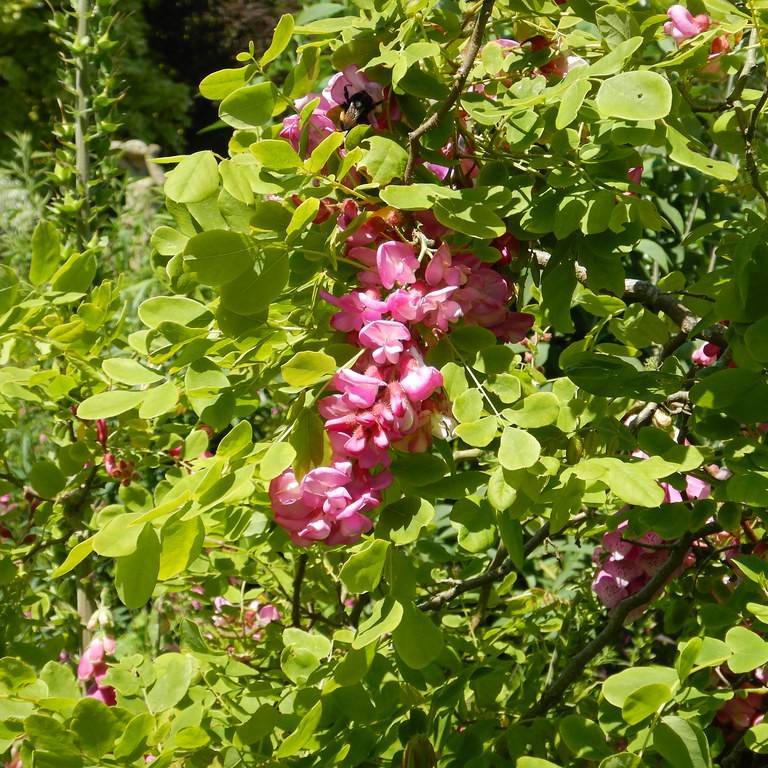
Bristly Locust
Robinia hispida
Overview
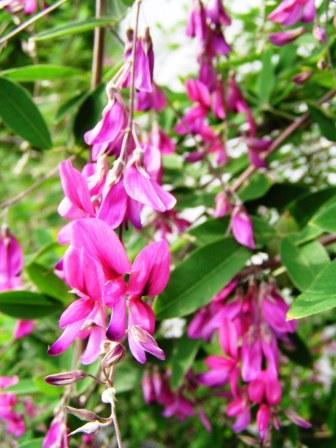
Bristly locust, also called rose acacia, is a suckering deciduous shrub notable for the dense, glandular bristles covering its young stems, leaf stalks, and seed pods. It produces abundant drooping racemes of fragrant, rose-pink pea-like flowers in late spring, which attract pollinators including bees and butterflies. It is a nitrogen-fixing species, capable of improving soil fertility in areas where it grows, though its aggressive suckering habit can make it invasive in some non-native regions.
Care Guide
Watering
Bristly locust is highly drought-tolerant once established, requiring only occasional deep watering during extended periods of no rainfall. Overwatering, especially in poorly drained soil, can lead to root rot, so allow the top several inches of soil to dry out completely between waterings. Newly planted shrubs need regular, moderate watering for the first growing season to develop a robust root system.
Light
This shrub thrives in full sun, requiring a minimum of 6 hours of direct, unfiltered sunlight per day to produce the most abundant flower displays. It can tolerate partial shade, but flowering will be reduced, and the plant may develop a leggy, sparse growth habit. Full sun exposure also helps minimize risk of fungal foliage diseases.
Soil
Bristly locust adapts to a wide range of soil types, including poor, dry, sandy, or rocky soils that are inhospitable to many other ornamental shrubs. It prefers well-drained soil with a neutral to slightly acidic pH, but it tolerates alkaline soil and even poor, compacted urban soils well. It does not tolerate waterlogged, saturated soil for extended periods.
Fertilizer
As a nitrogen-fixing legume, bristly locust rarely requires supplemental fertilization, as it produces its own nitrogen to support growth. If planted in extremely nutrient-poor soil, a light application of balanced, slow-release fertilizer in early spring can support healthy growth without encouraging excessive, weak foliage. Avoid high-nitrogen fertilizers, which can reduce flowering and increase suckering.
Temperature
Bristly locust is hardy in USDA zones 4 through 8, tolerating winter temperatures as low as -30°F (-34°C) without significant cold damage. It thrives in warm summer temperatures, tolerating heat and high humidity well across its hardiness range. Young shrubs may benefit from a light layer of winter mulch in the coldest parts of its range to protect shallow roots from freeze-thaw cycles.
Pruning
Prune bristly locust in late winter or early spring before new growth emerges to remove dead, damaged, or crossing branches and shape the plant as desired. To control its aggressive suckering habit, regularly remove unwanted suckers at the base as they appear, digging down to cut them off from the root system to prevent regrowth. Wear thick gloves when pruning, as the sharp bristles can irritate skin.
Propagation
Bristly locust is most easily propagated by digging up and transplanting root suckers in early spring before new growth starts, which root quickly when planted in prepared soil. It can also be grown from seed, which requires scarification (nicking or soaking in hot water) to break through the hard seed coat before sowing in spring. Softwood cuttings taken in early summer can also root successfully when kept in moist, well-drained medium under indirect light.
Humidity
Bristly locust tolerates a wide range of humidity levels, thriving in both the dry summer conditions of its native upland habitats and the higher humidity of the southeastern U.S. It does not require any supplemental humidity, even when grown in drier interior regions. Excessively high humidity combined with poor air circulation can increase risk of foliar fungal spots, so space plants appropriately to allow airflow.
Repotting
Bristly locust is rarely grown in containers, as its spreading root system and suckering habit make it better suited for in-ground landscape planting. If grown in a large container, repot every 2 to 3 years in early spring, using a well-drained potting mix and trimming back excess root growth to contain the plant’s size. Ensure containers have ample drainage holes to prevent waterlogging of the root zone.
Uses & Symbolism
Bristly locust is widely planted as an ornamental landscape shrub for its showy spring pink flowers and tolerance of poor site conditions, often used for erosion control on slopes and disturbed sites due to its extensive root system and suckering habit. It is also planted in pollinator gardens to support bees, butterflies, and other beneficial insects during its bloom period. Historically, its dense, thicket-forming growth was used for living fences and boundary markers in rural areas of the southeastern U.S.
Diseases & Pests
Bristly locust is relatively resistant to most pests and diseases, though it can occasionally be affected by locust borers, which tunnel into stems and can cause branch dieback, especially in stressed plants. Fungal diseases including powdery mildew and leaf spot may appear in conditions of high humidity and poor air circulation, though these are rarely fatal. Spider mites and scale insects may infest foliage during extended dry, hot periods, and can be controlled with horticultural oil sprays.
Related plants
Other plants you might like if you grow Bristly Locust.