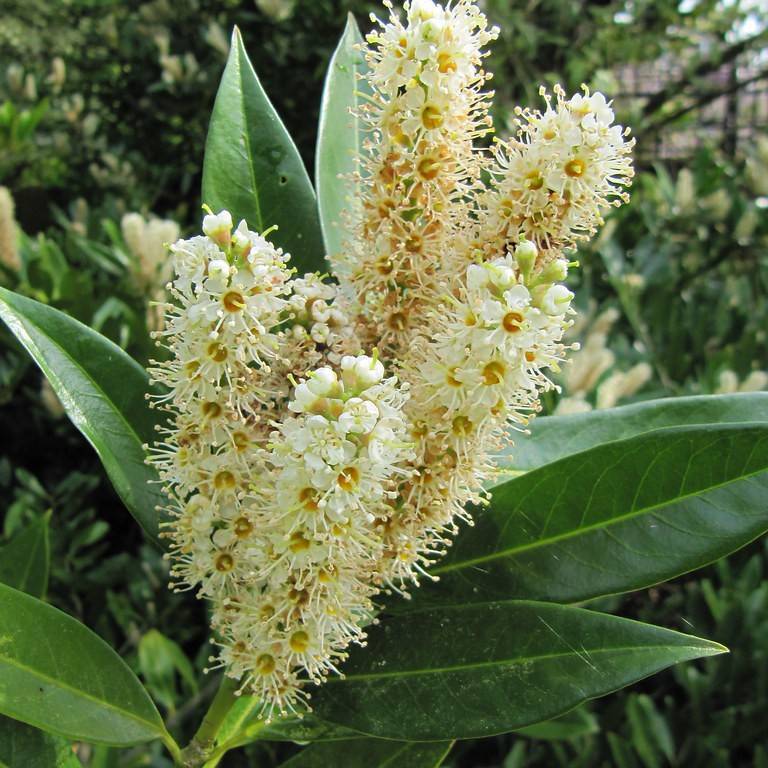
Cherry Laurel
Prunus laurocerasus
Overview
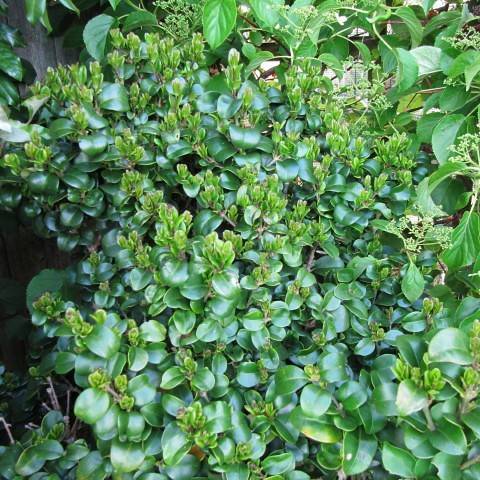
Cherry laurel is a fast-growing evergreen member of the Prunus genus, recognizable by its thick, glossy, dark green leaves, upright growth habit, and clusters of small, fragrant white spring flowers that give way to small black drupes in late summer. It is widely cultivated as a landscape plant for its tolerance of heavy pruning and ability to form dense, year-round privacy screens. While its common name references laurel, it is not related to true bay laurel (Laurus nobilis) and carries significant toxicity risks.
Care Guide
Watering
Water newly planted cherry laurels regularly for the first 1-2 years to establish deep root systems, keeping soil consistently moist but not waterlogged. Mature plants are drought-tolerant, requiring supplemental watering only during extended periods of hot, dry weather, as overwatering increases risk of root rot. Avoid watering foliage directly to reduce fungal disease risk.
Light
Cherry laurel thrives in full sun to partial shade, with optimal growth occurring in locations that receive 4-6 hours of direct sunlight daily. It can tolerate deep shade, though growth will be sparser and flowering may be reduced. In extremely hot climates, light afternoon shade prevents leaf scorch.
Soil
Adaptable to a wide range of soil types, including clay, loam, and sandy soils, as long as the substrate is well-draining. It prefers a neutral to slightly alkaline soil pH between 6.5 and 7.5, though it can tolerate mildly acidic conditions. Poorly drained, waterlogged soils will cause root damage and decline.
Fertilizer
Feed established cherry laurels once annually in early spring with a balanced, slow-release granular fertilizer formulated for woody landscape plants to support new growth and foliage health. Avoid over-fertilizing, as excessive nitrogen can lead to weak, leggy growth that is more susceptible to pest damage. Newly planted specimens do not require fertilizer for the first growing season, as high nutrient levels can burn tender young roots.
Temperature
Hardy in USDA zones 6 to 9, tolerating winter temperatures as low as -10°F (-23°C) when established. Young plants may require winter protection from harsh, drying winds and extreme cold to prevent leaf browning or dieback. Summer temperatures above 90°F (32°C) are tolerated well with adequate soil moisture.
Pruning
Prune cherry laurel in late winter or early spring before new growth emerges, or after flowering finishes to avoid removing current year’s bloom clusters. It tolerates heavy pruning to shape into formal hedges, maintain a desired size, or remove dead, damaged, or crossing branches, and can be cut back hard to rejuvenate overgrown specimens. Avoid pruning in late fall, as tender new growth stimulated by pruning may be damaged by upcoming winter cold.
Propagation
The most common propagation method is semi-hardwood cuttings taken in late summer or early fall, using 4-6 inch stem sections with mature current-year growth, treated with rooting hormone and placed in a well-draining propagation medium under consistent moisture and indirect light. It can also be grown from seed, though seeds require 3-4 months of cold stratification to germinate, and seedlings may not retain the exact characteristics of the parent cultivar. Suckers that form around the base of mature plants can be dug up and transplanted in early spring for easy clonal propagation.
Humidity
Cherry laurel adapts well to average outdoor humidity levels between 40% and 70%, which is typical of its native temperate range. It tolerates occasional high humidity, though prolonged periods of damp, stagnant air can increase susceptibility to fungal leaf spot diseases. In dry climates, occasional misting is not required, as long as soil moisture levels are adequate.
Repotting
Cherry laurel is rarely grown as a potted plant long-term, as its large size and extensive root system require frequent repotting. If grown in a container, repot every 2-3 years in early spring, moving to a pot 2-3 inches larger than the current container, using a well-draining potting mix amended with compost. Potted specimens require more frequent watering and fertilization than in-ground plants, as nutrients leach out of container soil faster.
Uses & Symbolism
Primarily used in landscape design as a dense, evergreen privacy hedge, screen, or windbreak, valued for its year-round foliage coverage and tolerance of heavy shaping. Its fragrant spring flowers attract pollinators including bees and butterflies, while its small black fruits provide food for native bird species, which are unaffected by its toxic compounds. It is occasionally planted as a standalone ornamental specimen tree in larger yards, though its toxic parts make it unsuitable for landscapes frequented by young children or unsupervised pets.
Diseases & Pests
Common fungal diseases include leaf spot, powdery mildew, and root rot, which occur most frequently in poorly drained soils or conditions with high humidity and poor air circulation. Common pests include aphids, scale insects, and cherry laurel psyllids, which feed on foliage, causing leaf discoloration, distortion, and stunted growth if infestations are severe. Shot hole disease, a bacterial infection, causes small circular lesions on leaves that drop out to leave hole-like damage, and can be managed by removing infected foliage and avoiding overhead watering.
Related plants
Other plants you might like if you grow Cherry Laurel.