Chastetree
Vitex agnus-castus
Overview
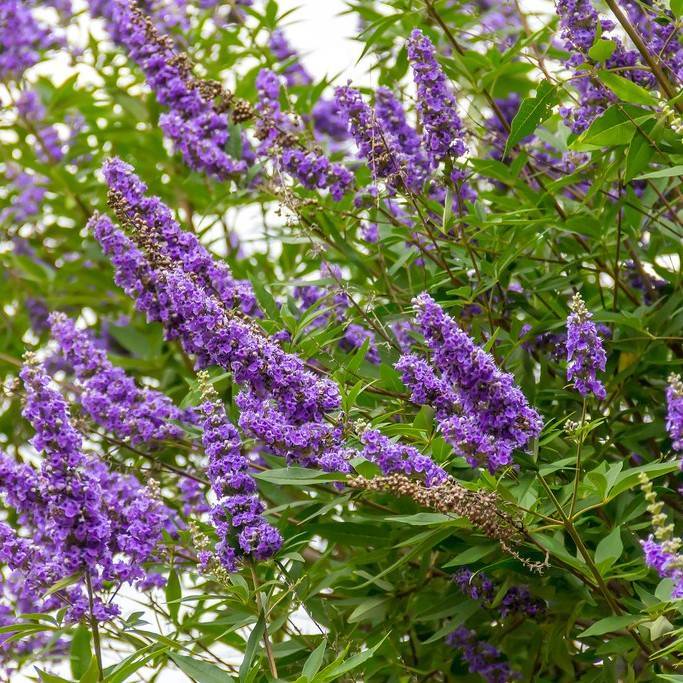
Chastetree is a multi-stemmed deciduous shrub or small tree with palmate, gray-green leaves that emit a peppery, herbal scent when crushed. From mid-summer to early fall, it produces dense, upright spikes of lavender, blue, pink, or white flowers that are highly attractive to pollinators including bees, butterflies, and hummingbirds. It is widely cultivated in warm temperate and subtropical regions for its ornamental value and tolerance of harsh growing conditions.
Care Guide
Watering
Water newly planted chastetree regularly for the first growing season to establish a deep, extensive root system, keeping soil consistently moist but not waterlogged. Once established, it is highly drought-tolerant, requiring only occasional deep watering during extended periods of extreme heat or drought. Overwatering, especially in poorly drained soil, can lead to root rot and fungal issues.
Light
Chastetree thrives in full, direct sunlight, requiring a minimum of 6 hours of unobstructed sun per day to produce abundant blooms and maintain a dense, compact growth habit. It can tolerate partial shade, but plants grown in low light will become leggy, produce far fewer flowers, and be more susceptible to pest infestations.
Soil
This adaptable shrub grows well in a wide range of soil types, including sandy, loamy, clay, and rocky soils, as long as the site offers good drainage. It prefers a neutral to slightly alkaline soil pH between 6.0 and 8.0, and tolerates moderate salinity, making it suitable for coastal plantings. Avoid heavy, waterlogged soils, as excess moisture around the root zone will cause root decay.
Fertilizer
Chastetree has low nutrient requirements and typically does not need regular fertilization if grown in average garden soil. If growth is slow or foliage appears pale, apply a balanced, slow-release 10-10-10 fertilizer in early spring before new growth emerges, taking care not to overapply nitrogen, which will encourage leafy growth at the expense of flowers. Avoid fertilizing after mid-summer, as this can stimulate tender new growth that is vulnerable to frost damage.
Temperature
It grows best in USDA hardiness zones 6 through 9, preferring warm, dry summer conditions and mild winter temperatures. In zone 6, it may die back to the ground during harsh winters, but will regrow vigorously from the root system in spring and still bloom the same growing season. Protect young plants from harsh winter winds and frost with a layer of mulch around the base to insulate the root zone.
Pruning
Prune chastetree in late winter or early spring before new growth begins, as flowers develop on new wood, so heavy pruning will not reduce bloom production. Cut back all stems to 2-3 feet above the ground to maintain a compact, shrub-like form, or remove lower branches to train the plant into a small, single-trunk tree. Remove any dead, damaged, or crossing branches throughout the year to improve air circulation and prevent disease.
Propagation
Chastetree is most easily propagated from softwood cuttings taken in early summer, when new growth is still flexible and not fully woody. Cut 4-6 inch long stem tips, remove the lower leaves, dip the cut end in rooting hormone, and plant in a well-drained potting mix, keeping the cuttings moist and in indirect light until roots develop in 4-6 weeks. It can also be grown from seed, though seed-grown plants may take 2-3 years to reach blooming size and may not retain the exact characteristics of the parent plant.
Humidity
Chastetree prefers low to moderate humidity levels, and thrives in the dry summer conditions common to its native Mediterranean range. It tolerates high humidity well in subtropical regions, as long as the soil is well-drained and the plant has good air circulation around its foliage to prevent fungal leaf spot. Avoid overhead watering in humid climates to reduce the risk of foliar disease.
Repotting
Chastetree is rarely grown in containers long-term, but if potted, repot young plants every 2-3 years in early spring before new growth begins, using a well-drained potting mix and a container with ample drainage holes. Choose a pot that is 2-3 inches larger in diameter than the current root ball to avoid excess soil that retains unnecessary moisture around the roots. Mature container-grown specimens can be root pruned and repotted every 3-4 years to restrict growth and maintain a manageable size.
Uses & Symbolism
Chastetree is widely planted as an ornamental specimen shrub, hedge, or small accent tree in water-wise and pollinator gardens, as well as in roadside and commercial landscape plantings due to its tolerance of poor soil, drought, and pollution. Extracts from its berries and leaves have been used in traditional herbal medicine for centuries to address hormonal imbalances, menstrual symptoms, and reproductive health issues, though clinical evidence for these uses is limited. Its aromatic leaves and stems are sometimes used in dried floral arrangements, and its flowers produce a light, mild honey when foraged by bees.
Diseases & Pests
Chastetree is largely pest and disease resistant, though it may occasionally suffer from aphid, whitefly, or scale infestations, which can be treated with insecticidal soap or horticultural oil. In poorly drained soils or overly wet conditions, it is susceptible to root rot, which can be prevented by planting in well-drained sites and avoiding overwatering. Fungal leaf spot and powdery mildew may occur in humid climates with poor air circulation, but these issues are rarely fatal and can be managed by pruning to improve airflow and avoiding overhead watering.
Related plants
Other plants you might like if you grow Chastetree.