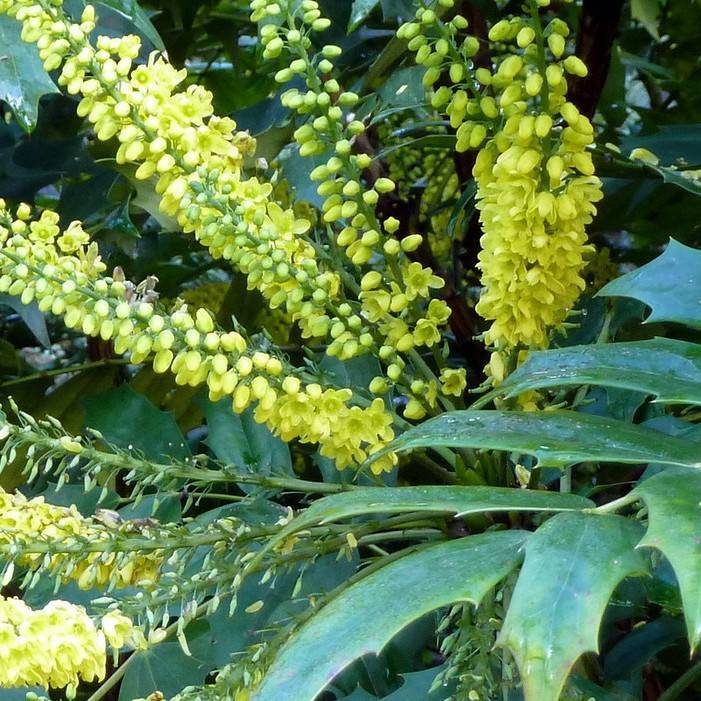
Charity Mahonia
Mahonia x media 'Charity'
Overview
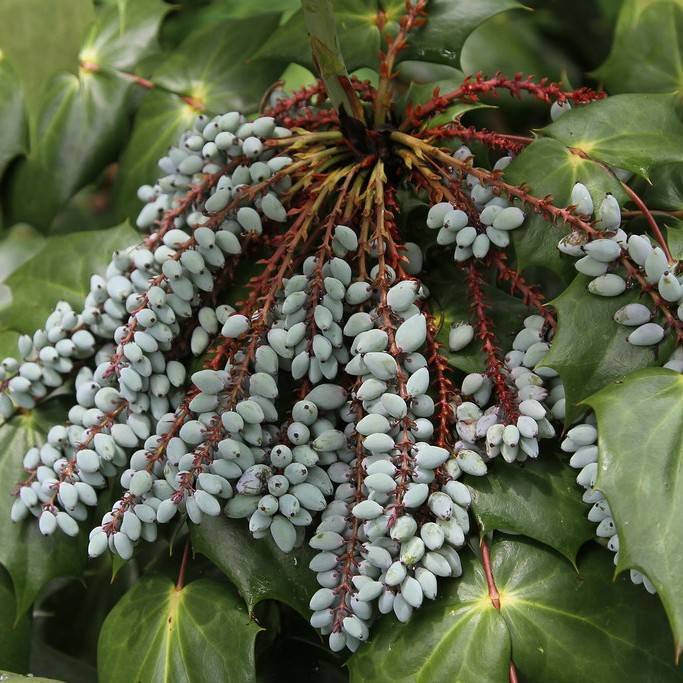
Charity Mahonia is a popular hybrid evergreen shrub prized for its year-round interest and cold hardiness. It produces upright, arching spikes of fragrant bright yellow flowers from late fall to early winter, followed by clusters of waxy dark blue berries in spring. Its leathery, spiky pinnate leaves emerge bronze-tinted before maturing to a deep glossy green, making it a striking structural addition to shaded gardens.
Care Guide
Watering
Water deeply once per week during the first growing season to establish a robust root system; once established, it is drought-tolerant, requiring only occasional watering during prolonged dry spells. Avoid overwatering or soggy soil, as this can lead to root rot.
Light
Thrives in partial to full shade, though it can tolerate brief periods of morning sun. Intense direct afternoon sun will scorch its leaves, causing unsightly brown edges and reduced foliage health.
Soil
Prefers well-drained, humus-rich, slightly acidic to neutral soil with a pH between 5.5 and 7.0. It can adapt to poorer, clay or sandy soils as long as drainage is adequate, though amending with compost or leaf mold will boost growth.
Fertilizer
Apply a balanced, slow-release shrub fertilizer in early spring before new growth emerges. A top dressing of well-rotted compost or leaf mold around the base in fall will provide additional nutrients and help retain soil moisture.
Temperature
Hardy in USDA zones 7 through 9, tolerating winter temperatures as low as 0°F (-18°C). It can withstand light frost without damage, though harsh, drying winter winds may cause leaf scorch, so plant in a sheltered spot in cooler parts of its range.
Pruning
Prune only to remove dead, damaged, or crossing branches in late spring after flowering has finished. To reduce size or encourage bushier growth, cut back up to one-third of the oldest stems to ground level every few years, as it blooms on previous year’s wood.
Propagation
Most commonly propagated via semi-hardwood cuttings taken in late summer or early fall, rooted in a well-draining propagating mix with bottom heat. It can also be grown from fresh seed sown in fall, though seed-grown plants may not retain the exact characteristics of the 'Charity' cultivar.
Humidity
Tolerates a wide range of humidity levels, from moderate coastal humidity to drier inland conditions. It does not require extra humidity to thrive, though prolonged extremely dry air may cause minor leaf browning at the edges.
Repotting
Charity Mahonia is rarely grown in containers long-term, as it grows to a large size. If potted, repot every 2-3 years in early spring using a loamy, well-draining potting mix, and choose a container with ample drainage holes to prevent waterlogging.
Uses & Symbolism
Widely planted as a low-maintenance structural shrub in shaded borders, woodland gardens, and hedgerows, where its winter flowers provide critical nectar for pollinators such as bumblebees. The tart, nutrient-dense berries are edible when cooked and used to make jams, jellies, or syrups, though they are bitter when raw. Its evergreen foliage and long-lasting flower spikes are also popular for cut flower arrangements.
Diseases & Pests
Generally pest and disease resistant, though it may be susceptible to powdery mildew in poorly ventilated, overly humid conditions, and root rot if grown in waterlogged soil. Occasional pests include scale insects, aphids, and rust, which can be treated with horticultural oil or neem oil if infestations are severe.
Related plants
Other plants you might like if you grow Charity Mahonia.