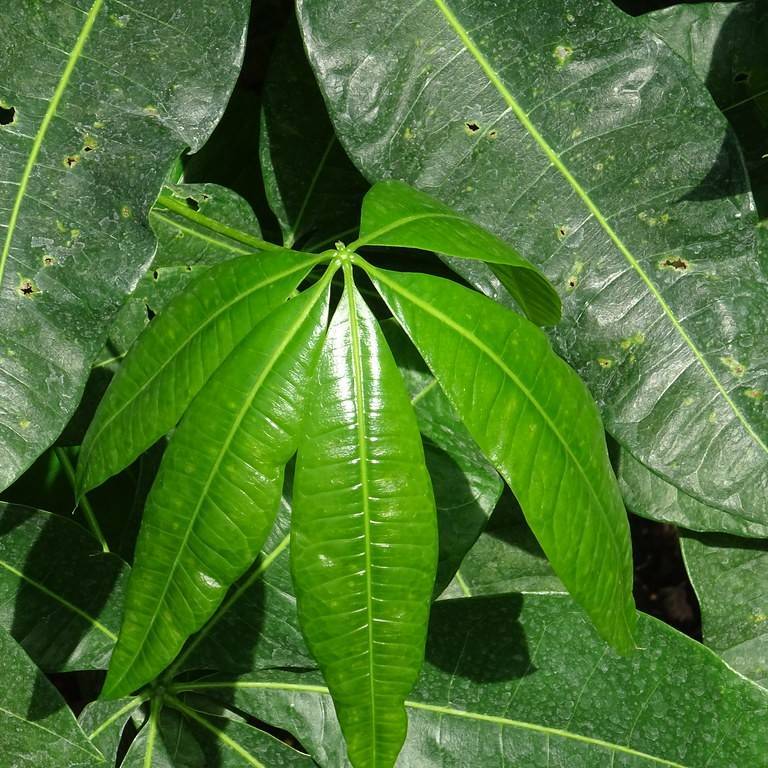
Guiana Chestnut
Pachira aquatica
Overview
Guiana Chestnut, also called money tree, is a tropical wetland tree distinguished by its bright green, hand-shaped leaves composed of 5 to 9 leaflets and often braided multiple stems when grown commercially. In its native range, it produces large, fragrant yellow-white flowers and edible, chestnut-like seeds inside woody pods, though blooms rarely appear on indoor specimens. It is widely associated with feng shui practices, where it is believed to attract positive energy and financial prosperity.
Care Guide
Watering
Allow the top 2 to 3 inches of soil to dry out completely between waterings, as overwatering is the most common cause of root rot. Reduce watering frequency significantly in winter when growth slows, and avoid letting the plant sit in standing water in its saucer. Native to wetland habitats, it tolerates occasional overwatering better than many houseplants but still prefers consistent, moderate moisture.
Light
Thrives in bright, indirect light, but adapts well to medium and even low light conditions, making it suitable for a range of indoor spaces. Avoid prolonged exposure to direct, intense midday sun, which can scorch its leaves and cause unsightly brown patches. Rotate the plant every few weeks to encourage even, upright growth and prevent leaning toward the light source.
Soil
Requires a well-draining, nutrient-rich potting mix; a blend of standard potting soil, perlite, and peat moss or coco coir works well to balance moisture retention and drainage. The soil pH should be slightly acidic to neutral, between 6.0 and 7.5, to support healthy nutrient uptake. Avoid heavy, compacted soils that hold excess moisture for long periods, as these increase the risk of root rot.
Fertilizer
Feed with a balanced, water-soluble houseplant fertilizer diluted to half strength once a month during the spring and summer active growing season. Do not fertilize in fall and winter, when the plant enters a period of dormancy and new growth stalls. Over-fertilization can cause leaf tip burn and stunted growth, so err on the side of underfeeding if unsure.
Temperature
Prefers average indoor temperatures between 65 and 75°F (18 and 24°C), and can tolerate short dips down to 50°F (10°C) without permanent damage. Avoid placing the plant near cold drafts, air conditioning vents, or heating sources, as sudden temperature fluctuations can cause leaf drop. It is not frost-hardy, so outdoor specimens in temperate climates must be brought inside before the first frost.
Pruning
Prune in early spring before new growth begins to control size, remove yellowed or damaged leaves, and encourage bushier, more compact growth. Cut back overlong stems just above a leaf node to stimulate new side shoots, and trim away any dead or rotting foliage at the base of the plant as needed. Pruning is rarely required for health, but can help maintain the desired shape, especially for braided specimens.
Propagation
Most commonly propagated from stem cuttings taken in spring or summer; cut a 4 to 6 inch healthy stem tip, remove lower leaves, dip the cut end in rooting hormone, and plant in moist, well-draining potting mix. It can also be grown from seed, though this method is slower and less common for home growers, as seeds are rarely produced on indoor plants. Keep cuttings in a warm, humid location with bright indirect light until roots develop, which typically takes 4 to 6 weeks.
Humidity
Adaptable to average indoor humidity levels between 40 and 60%, but benefits from occasional misting, a pebble tray, or a humidifier in very dry indoor environments. Brown leaf tips may indicate humidity is too low, though this is rarely a serious issue for the plant's overall health. Avoid misting if the plant is placed in a low light area, as excess moisture on leaves can increase the risk of fungal issues.
Repotting
Repot young Guiana Chestnut plants every 1 to 2 years in spring, moving to a pot one size larger than the current one to accommodate root growth. Mature plants only need repotting every 3 to 4 years, or when roots start growing out of the drainage holes at the bottom of the pot. Ensure the new pot has adequate drainage holes, and refresh the potting mix at repotting time to replenish nutrients. To restrict growth and keep the plant small, you can trim back the root ball slightly and repot it into the same size pot with fresh soil.
Uses & Symbolism
Primarily grown as a decorative houseplant, valued for its attractive foliage, easy care requirements, and cultural association with good fortune and financial prosperity in feng shui. In its native range, the large, nut-like seeds are roasted and eaten, the young leaves and flowers are consumed as vegetables, and parts of the plant are used in traditional medicine to treat minor ailments. It is also a popular low-maintenance plant for offices and commercial spaces, as it tolerates low light and infrequent watering well.
Diseases & Pests
Most issues stem from overwatering, which leads to root rot, the most common serious disease, marked by yellowing leaves, mushy stems, and a sour smell from the soil. Common pests include spider mites, mealybugs, and aphids, which can be treated with neem oil, insecticidal soap, or rubbing alcohol applied directly to infested areas. Fungal leaf spot can occur if foliage stays wet for long periods in low light, which can be prevented by avoiding overhead watering and ensuring good air circulation around the plant.
Related plants
Other plants you might like if you grow Guiana Chestnut.