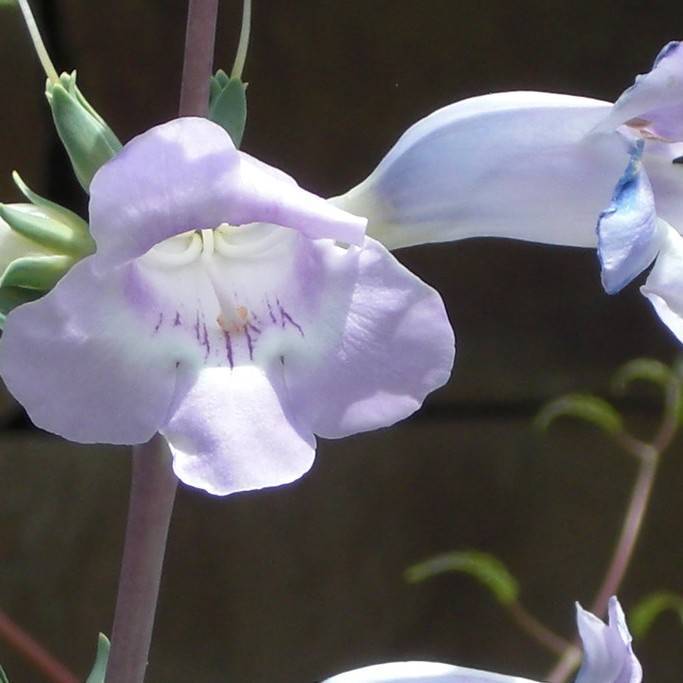
Large Beardtongue
Penstemon grandiflorus
Overview
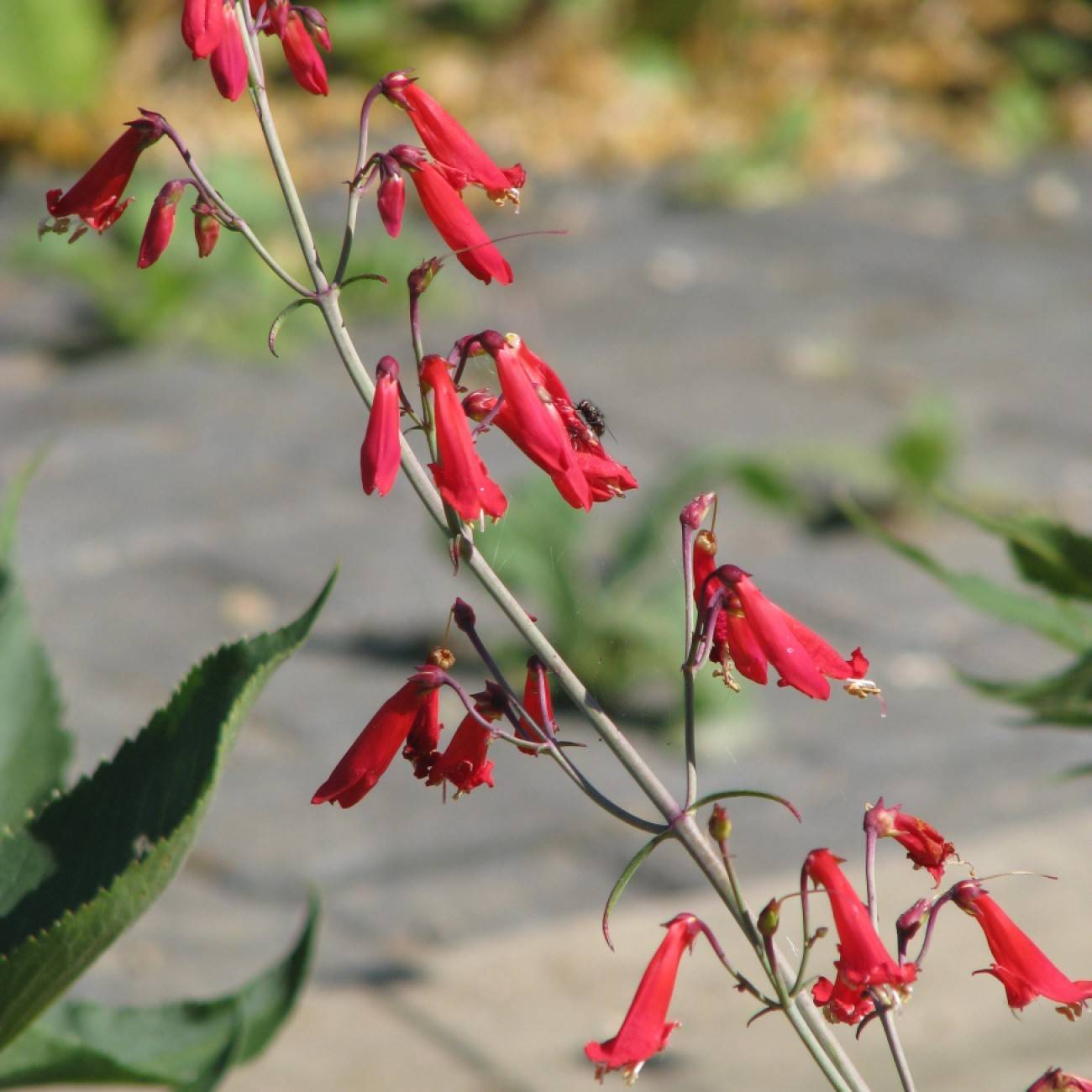
Large beardtongue, also called large-flowered penstemon, is a herbaceous perennial prized for its striking, inflated tubular flowers that bloom in dense spikes above silvery-green, lance-shaped foliage. It evolved in the prairies and dry, open habitats of the U.S. Great Plains, adapting to thrive in poor, rocky soils and prolonged dry conditions. The common name “beardtongue” refers to the fuzzy, stamen-like structure that protrudes from the flower’s throat, a signature trait of the Penstemon genus.
Care Guide
Watering
Large beardtongue is highly drought-tolerant once established, requiring only occasional deep watering during extended periods of no rainfall; overwatering is the most common cause of health decline. Newly planted specimens need regular, light watering for the first 2-3 months to help roots establish, after which they can rely almost entirely on natural precipitation. Avoid wetting the foliage when watering to reduce the risk of fungal leaf diseases.
Light
This species requires full sun, meaning a minimum of 6 hours of direct, unfiltered sunlight per day, to produce abundant blooms and maintain a compact, sturdy growth habit. It can tolerate very light partial shade, but prolonged shade will lead to leggy growth, reduced flowering, and increased susceptibility to pest infestations. For indoor cultivation, place it in a south-facing window or under full-spectrum grow lights to meet its high light needs.
Soil
Large beardtongue thrives in well-drained, sandy, loamy, or rocky soils with a neutral to slightly alkaline pH, and it tolerates poor, low-nutrient soils that many other ornamental plants cannot survive in. Heavy, clay-heavy soils that retain moisture for long periods are unsuitable, as they cause rapid root rot; amend heavy soils with coarse sand or gravel to improve drainage before planting. It does not require rich organic matter, and overly fertile soils can lead to excessive, floppy foliage growth at the expense of flowers.
Fertilizer
This plant has very low fertilizer needs, and most specimens will grow and bloom well with no supplemental fertilization at all when planted in average garden soil. If growth is particularly stunted or foliage appears pale, apply a balanced, slow-release 10-10-10 fertilizer at half the recommended rate once per year in early spring, before new growth emerges. Avoid high-nitrogen fertilizers, as they promote lush foliage growth that weakens the plant’s stems and reduces flowering.
Temperature
Large beardtongue is extremely cold-hardy, tolerating winter temperatures as low as -40°F (-40°C) in USDA hardiness zones 3 through 8, and it handles hot, dry summer temperatures up to 100°F (38°C) without stress. It requires a period of cold winter dormancy to thrive, making it unsuitable for tropical or subtropical climates that do not experience consistent freezing temperatures in winter. Extreme, unseasonable late spring frosts can damage new growth, so cover young shoots if a late freeze is forecast.
Pruning
Prune back spent flower spikes immediately after blooming to encourage a potential second flush of smaller blooms later in the growing season and prevent the plant from expending energy on seed production. In late fall or early spring, cut back all dead, dried foliage to the ground to make room for new spring growth and remove overwintering sites for pests and fungal pathogens. Thin out crowded stems every 2-3 years to improve air circulation through the plant’s canopy, reducing the risk of fungal disease.
Propagation
Large beardtongue is most easily propagated from seed, which can be sown directly outdoors in late fall to undergo natural cold stratification over winter, or stratified in the refrigerator for 4-6 weeks before spring sowing. It can also be propagated via root cuttings taken in late winter while the plant is dormant, by digging up a small section of the root system, cutting it into 2-inch segments, and planting them in well-drained potting mix. Division of mature clumps is possible but less reliable, as the plant has a deep, fragile taproot that is easily damaged during the division process.
Humidity
This species prefers low to moderate humidity levels between 30% and 50%, which matches the dry conditions of its native prairie habitat. It does not tolerate high humidity well, as prolonged moist air promotes fungal leaf spots and powdery mildew on its foliage. Ensure plants are spaced adequately to allow for good air circulation if grown in areas with higher than average summer humidity.
Repotting
Large beardtongue has a long, deep taproot and does not perform well in containers long-term, but if potted, it will only need repotting every 3-4 years when roots begin to grow out of the drainage holes. Repot in early spring before new growth emerges, using a fast-draining cactus or succulent potting mix amended with coarse sand to prevent water retention, and choose a deep pot to accommodate the plant’s taproot. Avoid disturbing the root ball as much as possible during repotting to prevent damage to the fragile taproot.
Uses & Symbolism
Large beardtongue is a popular addition to native wildflower gardens, xeriscapes, pollinator gardens, and rock gardens, where its showy blooms provide a long-lasting pop of color from late spring to mid-summer. It is a critical food source for native bees, bumblebees, hummingbirds, and specialist penstemon bees, supporting local ecosystem health in regions within and adjacent to its native range. Historically, some Indigenous Plains tribes used parts of the plant medicinally to treat toothaches and minor respiratory ailments, though modern medicinal use is not common.
Diseases & Pests
The most common health issue for large beardtongue is root rot, caused by overwatering or planting in poorly drained heavy soils, which causes wilting, yellowing foliage, and eventual plant death if not corrected. In high-humidity conditions or with poor air circulation, it may develop fungal diseases including powdery mildew and leaf spot, which appear as white powdery coatings or brown spots on foliage; these can be treated with neem oil or copper fungicide, and prevented by avoiding overhead watering. Common pests include aphids and spider mites, which suck sap from new growth, and can be controlled with insecticidal soap sprays or by introducing natural predators like ladybugs.
Related plants
Other plants you might like if you grow Large Beardtongue.