Eastern Blazingstar
Liatris scariosa
Overview
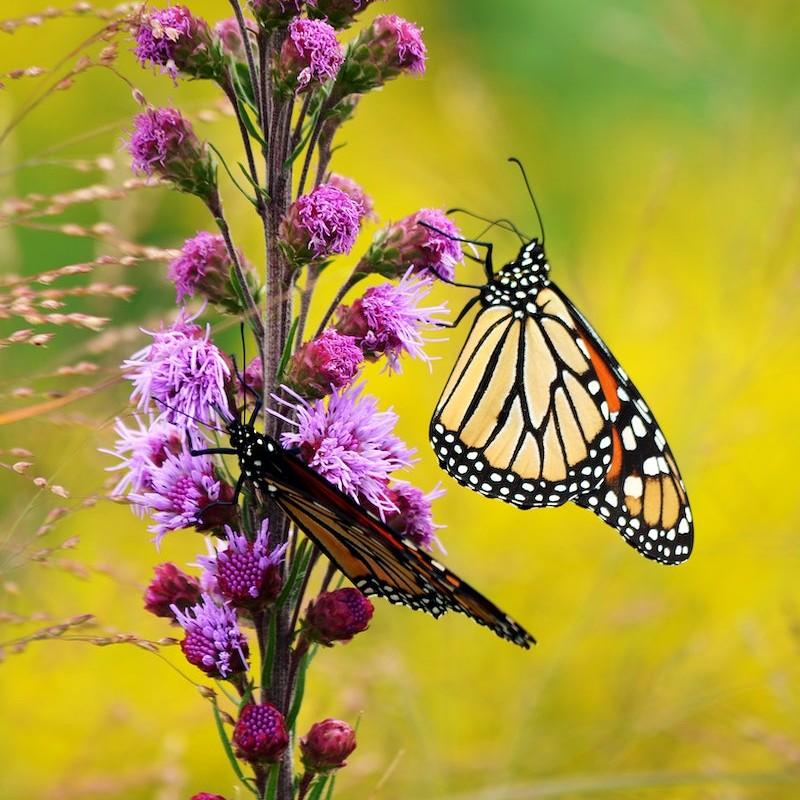
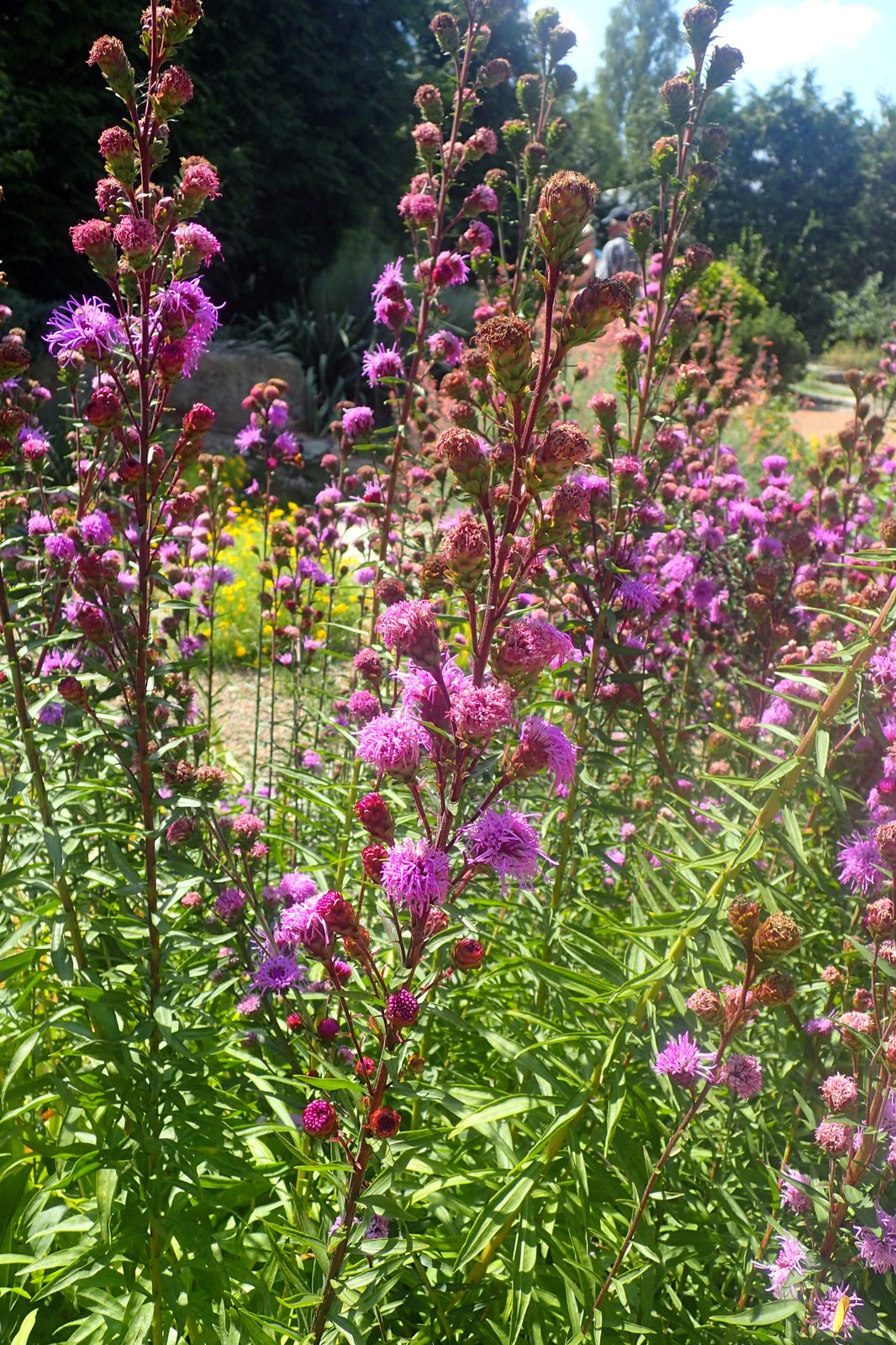
Eastern Blazingstar, also called tall gayfeather, is a herbaceous perennial adapted to prairies, meadows, and open woodland edges across its native North American range. It forms basal clumps of narrow, grass-like green foliage before sending up rigid, unbranched flower spikes lined with fluffy, button-like purple flower heads that bloom from the top of the spike downward. This species is highly valued for its ability to support native pollinators, including monarch butterflies, bumblebees, and specialist bees, while adding vertical structure to garden plantings.
Care Guide
Watering
Eastern Blazingstar has excellent drought tolerance once established, requiring only occasional deep watering during extended periods of dry weather. Avoid overwatering or allowing the plant to sit in saturated soil, as this can quickly lead to root rot; water at the base of the plant to keep foliage dry and reduce disease risk. Newly planted specimens need regular, consistent moisture for the first growing season to develop a strong, deep root system.
Light
This plant thrives in full sun, requiring a minimum of 6 hours of direct, unfiltered sunlight per day to produce sturdy flower spikes and abundant blooms. It can tolerate very light partial shade, but plants grown in shadier conditions will develop weak, leggy growth that may require staking and produce far fewer flowers. Full sun exposure also helps reduce the risk of foliar fungal diseases by encouraging quick drying of foliage after rain or watering.
Soil
Eastern Blazingstar adapts to a wide range of well-drained soil types, including sandy, loamy, and even poor, rocky soils with low fertility. It prefers neutral to slightly alkaline soil pH, but can tolerate slightly acidic conditions as long as drainage is excellent. Heavy clay soils that hold water for extended periods are unsuitable; amend these soils with coarse sand or compost to improve drainage before planting.
Fertilizer
This low-maintenance plant does not require regular fertilization, as excessive nutrients will encourage floppy, weak growth and reduce flowering. If planted in extremely poor, nutrient-depleted soil, apply a thin layer of compost around the base of the plant in early spring to provide a slow-release source of nutrients. Avoid high-nitrogen fertilizers entirely, as these prioritize foliage growth over flower production and can compromise the plant's drought tolerance.
Temperature
Eastern Blazingstar is hardy in USDA zones 3 through 9, tolerating extreme winter temperatures as low as -40°F (-40°C) and summer heat well above 90°F (32°C). It is adapted to the wide temperature fluctuations of its native prairie habitat, requiring a period of cold winter dormancy to regrow vigorously in the spring. Late spring frosts rarely damage established plants, as new foliage emerges relatively late in the season to avoid cold damage.
Pruning
Minimal pruning is required for Eastern Blazingstar; spent flower spikes can be left standing through the winter to provide food for seed-eating birds and add visual interest to the dormant garden. Cut back dead foliage and old flower spikes to 2-3 inches above the soil line in late winter or early spring before new growth emerges. If plants become leggy or flop over in mid-season, you can stake the tall spikes for support, or cut them back by half in late spring to encourage bushier, more compact growth.
Propagation
Eastern Blazingstar can be propagated easily from seed sown directly outdoors in fall, as the seeds require a 30-60 day period of cold stratification to germinate successfully. For spring sowing, refrigerate seeds in moist sand for 4-6 weeks before planting to satisfy their cold requirement. Mature clumps can also be divided every 3-4 years in early spring just as new growth emerges, ensuring each division has a healthy portion of roots and several growth buds.
Humidity
This plant tolerates a wide range of humidity levels, from the dry summer conditions of the central Great Plains to the higher humidity of the southeastern United States. Good air circulation around the foliage is important in high-humidity regions to prevent powdery mildew and other foliar fungal diseases. Avoid planting Eastern Blazingstar in crowded, poorly ventilated areas, and space plants 12-18 inches apart to allow for adequate air flow.
Repotting
Eastern Blazingstar is rarely grown in containers, as it develops a deep taproot that requires ample room to grow and performs best when planted directly in the ground. If grown in a large container, choose a pot at least 12 inches deep and wide to accommodate its root system, and use a fast-draining, sandy potting mix. Repot only when the plant has outgrown its current container, which typically occurs every 2-3 years, doing so in early spring before new growth begins.
Uses & Symbolism
Eastern Blazingstar is a staple of native pollinator gardens, meadow plantings, and rain gardens, where it provides critical nectar for butterflies, bees, and hummingbirds during the late summer and fall when many other flowering plants have finished blooming. Its tall, striking purple flower spikes make an excellent vertical accent in perennial borders, and the blooms are long-lasting in both fresh cut flower arrangements and dried floral displays. It is also used in habitat restoration projects to stabilize soil on disturbed sites and support local native wildlife populations.
Diseases & Pests
Eastern Blazingstar is relatively pest and disease resistant when grown in optimal conditions, though overwatering or poor drainage can lead to root rot, the most common issue affecting this species. In high-humidity conditions with poor air circulation, it may develop powdery mildew or leaf spot on its foliage; these can be prevented by spacing plants properly and watering at the base to keep leaves dry. Rare pest issues include aphids and leafhoppers, which can be controlled with a strong spray of water or insecticidal soap if infestations become severe.
Related plants
Other plants you might like if you grow Eastern Blazingstar.