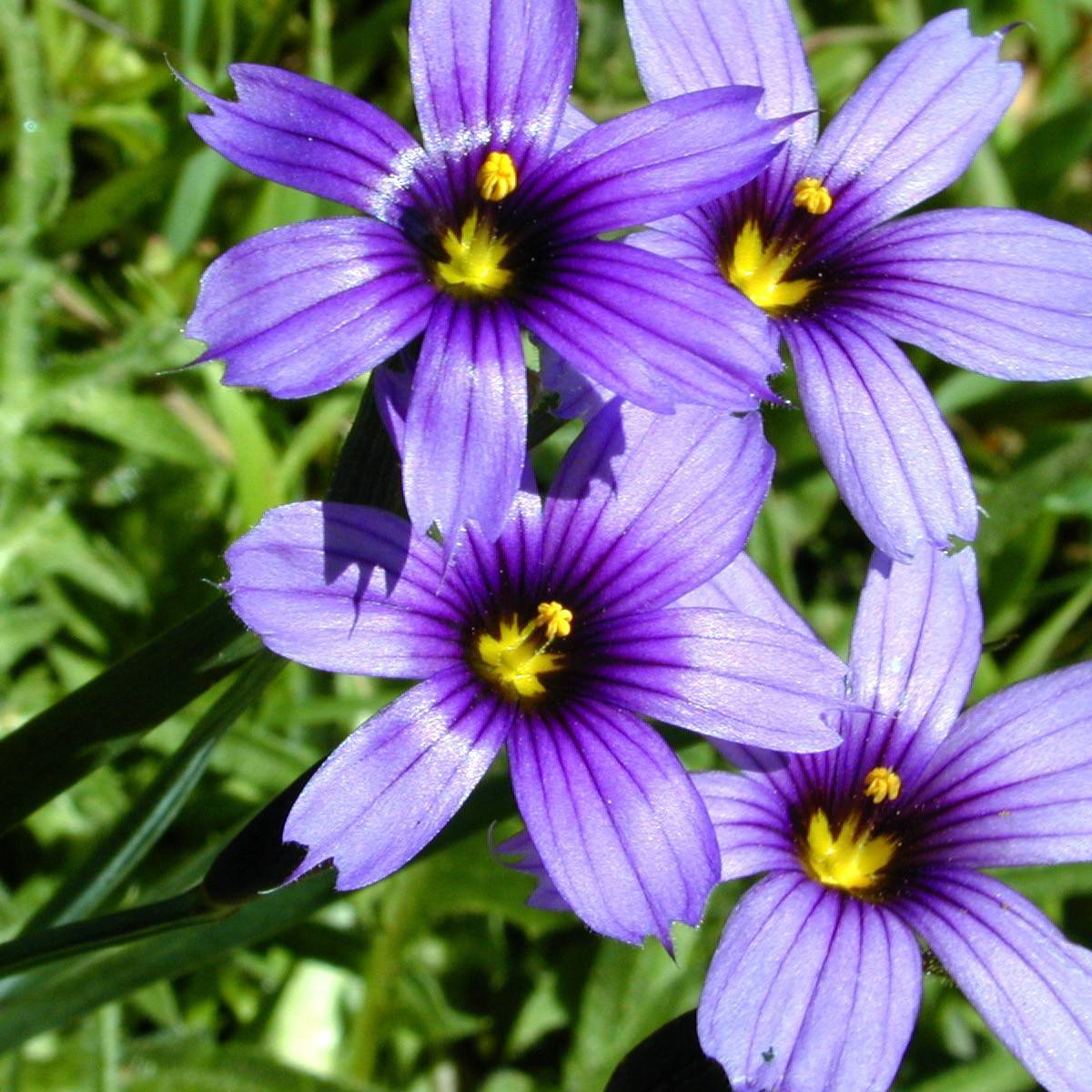
Californian Blue Eyed Grass
Sisyrinchium bellum
Overview
Californian Blue Eyed Grass is a clump-forming herbaceous perennial belonging to the iris family, despite its common name referencing grass for its narrow, blade-like foliage. It produces abundant small, star-shaped blue flowers with bright yellow centers that open on sunny days and close in overcast or evening conditions. It is well-adapted to Mediterranean climates, tolerating seasonal drought once established, and supports native pollinators including bees and small butterflies.
Care Guide
Watering
Water regularly during the active growing season in spring, keeping soil consistently moist but not waterlogged to support healthy foliage and bloom production. Reduce watering significantly after flowering ends in summer, allowing the soil to dry out completely between waterings to prevent root rot during its dormant period. Avoid overwatering in winter, as dormant rhizomes are highly susceptible to rot in saturated cold soil.
Light
Thrives in full sun to partial shade, with the most prolific bloom production occurring in sites receiving 6 or more hours of direct sunlight daily. In hotter inland regions, provide light afternoon shade to prevent foliage scorch and extend the bloom period. Too much deep shade will result in sparse flowering and lanky, weak foliage growth.
Soil
Prefers well-drained, loamy or sandy soil with a neutral to slightly acidic pH range between 6.0 and 7.2. It tolerates poor, rocky soils common to its native grassland habitats, as long as drainage is excellent to avoid standing water around the rhizomes. Heavy clay soils should be amended with compost or coarse sand to improve drainage before planting.
Fertilizer
Does not require heavy fertilization; a light application of balanced, slow-release 10-10-10 fertilizer in early spring as new growth emerges is sufficient to support healthy growth and blooms. Avoid high-nitrogen fertilizers, as these will promote excessive foliage growth at the expense of flower production. Fertilizer is unnecessary in nutrient-rich native garden soils, as excess nutrients can reduce plant longevity.
Temperature
Adapted to Mediterranean climate conditions, tolerating winter lows down to 10°F (-12°C) in USDA hardiness zones 7 through 10. It thrives in warm spring temperatures between 60 and 75°F (15 and 24°C) during its active growth and bloom period. Extreme summer heat above 90°F (32°C) will trigger dormancy, causing foliage to die back naturally until cooler fall temperatures return.
Pruning
Trim back spent flower stalks after blooming finishes to encourage a possible second lighter flush of blooms and prevent unwanted self-seeding if desired. Once foliage yellows and dies back in late summer or early fall, cut the entire clump back to 1-2 inches above the soil line to tidy the planting area and prepare for new spring growth. Avoid pruning green, actively growing foliage, as this will reduce the plant’s ability to store energy for the next growing season.
Propagation
Easily propagated by seed, sown directly outdoors in fall or cold-stratified for 4 weeks and sown in spring, with germination occurring within 2-3 weeks under warm, moist conditions. Established clumps can be divided in early fall or late winter when dormant, separating rhizome sections and replanting them 6 inches apart in prepared soil. Division every 3-4 years is recommended to maintain vigorous growth and consistent bloom production in older clumps.
Humidity
Tolerates a wide range of humidity levels, thriving in the moderate coastal humidity of its native range as well as the drier air of inland valley regions. It does not require supplemental humidity when grown in garden settings, as long as soil moisture needs are met during the growing season. High humidity combined with poor air circulation and wet soil can increase the risk of fungal leaf spot diseases.
Repotting
When grown in containers, repot every 2-3 years in late fall or early winter during dormancy, using a well-drained potting mix amended with perlite or coarse sand to improve drainage. Select a pot with multiple drainage holes to prevent water accumulation around the rhizomes, and avoid planting it in overly large containers, as excess soil can hold too much moisture and cause rot. After repotting, water sparingly until new spring growth emerges, then resume regular watering.
Uses & Symbolism
Commonly used in native plant gardens, rock gardens, border edging, and meadow plantings, where its low-growing habit and bright blooms provide seasonal color without overwhelming companion plants. It is a valuable addition to pollinator gardens, supporting native bees, syrphid flies, and small butterflies, and is deer-resistant, making it suitable for landscapes with high wildlife pressure. It can also be grown in containers for patio or balcony displays, as long as drainage is adequate.
Diseases & Pests
Relatively pest and disease resistant, though overwatered or poorly drained plants may develop root rot caused by Pythium or Phytophthora fungal pathogens, which causes wilting, yellowing foliage, and eventual plant death. Fungal leaf spot may occur in humid, poorly ventilated conditions, appearing as small brown spots on foliage; this can be managed by improving air circulation and avoiding overhead watering. Aphids and spider mites may occasionally infest new growth, which can be controlled with a strong spray of water or insecticidal soap for severe infestations.
Related plants
Other plants you might like if you grow Californian Blue Eyed Grass.