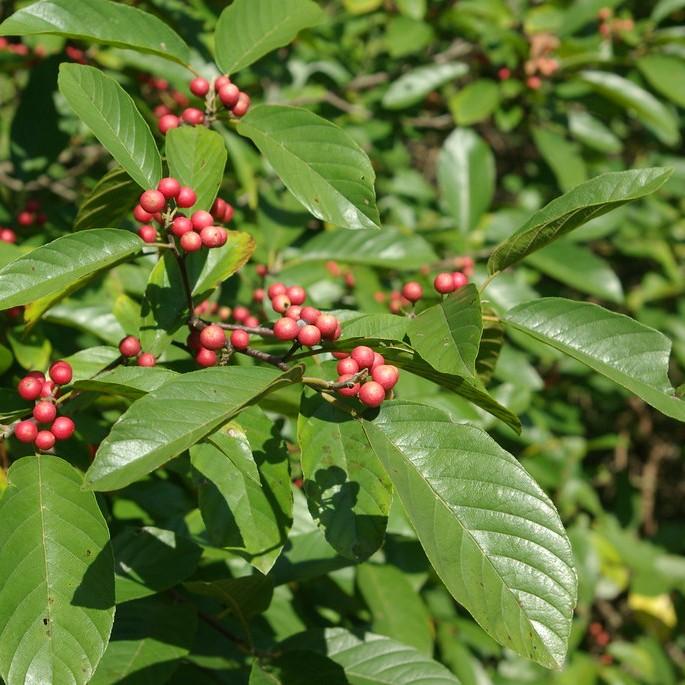
Carolina Buckthorn
Frangula caroliniana
Overview
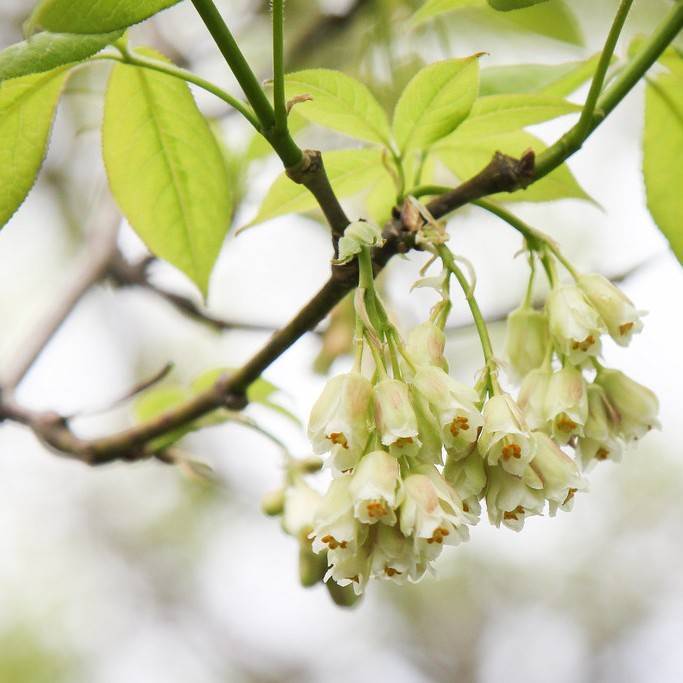
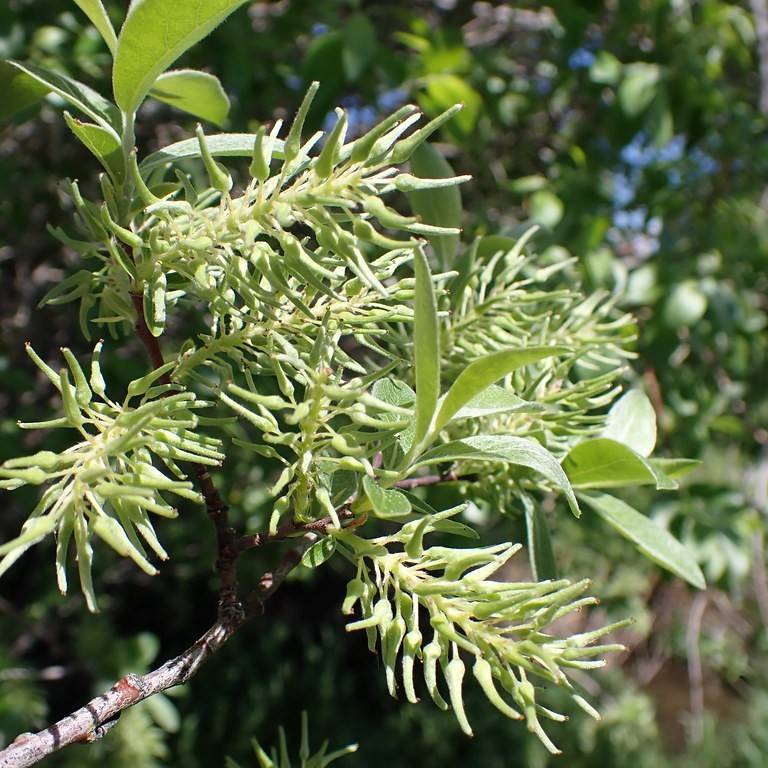
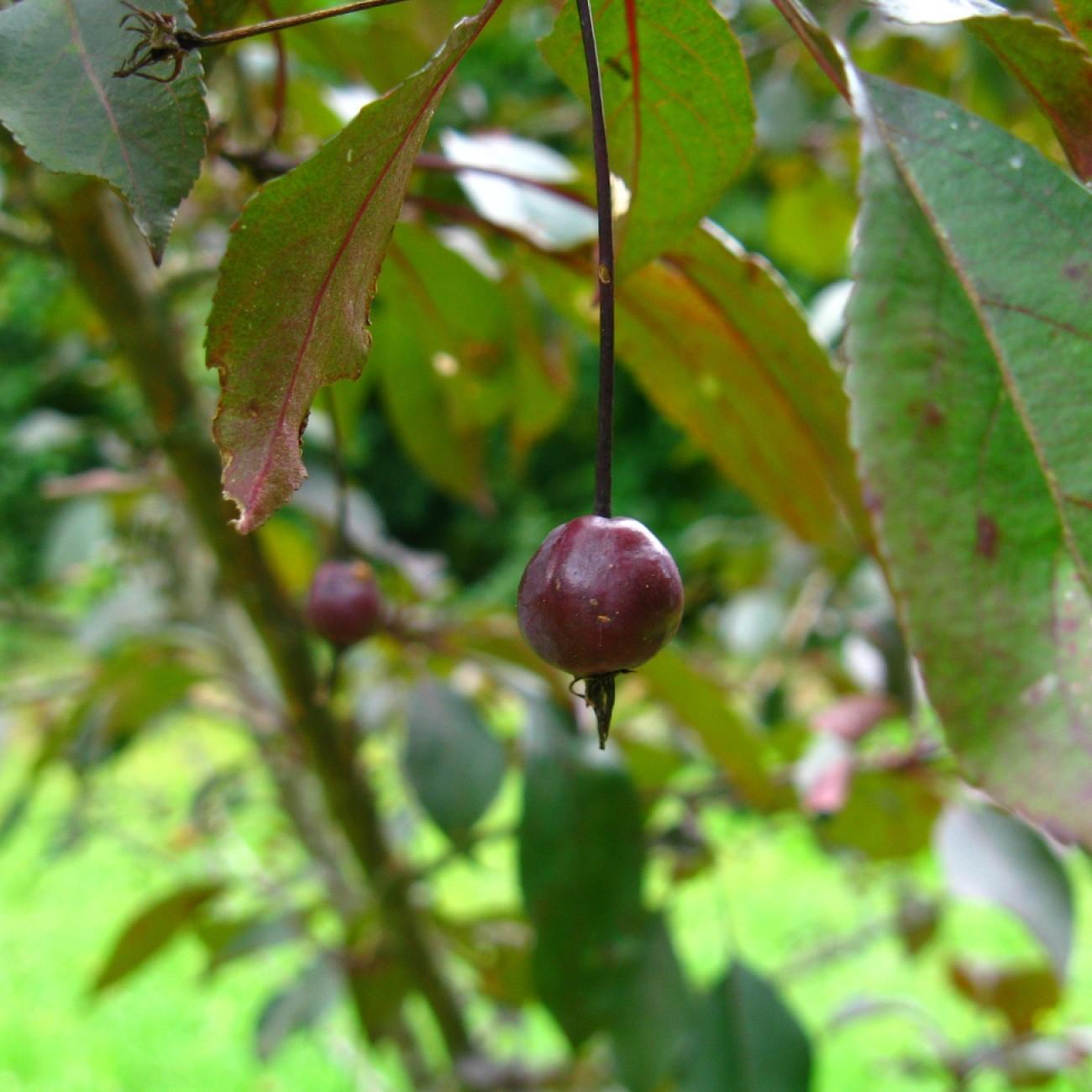
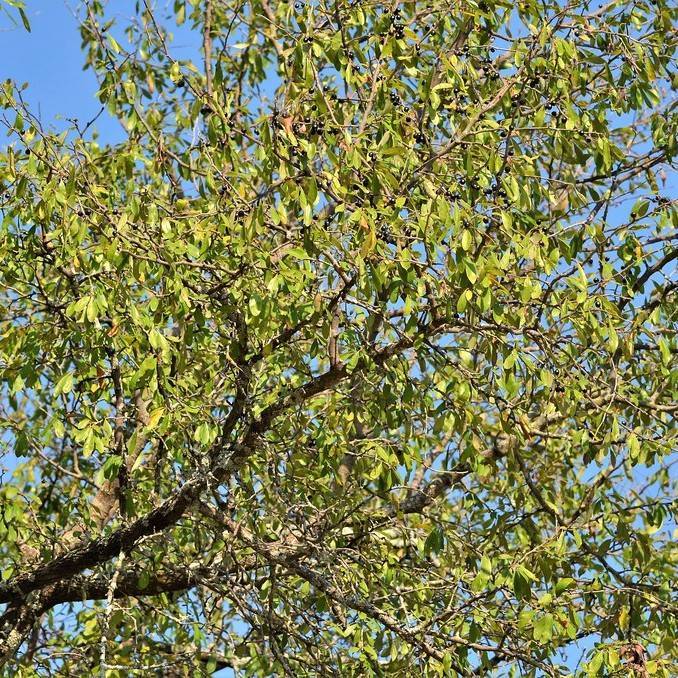
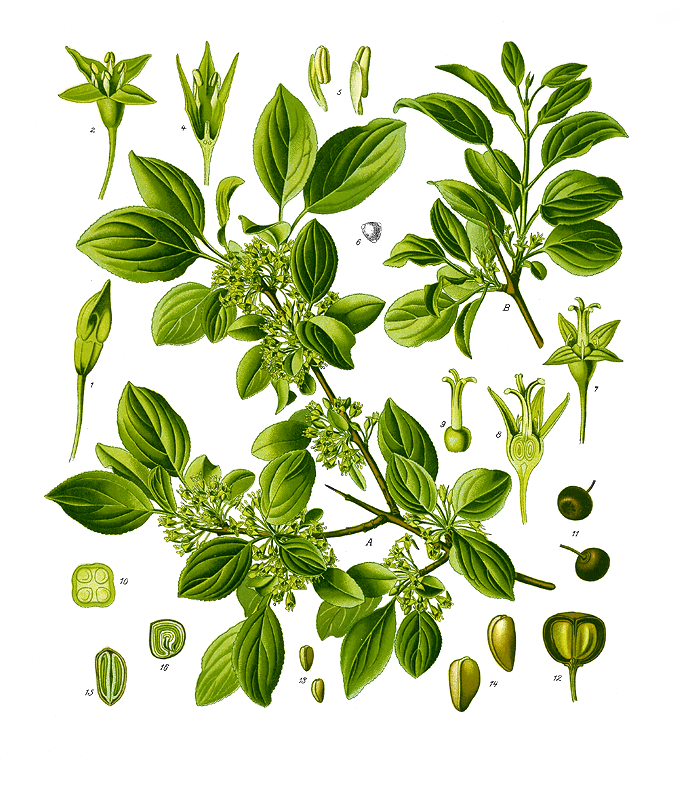
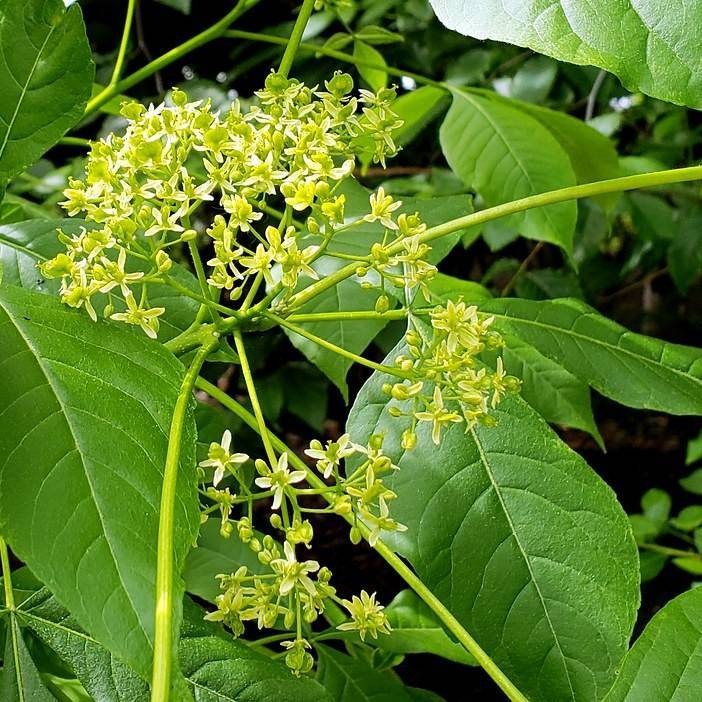
Carolina Buckthorn is a adaptable, low-maintenance native woody plant that thrives in a range of woodland and edge habitats. Its oval, finely toothed leaves turn a muted yellow in fall, while small, inconspicuous greenish-white flowers bloom in spring, followed by round, berry-like drupes that ripen to deep black in late summer. Though toxic to humans and domestic animals, the plant is a critical host for the swallowtail butterfly and a food source for many native bird species.
Care Guide
Watering
Carolina Buckthorn prefers consistent, moderate moisture, especially during its first 2 to 3 years of establishment, when it should be watered deeply once per week during dry spells. Once mature, it is highly drought-tolerant, requiring only supplemental watering during extended periods of extreme heat or aridity to prevent leaf scorch. Avoid overwatering or planting in poorly drained sites, as this can lead to root rot.
Light
This species grows best in partial shade, mimicking its native understory habitat, where it receives dappled sunlight for 4 to 6 hours per day. It can tolerate full sun in cooler climates if provided with adequate moisture, but intense, direct sun in warm southern regions may cause leaf burn and stunted growth. It also survives in full deep shade, though flowering and fruiting will be significantly reduced in low-light conditions.
Soil
Carolina Buckthorn adapts to a wide range of soil types, including sandy loam, clay, and rocky limestone soils, as long as the site offers good drainage. It prefers a neutral to slightly acidic soil pH between 6.0 and 7.5, but can tolerate mildly alkaline conditions up to a pH of 8.0 without adverse effects. Amending heavy clay soils with organic matter at planting time will improve drainage and support faster root establishment.
Fertilizer
Young Carolina Buckthorn plants benefit from a light application of balanced, slow-release 10-10-10 fertilizer in early spring, before new leaf growth emerges, to support healthy foliage and root development. Mature established plants rarely require fertilization, as they obtain sufficient nutrients from surrounding organic matter in their native habitat. Over-fertilization can lead to excessive, weak vegetative growth that is more susceptible to pest infestations.
Temperature
This plant is highly cold-hardy, thriving in USDA hardiness zones 5 through 9, withstanding winter temperatures as low as -20°F (-29°C) without significant damage. It tolerates summer heat up to 100°F (38°C) if provided with adequate moisture and partial shade in warmer zones. Late spring frost can damage newly emerged tender foliage, but the plant will typically regrow new leaves within a few weeks of cold damage.
Pruning
Prune Carolina Buckthorn in late winter, while the plant is dormant, to remove dead, damaged, or crossing branches and maintain your desired shape or size. It can be pruned into a single-trunk small tree or left to grow as a multi-stemmed shrub, depending on landscape use. Avoid heavy pruning that removes more than one-third of the plant’s total growth in a single season, as this can stress the plant and reduce fruiting.
Propagation
Carolina Buckthorn is most commonly propagated from seed, which requires 3 to 4 months of cold stratification to break dormancy before sowing in moist potting mix in spring. Semi-hardwood cuttings taken in mid-summer can also root successfully if treated with rooting hormone and kept in a humid, shaded propagation environment for 2 to 3 months. Suckers that form around the base of mature plants can be dug up and transplanted in early spring for easy vegetative propagation.
Humidity
This species tolerates a wide range of humidity levels, from the dry continental climates of the central U.S. to the high humidity of the southeastern coastal plains, with no special humidity requirements. Average ambient humidity between 40% and 70% is ideal for healthy growth, and the plant shows no adverse effects from short periods of very low or very high humidity. Avoid placing it in constantly saturated, high-humidity conditions with poor air circulation, as this increases the risk of fungal leaf spot.
Repotting
Carolina Buckthorn is rarely grown in containers long-term, as it develops a deep, extensive root system that requires space to spread. If grown in a pot for the first 1 to 2 years before landscape planting, repot annually in early spring before new growth emerges, using a well-draining potting mix and a container at least 2 inches larger in diameter than the previous pot. Once the plant reaches 3 to 4 feet tall, it should be transplanted to a permanent outdoor location for best growth.
Uses & Symbolism
Carolina Buckthorn is widely planted in native pollinator gardens and woodland restoration projects to support local bird populations, swallowtail butterflies, and other native insect species. Historically, Indigenous peoples used small, carefully prepared doses of the bark as a laxative, though its toxicity makes unregulated use extremely dangerous. Its dense, branching growth habit also makes it a useful hedge or screening plant for naturalized landscapes.
Diseases & Pests
Carolina Buckthorn is relatively disease-resistant, though it can occasionally develop fungal leaf spot and powdery mildew in conditions of high humidity and poor air circulation. Common pests include aphids, scale insects, and spider mites, which typically cause only minor leaf damage and can be controlled with horticultural oil or insecticidal soap if infestations are severe. It is not a host for oat crown rust, unlike some other Rhamnaceae species, making it safe to plant near agricultural oat crops.
Related plants
Other plants you might like if you grow Carolina Buckthorn.