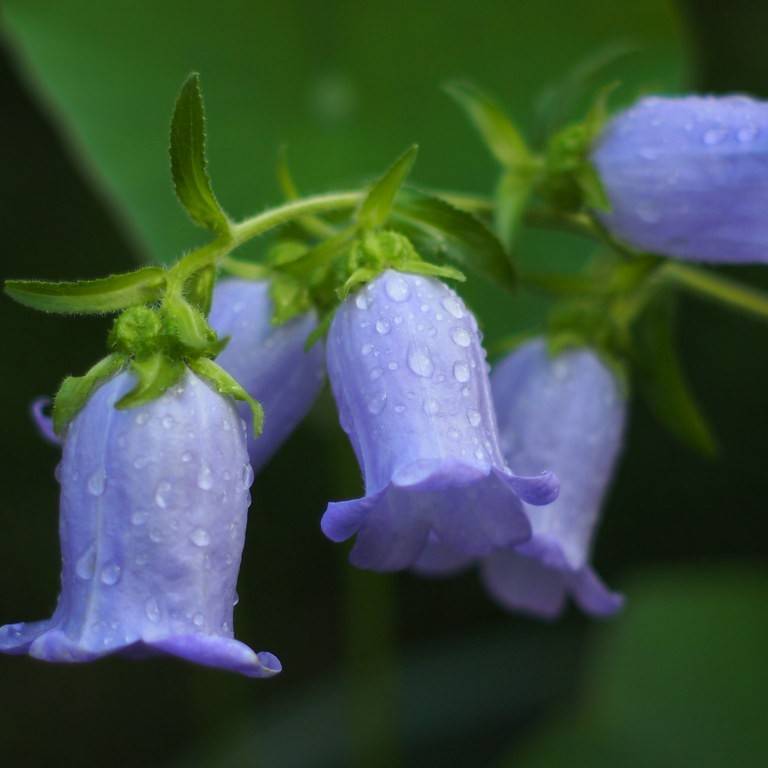
Canterbury Bellflower
Campanula medium
Overview
Canterbury Bellflower is a classic cottage garden staple with a biennial life cycle, forming a low rosette of foliage in its first year before sending up tall, upright flower stalks in its second growing season. Its signature cup-shaped blooms, which can reach 2 inches across, grow in dense clusters along the upper portion of the stems, attracting bees, butterflies, and other pollinators to garden spaces. It is widely cultivated as an ornamental for borders, cutting gardens, and cottage-style plantings, with cultivars available in single and double-flowered forms.
Care Guide
Watering
Water Canterbury Bellflower regularly to keep the soil consistently moist but not waterlogged, as saturated soil can cause root rot. Reduce watering frequency during periods of heavy rain, and avoid overhead watering to minimize fungal disease risk on foliage. Allow the top 1 inch of soil to dry out slightly between waterings in cooler weather to prevent overwatering.
Light
Plant Canterbury Bellflower in full sun to partial shade for optimal flowering, with at least 6 hours of direct sunlight daily in most growing regions. In areas with very hot, intense summer sun, provide afternoon shade to protect the foliage from scorching and extend the bloom period. Insufficient light will lead to leggy growth and reduced flower production.
Soil
Grow Canterbury Bellflower in well-drained, loamy soil with a neutral to slightly alkaline pH between 6.6 and 7.5 for best results. Amend heavy clay soils with compost or sand to improve drainage, as the plant is highly susceptible to root rot in poorly draining substrates. Add organic matter such as well-rotted manure to poor soils to boost nutrient content and support healthy growth.
Fertilizer
Feed Canterbury Bellflower with a balanced, all-purpose granular fertilizer in early spring as new growth begins to emerge, following package dosing instructions to avoid overfertilization, which can lead to excessive foliage growth at the expense of blooms. Side-dress with compost mid-season if growth appears stunted, but avoid high-nitrogen fertilizers that prioritize leaf development over flowering. Discontinue fertilizing once blooms begin to fade to prepare the plant for its natural end-of-season decline.
Temperature
Canterbury Bellflower thrives in cool to moderate temperatures between 60 and 75°F (15 and 24°C) during its active growing season, and can tolerate light frosts in both spring and fall. It is hardy in USDA zones 3 to 8, requiring a period of cold stratification over winter to trigger flowering in its second year. In regions with extremely warm winters, it may be grown as an annual by sowing seeds indoors in late winter to early spring.
Pruning
Remove spent flower heads regularly throughout the bloom period to encourage additional flowering and prevent the plant from putting energy into seed production prematurely. Cut back the entire flower stalk to the base of the foliage once all blooms have faded if you do not wish for the plant to self-sow in your garden. If self-sowing is desired, leave a few spent flower heads on the stalk to mature and disperse seed for the next generation of plants.
Propagation
Canterbury Bellflower is most commonly propagated from seed, which can be sown directly outdoors in late spring or early summer, or started indoors 8 to 10 weeks before the last expected frost date. Do not cover the seeds with soil after sowing, as they require light to germinate, which typically occurs within 14 to 21 days at temperatures between 65 and 70°F (18 and 21°C). It will readily self-sow in ideal growing conditions, with volunteer seedlings easy to transplant to desired locations in early spring.
Humidity
Canterbury Bellflower prefers average ambient humidity levels between 40 and 60%, which is typical of most temperate garden environments. High humidity combined with poor air circulation can increase the risk of fungal diseases such as powdery mildew and botrytis, so space plants 12 to 18 inches apart to promote airflow around foliage. It does not require supplemental humidity, and performs poorly in overly damp, stagnant conditions.
Repotting
Canterbury Bellflower is rarely grown in containers long-term, but if potted, it may need repotting once in its first year if it outgrows its initial container, before flowering stalks emerge in the second year. Use a container with ample drainage holes, and repot in early spring using a well-drained, loamy potting mix to avoid root rot. Once it begins its second year of growth and sends up flower stalks, avoid repotting as this can damage the root system and cause blooms to drop prematurely.
Uses & Symbolism
Canterbury Bellflower is a highly popular ornamental for cottage gardens, mixed borders, and cutting gardens, with its long-lasting, bell-shaped blooms making excellent cut flowers for fresh floral arrangements. It is often planted in pollinator gardens to support native bee and butterfly populations, as its nectar-rich flowers are a valuable food source for these beneficial insects. Historic uses include ornamental plantings in medieval monastery gardens, where it was associated with religious symbolism linked to church bells.
Diseases & Pests
Canterbury Bellflower is susceptible to common fungal diseases including powdery mildew, botrytis blight, and root rot, most often caused by overwatering, poor drainage, or insufficient air circulation around plants. Common pests include aphids, slugs, and snails, which feed on young foliage and flower buds, particularly in cool, damp weather. Prevent disease and pest issues by planting in well-drained soil, spacing plants appropriately to encourage airflow, and avoiding overhead watering to keep foliage dry.
Related plants
Other plants you might like if you grow Canterbury Bellflower.