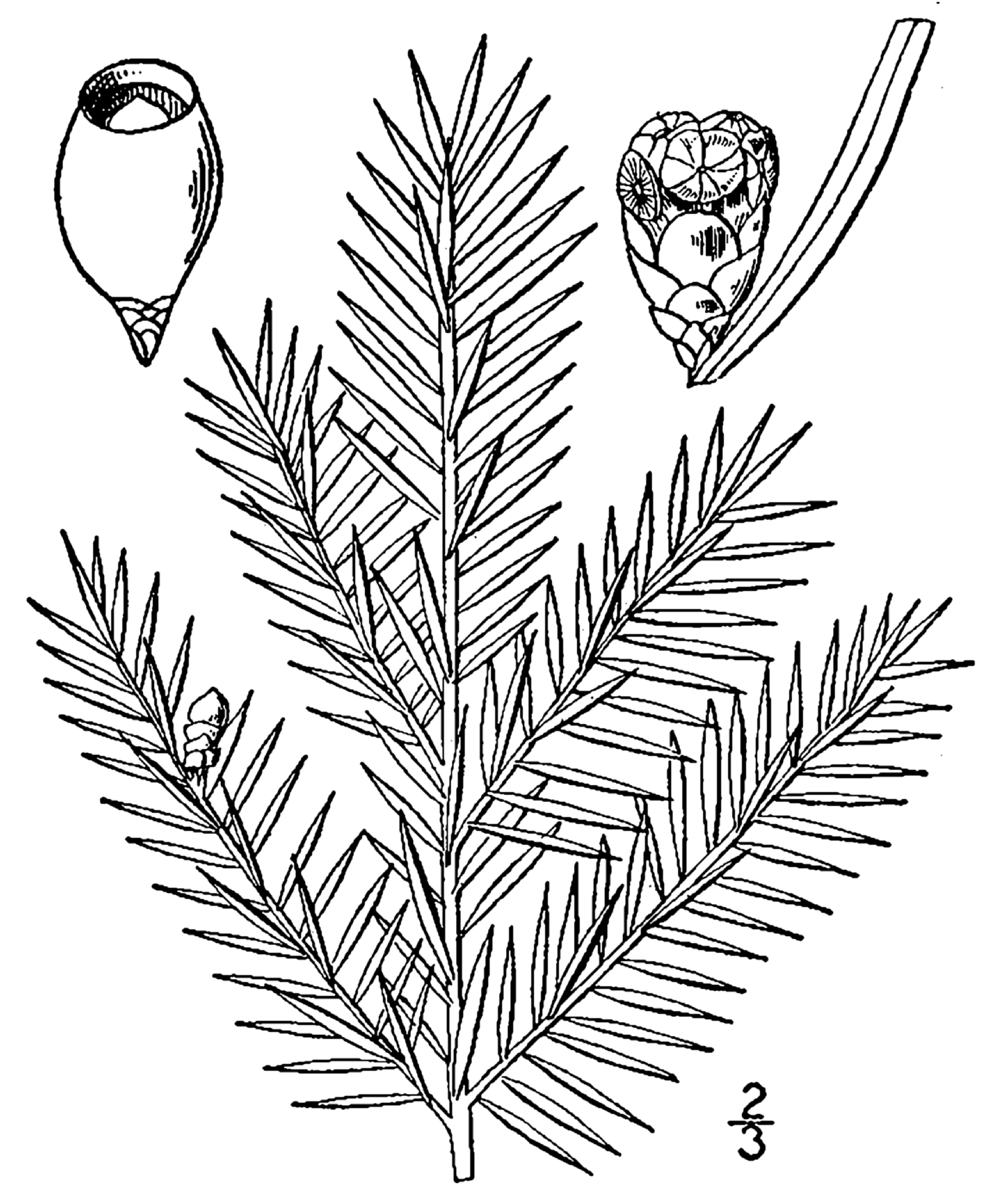
Canada Yew
Taxus canadensis
Overview
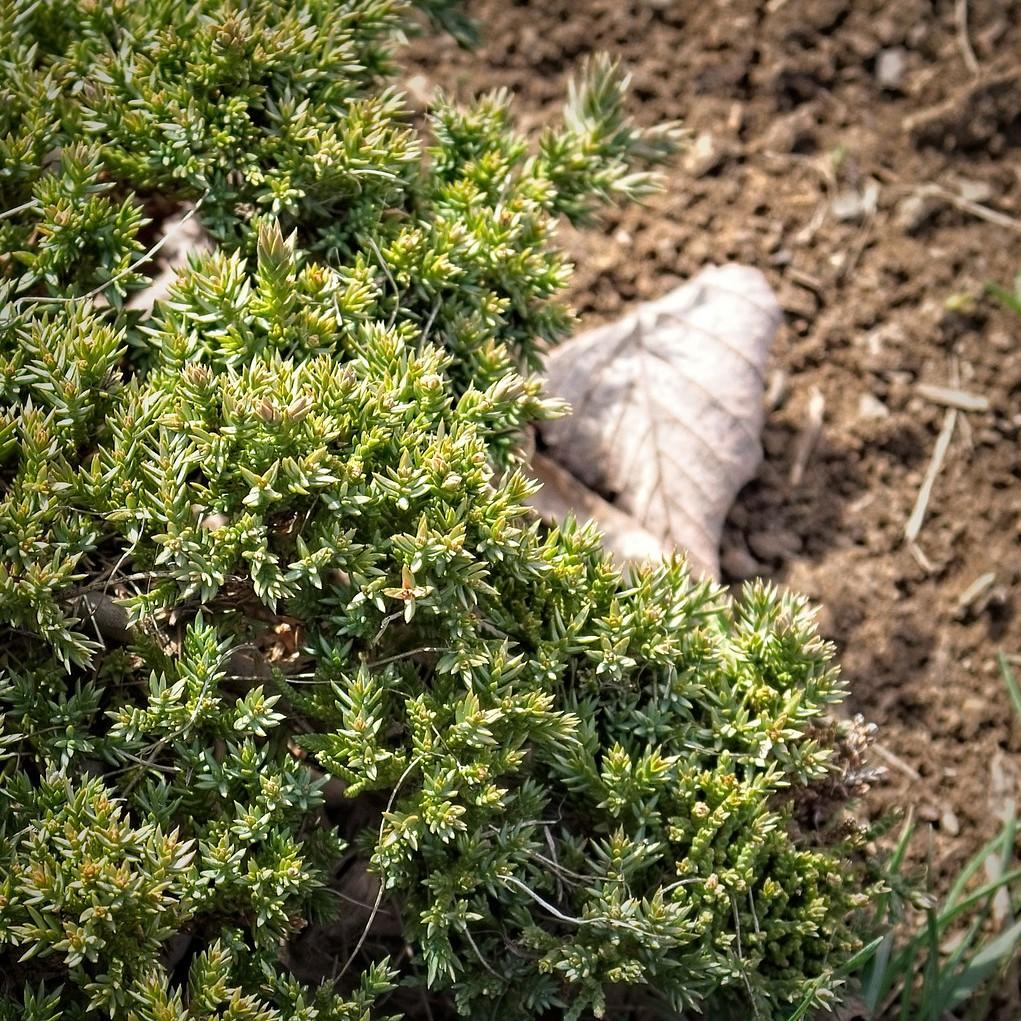
Canada Yew is a low-growing, mounding evergreen conifer that spreads via trailing stems to form dense, carpet-like colonies in cool, shaded forest understories. Unlike its upright ornamental yew relatives, it rarely grows taller than 2 feet, making it ideal as a ground cover in shaded, cool climates. Female plants produce small, bright red, cup-shaped arils in late summer that are a critical food source for native birds including ruffed grouse and cedar waxwings.
Care Guide
Watering
Canada Yew prefers consistently moist, well-drained soil and should be watered deeply once per week during dry periods, avoiding waterlogged conditions that can cause root rot. Established plants are moderately drought tolerant, but regular moisture supports denser, healthier foliage, especially in areas with partial sun exposure.
Light
This understory shrub thrives in partial to full shade, making it an excellent choice for heavily shaded garden spots where most other ground covers fail to establish. It can tolerate limited direct morning sun, but prolonged afternoon sunlight will scorch its delicate evergreen needles and cause unsightly browning.
Soil
It grows best in slightly acidic, loamy, organically rich soil with a pH between 5.0 and 6.5, though it can adapt to neutral pH levels if organic matter is regularly amended. Heavy clay soils should be improved with compost or peat moss to enhance drainage, as standing water will quickly kill shallow yew roots.
Fertilizer
Fertilize once per year in early spring with a slow-release, balanced evergreen fertilizer, applied lightly around the base of the plant to avoid burning shallow root systems. Excess fertilization can lead to leggy, weak growth, so no additional feeding is required if the plant is growing in nutrient-rich, compost-amended soil.
Temperature
Canada Yew is extremely cold hardy, surviving winter temperatures as low as -40°F (-40°C) in USDA hardiness zones 2 through 7, and requires a period of winter cold dormancy to thrive. It does not perform well in hot, humid climates above zone 7, as high summer temperatures will cause foliage dieback and increased susceptibility to pests.
Pruning
Prune in late winter or early spring before new growth emerges, trimming back stray stems to maintain the desired shape and encourage denser, bushier growth. Avoid cutting back into old, woody stems with no green foliage, as Canada Yew will not resprout from bare wood, which can leave permanent bare patches in the ground cover.
Propagation
The easiest method of propagation is by semi-hardwood cuttings taken in late summer, dipped in rooting hormone, and planted in a moist, sterile potting mix kept under indirect light until roots develop in 3 to 6 months. It can also be grown from fresh seed, but seeds require 1 to 2 years of cold stratification to germinate, and seedlings grow very slowly for the first three years.
Humidity
Canada Yew prefers moderate to high humidity levels common in its native forest understory habitat, and will tolerate average household humidity if grown as a shaded container plant. In dry, low-humidity environments, occasional misting of the foliage can prevent needle tip browning and keep the plant looking healthy.
Repotting
If grown in containers, repot every 2 to 3 years in early spring, moving to a slightly larger pot with fresh, acidic, well-drained potting mix designed for evergreens. Take care not to damage the shallow, fragile root system during repotting, and avoid planting the yew deeper than it was growing in its previous container to prevent stem rot.
Uses & Symbolism
Canada Yew is widely planted as a low-maintenance, erosion-controlling ground cover for shaded slopes, woodland gardens, and under large trees where turf grass fails to grow. The taxine alkaloids extracted from its foliage are used in the pharmaceutical industry to produce paclitaxel, a widely prescribed chemotherapy medication for multiple types of cancer. It is also planted in native wildlife gardens to provide year-round cover for small mammals and a seasonal food source for native bird species.
Diseases & Pests
The most common pests affecting Canada Yew are black vine weevils, whose larvae feed on the plant's roots, causing yellowing foliage and sudden plant death, and yew scale insects that suck sap from stems, leading to stunted growth and sooty mold growth on excreted honeydew. It is susceptible to root rot in poorly drained, waterlogged soils, and may develop needle blight in overly humid, poorly ventilated growing conditions, causing brown, dying needles on affected stems. Winter sun scald and frost damage can occur in exposed locations, leading to browning of foliage on the south and west facing sides of the plant.
Related plants
Other plants you might like if you grow Canada Yew.