Canada Thistle
Cirsium arvense
Overview
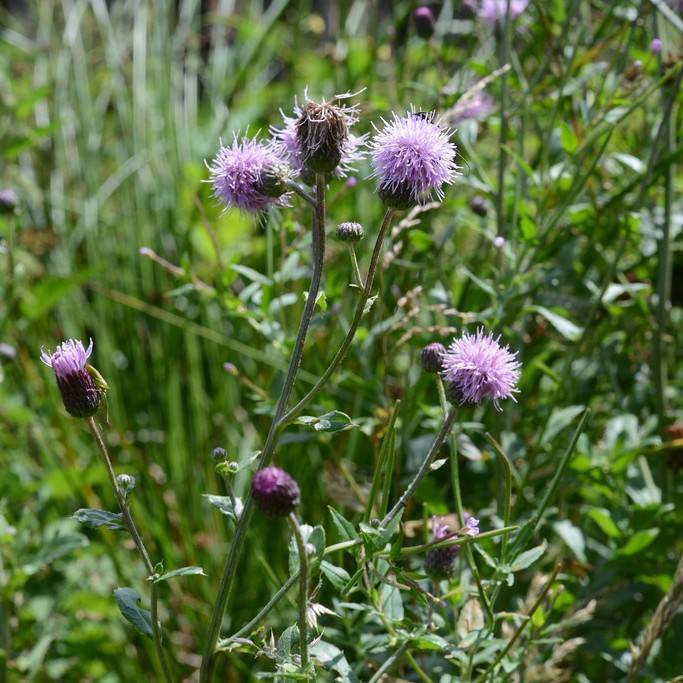
Canada thistle, despite its common name, is not native to North America, where it was introduced in the 17th century and has become a widespread invasive species in agricultural fields, pastures, and disturbed areas. It produces multiple slender, spiny stems and lobed, prickly leaves, with separate male and female plants that produce fluffy, wind-dispersed seed heads after flowering. Its deep, creeping rhizomes allow it to form dense, monotypic stands that outcompete native vegetation and reduce crop yields.
Care Guide
Watering
Canada thistle is highly drought-tolerant, thriving in a wide range of moisture conditions from moderately dry to seasonally wet sites, and requires no supplemental watering in natural or invasive settings. It can survive extended dry periods by drawing moisture from its deep, extensive rhizome network that can reach depths of 15 feet (4.5 m) or more. Overly saturated, waterlogged soils may restrict root growth and reduce its competitive advantage.
Light
This species prefers full, direct sunlight for optimal growth and flowering, requiring at least 6 hours of unobstructed light daily to produce robust stands and viable seed. It can tolerate partial shade but will exhibit reduced vigor, slower spread, and fewer flower heads in low-light conditions. Dense shade from taller, established vegetation can suppress its growth over time.
Soil
Canada thistle adapts to nearly all soil types, including clay, loam, sand, and alkaline or slightly acidic substrates, with a preference for well-drained, fertile loams high in nitrogen. It can tolerate moderate soil salinity and poor, nutrient-deficient soils where many native plants struggle to establish. It does not grow well in heavy, permanently waterlogged soils that cause rhizome rot.
Fertilizer
In agricultural settings, excess nitrogen fertilization can boost Canada thistle growth and spread, as it readily takes up available soil nutrients to fuel rhizome expansion and aboveground biomass production. No supplemental fertilization is required for this species, as it obtains all necessary nutrients from most unamended soils. Low-nutrient soils can slow its growth rate but rarely eliminate established stands.
Temperature
Canada thistle is cold-hardy, adapted to USDA hardiness zones 3 through 8, with rhizomes that can survive winter temperatures as low as -40°F (-40°C). Optimal growth occurs between 60-85°F (15-29°C), with new shoots emerging in early spring as soon as soil temperatures rise above freezing. High temperatures above 95°F (35°C) may cause temporary wilting but rarely kill established plants.
Pruning
Regular mowing or cutting of aboveground growth can reduce seed production and weaken rhizome reserves over time, though it rarely eradicates established stands unless repeated consistently for 2-3 years. Cut stems should be disposed of carefully, as fragmented rhizomes can resprout if left in contact with soil. For control, cutting should be timed just before flowering to prevent seed set.
Propagation
Canada thistle spreads primarily via vegetative growth from its extensive rhizome network, with even small 1-inch (2.5 cm) rhizome fragments capable of producing new, independent plants. It also reproduces sexually via seed, with female plants producing up to 1,500 seeds per flower head that are dispersed by wind, animals, or agricultural equipment. Seeds can remain viable in the soil seed bank for up to 20 years, making eradication extremely difficult.
Humidity
This adaptable species tolerates a wide range of humidity levels, from arid continental climates with 30% average relative humidity to humid temperate regions with 80% average humidity, with no impact on growth or spread. High humidity may increase susceptibility to foliar fungal diseases, but these rarely cause significant damage to established stands. It has no specific humidity requirements for growth or germination.
Repotting
Canada thistle is not cultivated as a desirable plant, so repotting is not a relevant practice; instead, control efforts focus on removing entire root systems to prevent resprouting. If accidentally potted in container soil, it should be disposed of entirely, including all root fragments, to avoid introducing it to new areas. Do not compost pulled plants, as rhizomes and seeds can survive standard composting temperatures.
Uses & Symbolism
While often considered a noxious weed, Canada thistle provides a valuable nectar source for native bees, butterflies, and other pollinators during its mid-summer flowering period, and its seed heads are eaten by goldfinches and other seed-eating birds. Historically, its roots were used in traditional herbal medicine to treat digestive issues and fever, though modern medicinal use is rare. In some regions, young, tender shoots are harvested before they develop spines and eaten as a cooked leafy green.
Diseases & Pests
Common pests that affect Canada thistle include the thistle stem weevil, thistle crown fly, and thistle gall fly, all of which are used as biological control agents to weaken and reduce invasive stands by feeding on stems, crowns, and seed heads. Fungal diseases such as powdery mildew, rust, and verticillium wilt may cause foliar damage but rarely kill established plants, as rhizomes remain unaffected. Root rot can occur in waterlogged soils, reducing stand density over time.
Related plants
Other plants you might like if you grow Canada Thistle.