Campanule Feuilles De Pêcher
Campanula persicifolia
Overview
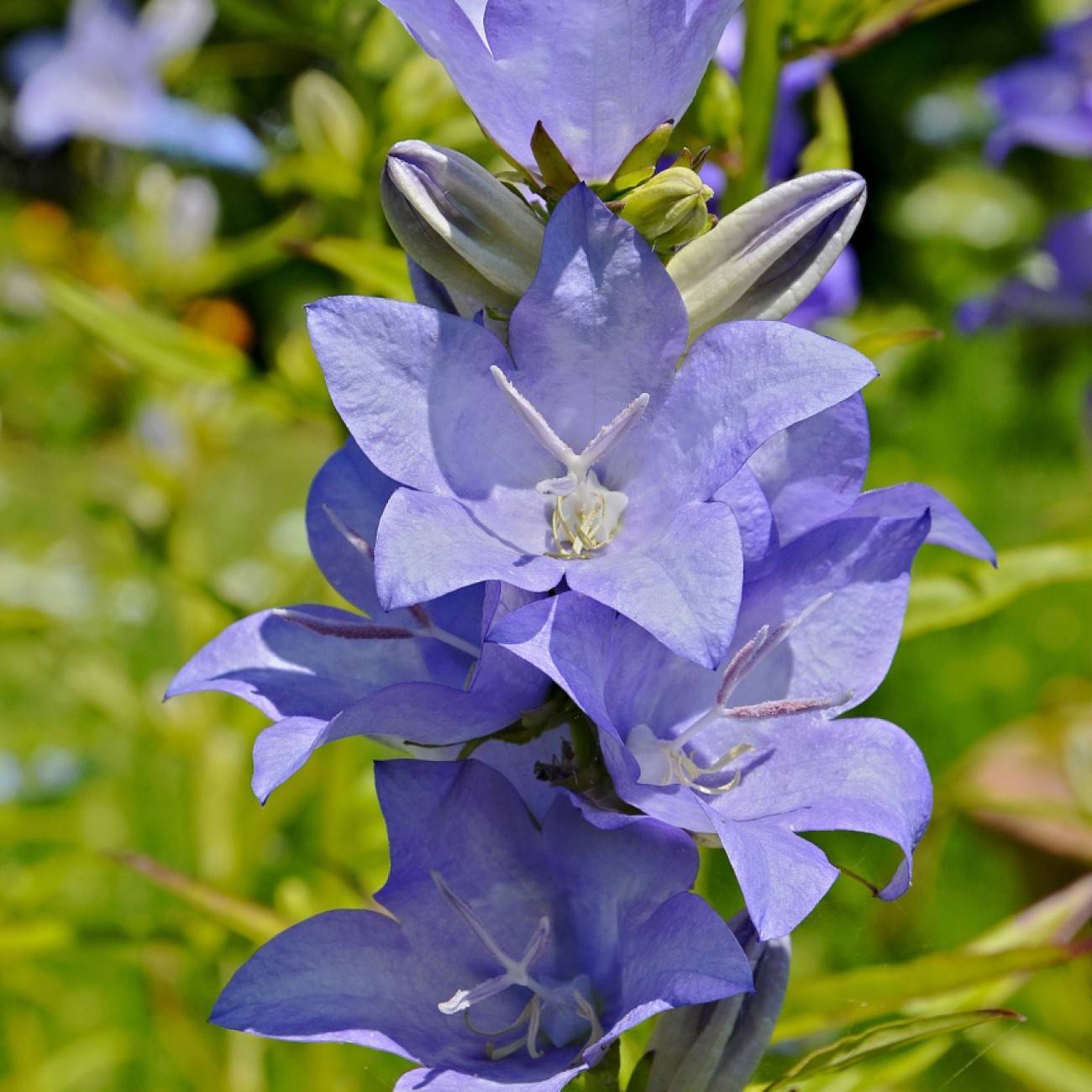
Campanule Feuilles De Pêcher, commonly called peach-leaved bellflower, is named for its narrow, glossy, lance-shaped foliage that resembles peach tree leaves. It produces loose spikes of upward or outward-facing bell-shaped blooms in early to mid summer, which attract bees, butterflies, and other pollinators to the garden. This low-maintenance species naturalizes readily in optimal conditions, making it a popular choice for cottage gardens, border edges, and cut flower arrangements.
Care Guide
Watering
Water regularly to keep the soil consistently moist but not waterlogged, providing roughly 1 inch of water per week during active growth. Reduce watering frequency in fall and winter once the plant goes dormant, allowing the top 2 inches of soil to dry out between applications to prevent root rot. Avoid overhead watering to minimize foliar disease risk, directing water to the base of the plant instead.
Light
Thrives in full sun to partial shade, with at least 6 hours of direct sunlight daily for the most abundant flowering. In regions with hot, intense summer sun, provide light afternoon shade to prevent leaf scorch and extend the bloom period. Plants grown in full shade will become leggy and produce far fewer flowers.
Soil
Prefers well-drained, fertile, loamy soil with a neutral to slightly alkaline pH between 6.0 and 8.0. It can tolerate poor, rocky soils as long as drainage is excellent, as standing water around the crown will quickly cause rot. Amend heavy clay soils with compost or coarse sand before planting to improve drainage.
Fertilizer
Apply a balanced, slow-release 10-10-10 fertilizer in early spring just as new growth emerges to support healthy foliage and bloom development. An optional light application of liquid bloom booster fertilizer can be applied when flower buds first form to encourage larger, longer-lasting blooms. Avoid over-fertilizing, as this will lead to excessive foliage growth at the expense of flowers and weak stems that flop over.
Temperature
Adaptable to a wide range of temperatures, hardy in USDA zones 3 through 8, surviving winter lows as low as -40°F (-40°C). It prefers cool summer temperatures between 60°F and 75°F (15°C to 24°C), and may go dormant early if exposed to prolonged temperatures above 85°F (29°C). Mulch around the base of the plant in late fall to insulate the roots from extreme winter temperature fluctuations.
Pruning
Deadhead spent flower spikes regularly throughout the bloom period to encourage reblooming later in the season and prevent unwanted self-seeding. Cut back the entire plant to 2 to 3 inches above the soil line after the first hard frost in fall to remove dead foliage and reduce overwintering sites for pests and diseases. Thin out overcrowded clumps every 3 to 4 years during division to improve air circulation and maintain vigorous growth.
Propagation
Most easily propagated by division in early spring or late fall, carefully digging up mature clumps and separating them into smaller sections with healthy roots and growing points before replanting. It can also be grown from seed sown directly in the garden in fall or started indoors 8 to 10 weeks before the last expected frost date, with seeds requiring light to germinate so they should not be covered with soil. Basal cuttings taken in early spring from new growth can also root successfully when placed in moist, well-drained potting mix under high humidity.
Humidity
Tolerates average ambient humidity levels between 40% and 60%, which is typical of its native temperate range. It does not require extra humidity in most garden settings, but will benefit from occasional misting during periods of extremely hot, dry weather to prevent leaf tip browning. Avoid overly humid, stagnant air around the foliage, as this increases the risk of fungal leaf spot and powdery mildew.
Repotting
If grown in containers, repot every 2 to 3 years in early spring before new growth emerges, moving to a pot one size larger with fresh, well-drained potting mix amended with compost. Ensure the container has ample drainage holes to prevent waterlogging, and plant the crown at the same depth it was growing in the previous pot to avoid rot. For garden plants, clumps only need to be lifted and divided (repotted or replanted) when they become overcrowded or bloom production declines, usually every 3 to 4 years.
Uses & Symbolism
Campanule Feuilles De Pêcher is a popular ornamental for cottage gardens, mixed borders, rock gardens, and wildflower meadows, where its delicate bell-shaped blooms add soft color and vertical interest. Its long, sturdy stems make it an excellent cut flower, with blooms lasting up to 10 days in fresh arrangements. It is also planted in pollinator gardens to support native bees, butterflies, and hummingbirds throughout the summer bloom period.
Diseases & Pests
The most common fungal issues affecting this plant are powdery mildew and leaf spot, which occur in humid, poorly ventilated conditions and can be prevented by spacing plants for good air flow and avoiding overhead watering. Slugs and snails are common pests that feed on young foliage, especially in damp, shaded areas, and can be controlled with bait, diatomaceous earth, or handpicking. Root rot may occur in heavy, waterlogged soils, so ensuring proper drainage is the most effective prevention measure for this potentially fatal condition.
Related plants
Other plants you might like if you grow Campanule Feuilles De Pêcher.