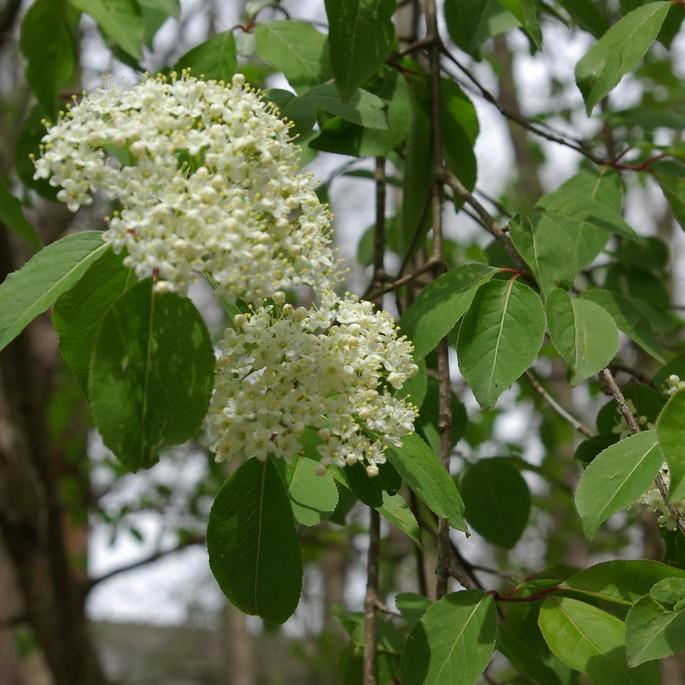
Blackhaw Viburnum
Viburnum prunifolium
Overview
Blackhaw Viburnum is a hardy, multi-stemmed deciduous shrub with a rounded, dense growth habit, named for its dark, rigid branches and plum-like foliage. In spring, it produces flat clusters of small, creamy-white flowers that attract native pollinators, followed by clusters of sweet, blue-black drupes in late summer that persist into winter. Its glossy, dark green leaves turn striking shades of red, burgundy, and purple in fall, making it a popular four-season landscape plant.
Care Guide
Watering
Blackhaw Viburnum has moderate water needs, requiring consistent moisture while establishing, typically 1 inch of water per week from rain or supplemental irrigation. Once mature, it is highly drought-tolerant, only needing additional watering during extended periods of extreme heat or dryness to prevent leaf drop. Avoid overwatering or planting in waterlogged sites, as this can lead to root rot.
Light
This shrub thrives in full sun to partial shade, with at least 4 hours of direct sunlight daily to encourage abundant flowering and fruiting. It can tolerate deeper shade, though bloom production will be reduced and growth may become more open and leggy. In hotter southern portions of its range, it benefits from light afternoon shade to prevent leaf scorch.
Soil
Blackhaw Viburnum adapts to a wide range of soil types, including clay, loam, sand, and even rocky soils, as long as the site has good drainage. It prefers slightly acidic to neutral soil with a pH between 5.5 and 7.5, but can tolerate mildly alkaline conditions as well. Amending planting sites with organic matter such as compost will improve growth for young shrubs, but it is not required for established plants.
Fertilizer
This low-maintenance shrub rarely requires regular fertilization if planted in moderately fertile soil. For young plants or those growing in very poor soil, apply a balanced, slow-release 10-10-10 fertilizer in early spring before new growth emerges. Avoid over-fertilizing, as this can lead to excessive soft growth that is susceptible to pest damage and reduced flowering.
Temperature
Blackhaw Viburnum is extremely cold-hardy, suitable for USDA hardiness zones 3 through 9, tolerating winter temperatures as low as -40°F (-40°C). It can withstand summer temperatures up to 100°F (38°C) as long as it has adequate moisture during extreme heat. Late spring frosts can damage emerging flower buds, but the shrub will typically recover and produce new foliage the same season.
Pruning
Prune Blackhaw Viburnum immediately after flowering finishes in late spring, as flower buds form on the previous year’s growth, and pruning later in the season will remove next year’s blooms. Remove any dead, damaged, or crossing branches to improve air circulation and maintain the shrub’s natural rounded shape. It can be heavily pruned to form a hedge or small tree, though heavy pruning will reduce fruit production for 1-2 seasons.
Propagation
Blackhaw Viburnum is most easily propagated from softwood cuttings taken in early summer, treated with rooting hormone, and placed in a well-draining, moist medium under high humidity until roots form in 6-8 weeks. It can also be grown from seed, though seeds require 2-3 months of cold stratification to break dormancy and may take up to 18 months to germinate. Suckers that form around the base of mature shrubs can be dug up and transplanted in early spring or late fall for simple clonal propagation.
Humidity
This shrub adapts well to a wide range of humidity levels, thriving in both the humid southeastern United States and the drier midwestern regions. Average ambient humidity between 40% and 70% is ideal for healthy growth, but it can tolerate lower humidity as long as soil moisture is adequate. Good air circulation around the foliage helps prevent fungal leaf spots in areas with very high humidity.
Repotting
Blackhaw Viburnum is rarely grown in containers long-term, as its large root system requires significant space to develop. If grown as a container specimen for a short period, repot young shrubs every 2-3 years in early spring using a high-quality, well-draining potting mix, moving to a container 2-3 inches larger than the previous one. Once shrubs reach 6 feet tall, they are best transplanted to a permanent in-ground location to avoid root binding.
Uses & Symbolism
Blackhaw Viburnum is widely planted as an ornamental landscape shrub for its four-season interest, used as a specimen plant, hedge, or naturalized border in native and wildlife gardens. Its sweet, edible berries can be eaten fresh, cooked into jams and jellies, or left on the shrub to feed birds, squirrels, and other wildlife through the winter. Historically, its bark was used in traditional herbal medicine to treat gynecological conditions and muscle spasms, and its hard, dense wood is occasionally used for small woodworking projects.
Diseases & Pests
Blackhaw Viburnum is relatively pest and disease resistant, though it can occasionally be affected by powdery mildew, leaf spot, and rust in areas with poor air circulation and high humidity. Common pests include aphids, viburnum leaf beetles, and scale insects, which can be controlled with horticultural oil or insecticidal soap if infestations become severe. Root rot can occur in poorly drained, waterlogged soils, so ensuring proper site drainage is the best preventative measure.
Related plants
Other plants you might like if you grow Blackhaw Viburnum.