Byzantine Gladiolus
Gladiolus communis subsp. byzantinus
Overview
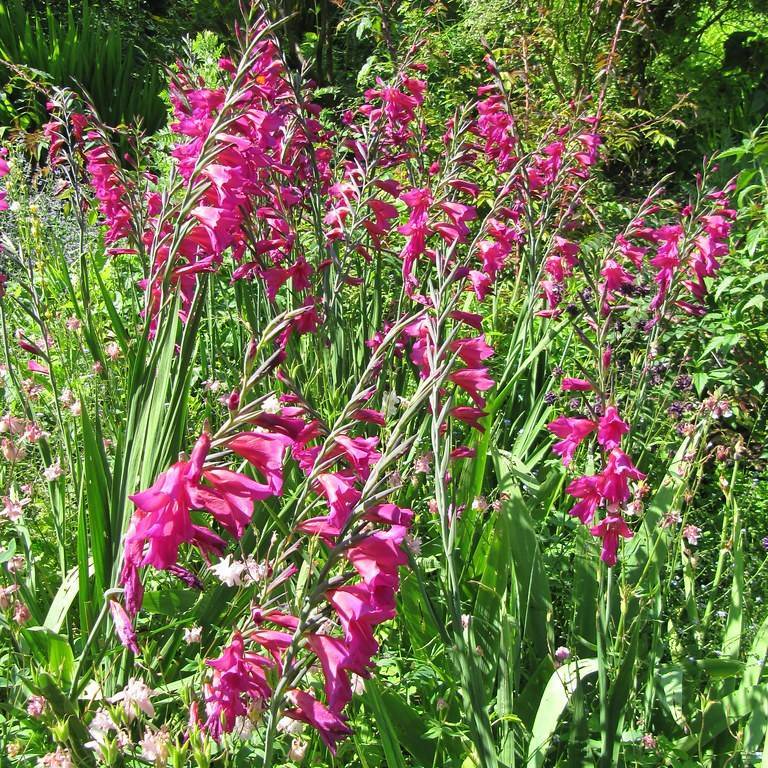
Byzantine gladiolus is a robust, cold-hardy subspecies of common gladiolus, distinguished by its dense spikes of deep magenta, funnel-shaped flowers that bloom in mid to late spring. Unlike tender hybrid gladioli, it tolerates light frosts and naturalizes readily in suitable climates, forming clumps over time. Its stiff, sword-shaped gray-green foliage emerges in early spring, creating a vertical accent in garden beds before flowers appear.
Care Guide
Watering
Water regularly during active growth in spring, keeping soil consistently moist but not waterlogged to prevent corm rot. Reduce watering gradually once flowers fade and foliage begins to yellow in summer, allowing corms to dry out during their dormant period.
Light
Plant in full sun, receiving at least 6 hours of direct sunlight daily for the most abundant blooms and sturdiest stems that do not require staking. It can tolerate partial shade, but flowering may be reduced and stems may become leggy and prone to bending.
Soil
Thrives in well-drained, sandy loam soil with a neutral to slightly alkaline pH. Avoid heavy, clay soils that hold excess moisture, as this will cause corms to rot during dormancy; amend heavy soils with sand or compost to improve drainage before planting.
Fertilizer
Apply a balanced, slow-release fertilizer in early spring when new foliage emerges to support healthy growth and flower development. Avoid over-fertilizing with high-nitrogen formulas, which can promote excessive foliage growth at the expense of blooms and increase susceptibility to disease.
Temperature
Performs best in USDA hardiness zones 6 to 10, tolerating winter temperatures as low as -10°F (-23°C) if corms are planted 4-6 inches deep and mulched in colder zones. In regions with harsher winters, lift corms in fall after foliage dies back, store them in a cool, dry place over winter, and replant in spring.
Pruning
Remove spent flower spikes after blooming to prevent the plant from expending energy on seed production, but leave foliage intact until it yellows and dies back naturally to allow corms to store energy for the next growing season. Cut back dead foliage to ground level in late summer or early fall once it has fully withered.
Propagation
Easily propagated by dividing cormels, the small offset corms that form around the base of mature parent corms, during dormancy in late summer or fall. Separate cormels from the main corm, plant them 2-3 inches deep in prepared soil, and they will typically reach flowering size in 1-2 growing seasons.
Humidity
Adaptable to a wide range of humidity levels, thriving in the dry to moderate humidity typical of its native Mediterranean range. High humidity during dormancy can increase the risk of corm rot, so ensure soil is well-drained and avoid overwatering during summer and winter dormant periods.
Repotting
If grown in containers, repot every 2-3 years during dormancy, lifting and dividing crowded corms to prevent overcrowding and maintain robust flowering. Use a well-drained potting mix formulated for bulbs, and ensure containers have adequate drainage holes to prevent moisture buildup around corms.
Uses & Symbolism
Widely planted in cottage gardens, Mediterranean-themed landscapes, and cutting gardens for its long-lasting, eye-catching spring blooms that work well in fresh floral arrangements. Its ability to naturalize makes it ideal for mass planting in meadows, border edges, and rock gardens where it can spread gently without becoming invasive. Historically, it has been used in traditional Mediterranean folk medicine for its astringent properties, though consumption is not recommended due to its toxicity.
Diseases & Pests
Susceptible to corm rot in poorly drained soils, caused by fungal pathogens such as Fusarium and Pythium, which can be prevented by ensuring proper drainage and avoiding overwatering. Common pests include gladiolus thrips, which feed on flower buds and foliage causing discoloration and distortion, and aphids, which cluster on new growth and can spread viral diseases; these can be controlled with insecticidal soap or neem oil applications. It may also develop botrytis blight in cool, damp conditions, which causes gray mold on flowers and foliage; improve air circulation around plants to reduce risk.
Related plants
Other plants you might like if you grow Byzantine Gladiolus.
%22%2F%3E%0A%20%20%20%20%20%20%3Ccircle%20cx%3D%22920%22%20cy%3D%22180%22%20r%3D%2290%22%20fill%3D%22%23cfe8d5%22%2F%3E%0A%20%20%20%20%20%20%3Cpath%20d%3D%22M600%20590c-90-180-215-255-310-280%200%20165%20118%20296%20270%20296h40z%22%20fill%3D%22%2379b88e%22%2F%3E%0A%20%20%20%20%20%20%3Cpath%20d%3D%22M600%20590c80-150%20198-212%20302-228-8%20142-123%20255-270%20255h-32z%22%20fill%3D%22%235c9f73%22%2F%3E%0A%20%20%20%20%20%20%3Cpath%20d%3D%22M600%20610V360%22%20stroke%3D%22%234f8c64%22%20stroke-width%3D%2218%22%20stroke-linecap%3D%22round%22%2F%3E%0A%20%20%20%20%20%20%3Ctext%20x%3D%22600%22%20y%3D%22700%22%20text-anchor%3D%22middle%22%20font-family%3D%22Arial%2C%20sans-serif%22%20font-size%3D%2244%22%20fill%3D%22%23365c45%22%3E%0A%20%20%20%20%20%20%20%20Plant%20image%20coming%20soon%0A%20%20%20%20%20%20%3C%2Ftext%3E%0A%20%20%20%20%3C%2Fsvg%3E%0A%20%20)