Cat Mint
Nepeta cataria
Overview
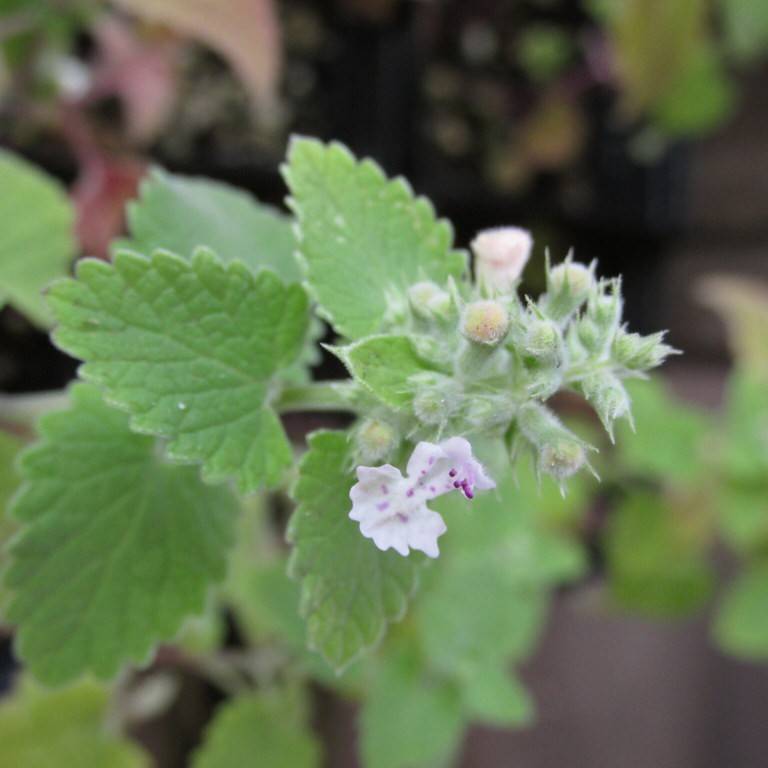
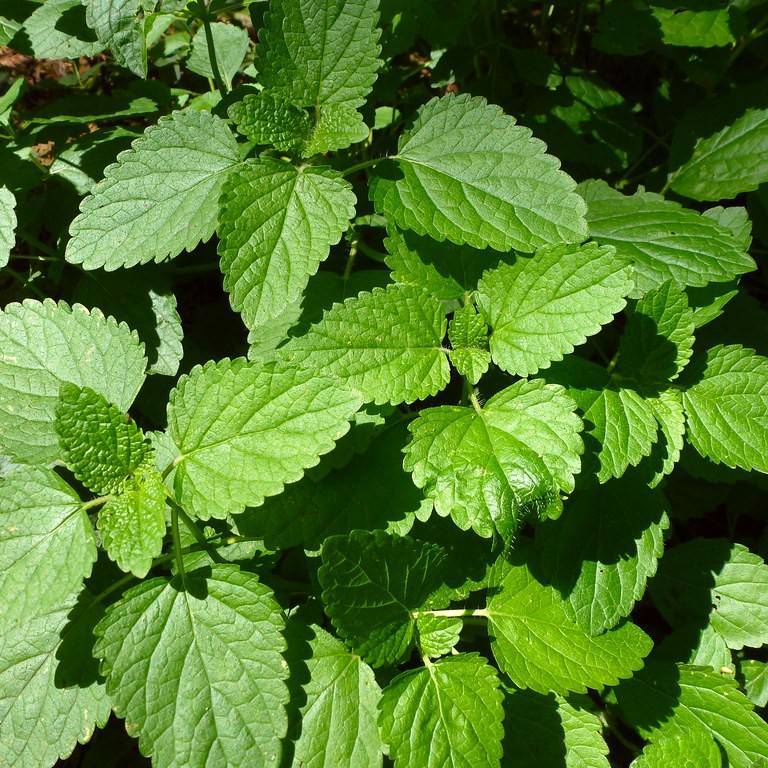
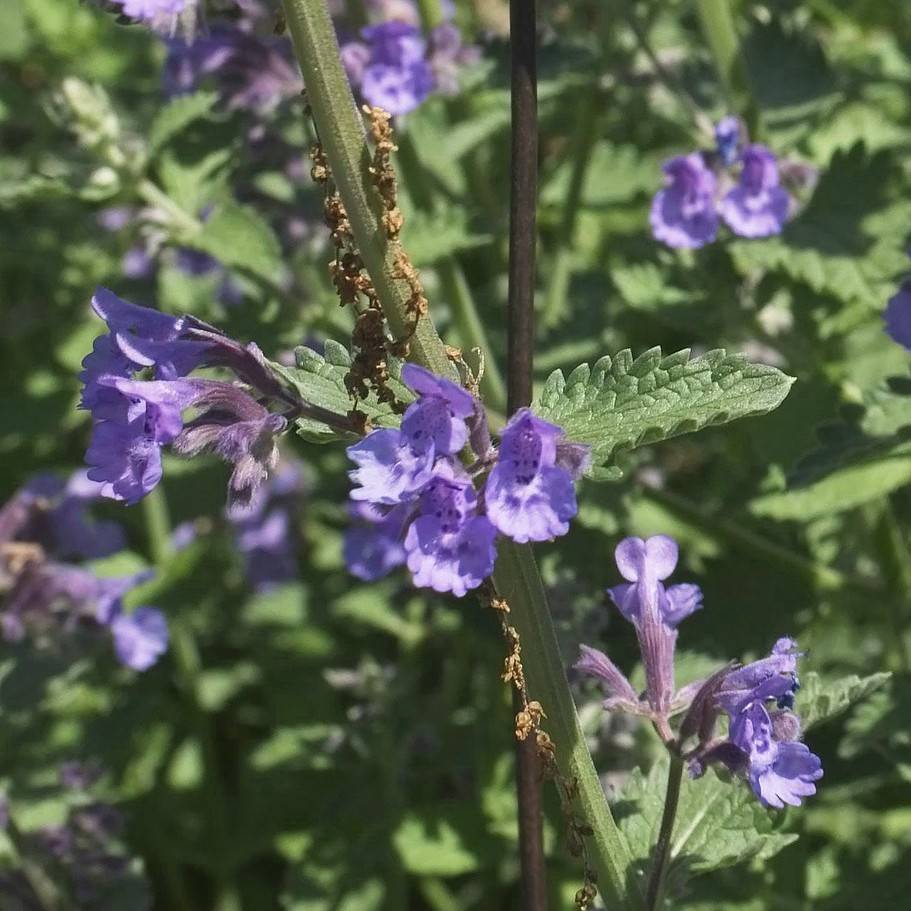
Cat mint, often confused with catnip, is a clump-forming herbaceous perennial with soft, gray-green, toothed foliage that emits a sharp, minty aroma when crushed. It produces dense spikes of tiny, tubular lavender or white flowers from late spring to early fall, drawing pollinators like bees, butterflies, and hummingbirds to garden beds. The plant is highly cold-hardy and adaptable, thriving in neglected spots where other ornamentals struggle to grow. Approximately 70-80% of domestic cats exhibit a positive reaction to its foliage, which contains the compound nepetalactone that triggers playful, relaxed behavior in felines.
Care Guide
Watering
Cat mint is drought-tolerant once established, requiring only occasional deep watering during prolonged dry spells; overwatering will quickly lead to root rot. Newly planted specimens should be watered regularly for the first 2-3 months to help them develop a strong root system, then allowed to dry out completely between waterings. Avoid overhead watering to reduce risk of foliar fungal diseases, directing water directly to the base of the plant instead.
Light
This plant grows best in full sun, receiving at least 6 hours of direct sunlight daily to produce dense foliage and abundant blooms. It can tolerate partial shade, though plants grown in shadier spots will become leggy, produce fewer flowers, and have a weaker aroma. In extremely hot, arid climates, a small amount of afternoon shade will prevent leaf scorch during the hottest summer months.
Soil
Cat mint adapts to nearly any well-drained soil type, including sandy, loamy, or even poor, rocky soils with low nutrient content. It prefers a neutral to slightly alkaline pH between 6.1 and 7.8, but will tolerate mildly acidic conditions as long as drainage is excellent. Heavy clay soils that hold moisture should be amended with coarse sand or compost before planting to prevent waterlogging around the roots.
Fertilizer
This low-feeding plant rarely needs supplemental fertilization, as excessive nutrients will cause it to produce lanky, weak growth with fewer flowers. If growing in extremely poor soil, a single application of balanced, slow-release 10-10-10 fertilizer in early spring is sufficient to support growth throughout the growing season. Avoid high-nitrogen fertilizers entirely, as they will promote foliage growth at the expense of blooms and reduce the concentration of aromatic compounds in the leaves.
Temperature
Cat mint is exceptionally cold-hardy, surviving winter temperatures as low as -40°F (-40°C) in USDA hardiness zones 3 through 9. It thrives in average summer temperatures between 60-85°F (15-29°C), and will go partially dormant in extended periods of heat above 90°F (32°C), though it will rebound once temperatures cool. Mild winter frost will kill back above-ground foliage, but the root system will remain intact and produce new growth in early spring.
Pruning
Cut back the entire plant by half after its first flush of blooms in mid-summer to encourage a second, heavier round of flowering in early fall and prevent the plant from self-seeding aggressively across the garden. In late fall or early spring, trim all dead, woody stems down to 2-3 inches above the soil line to make room for fresh new growth. Remove any yellowed or damaged foliage throughout the growing season to improve air circulation and reduce pest and disease risk.
Propagation
Cat mint is most easily propagated by dividing mature clumps every 3-4 years in early spring or late fall, separating the root ball into smaller sections with at least 2-3 growth points each before replanting. It can also be grown from stem cuttings taken in late spring or early summer, rooting 4-6 inch cuttings of soft, new growth in moist perlite or potting mix within 2-3 weeks. Seeds can be sown directly outdoors in early spring after the last frost, or started indoors 6-8 weeks before the last frost date, though seeds may take up to 20 days to germinate.
Humidity
Cat mint tolerates a wide range of humidity levels, growing well in both dry, arid climates and moderately humid regions as long as air circulation around the foliage is good. High humidity combined with poor air flow increases the risk of powdery mildew and other fungal diseases, so space plants at least 18 inches apart to allow for proper ventilation. It does not require any misting or supplemental humidity, even when grown indoors as a potted plant.
Repotting
Potted cat mint should be repotted every 1-2 years in early spring, or when roots begin to grow out of the drainage holes at the bottom of the pot. Choose a container that is 1-2 inches larger than the current root ball, with multiple drainage holes to prevent water buildup, and use a fast-draining, sandy potting mix to mimic its native growing conditions. After repotting, water lightly and place the plant in full sun to help it adjust to its new container.
Uses & Symbolism
Cat mint is widely planted in pollinator gardens to attract bees, butterflies, and hummingbirds, and works well as a low edging plant, ground cover, or addition to rock gardens. Dried leaves and stems can be used to make cat toys, or brewed into a mild, calming herbal tea for human consumption that is said to relieve minor stress and digestive upset. Its strong aromatic foliage also acts as a natural pest repellent, deterring aphids, squash bugs, and deer from nearby vegetable and ornamental plantings.
Diseases & Pests
Cat mint is largely pest and disease resistant, though overwatered plants may develop root rot, and those grown in humid, poorly ventilated conditions can contract powdery mildew on their foliage. Spider mites and whiteflies may infest stressed plants, especially those grown indoors, and can be treated with a strong spray of water or neem oil applied to the affected foliage. Slugs and snails may occasionally feed on young, tender new growth in moist spring conditions, and can be controlled with copper tape or organic slug bait around the base of plants.
Related plants
Other plants you might like if you grow Cat Mint.