Buffalo Currant
Ribes odoratum
Overview
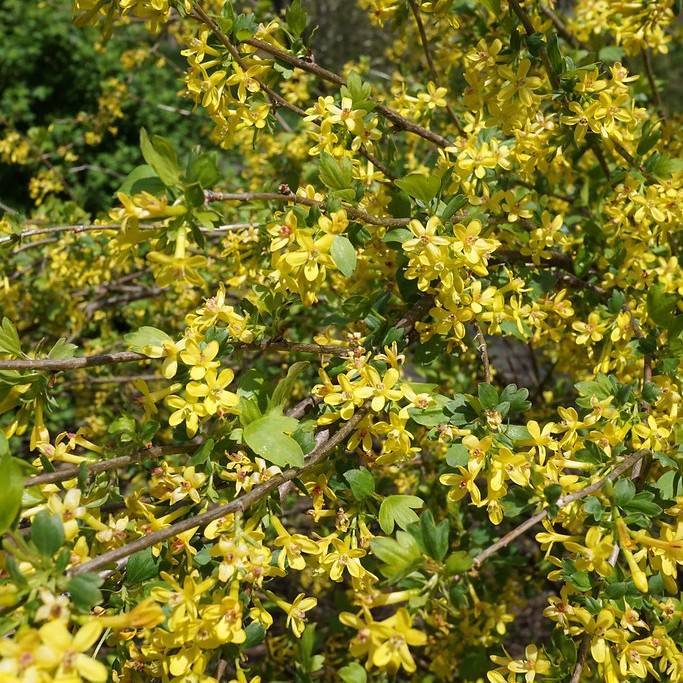
Buffalo currant, also called clove currant for its spicy, clove-like floral scent, is a deciduous shrub prized for its ornamental and edible traits. It produces clusters of bright yellow, tubular flowers in early spring, followed by round, dark purple to black berries in mid to late summer. Adaptable to harsh prairie and woodland edge conditions, it is a low-maintenance choice for xeriscapes, native plant gardens, and edible landscapes.
Care Guide
Watering
Water newly planted buffalo currant regularly for the first growing season to establish a deep root system, keeping soil evenly moist but not waterlogged. Once established, it is highly drought-tolerant, requiring only occasional supplemental watering during extended hot, dry periods to support fruit production. Avoid overwatering, as soggy soil can cause root rot and fungal issues.
Light
Thrives in full sun, which encourages maximum flowering and fruit production, though it tolerates partial shade, especially in warmer southern climates. In dense shade, growth may become leggy, flowering will be sparse, and berry yields will be significantly reduced. Position it in a spot with at least 6 hours of direct sunlight daily for best performance.
Soil
Adaptable to a wide range of soil types, including sandy, loam, clay, and rocky soils, as long as the site has good drainage. It tolerates mildly acidic to slightly alkaline pH levels, and is even moderately tolerant of saline soils common in some prairie regions. Amending heavy clay soil with organic matter at planting time will improve drainage and support faster establishment.
Fertilizer
Buffalo currant is a light feeder that rarely requires heavy fertilization, especially when grown in native, organically rich soil. Apply a balanced, slow-release 10-10-10 fertilizer in early spring before new growth emerges if the plant shows signs of poor vigor, such as stunted growth or pale foliage. Avoid over-fertilizing with high-nitrogen products, which can promote excessive leaf growth at the expense of flowers and fruit.
Temperature
Hardy in USDA zones 3 to 8, tolerating winter temperatures as low as -40°F (-40°C) without winter protection in most of its native range. It thrives in temperate to semi-arid climates, tolerating summer temperatures up to 100°F (38°C) if provided with occasional supplemental water. Late spring frosts can damage emerging flower buds, so avoid planting it in low-lying frost pockets where cold air accumulates.
Pruning
Prune buffalo currant in late winter or early spring while the plant is dormant, removing dead, damaged, or crossing branches to improve air circulation and reduce disease risk. Once the shrub is 3 to 4 years old, remove up to one-third of the oldest, woodiest stems each year to encourage new, productive growth that supports heavier flowering and fruiting. You can also shear the shrub lightly after flowering if you prefer a more formal, compact shape, though this may reduce the number of berries produced that season.
Propagation
The most reliable propagation method is hardwood cuttings taken in late winter from dormant, one-year-old stems, planted directly in moist, well-drained soil where they will root by mid-spring. It can also be propagated from seed collected from fully ripe berries in late summer, though seeds require 3 to 4 months of cold stratification to germinate successfully, and seedlings may not retain the exact traits of the parent plant. Suckers that grow from the root system can be dug up and transplanted in early spring or late fall to create new plants with minimal effort.
Humidity
Tolerates a wide range of humidity levels, from the dry air of semi-arid prairies to the moderate humidity of eastern woodland edges. It does not require supplemental humidity when grown outdoors, and high humidity is only a concern if air circulation is poor, which can increase the risk of powdery mildew on foliage. Avoid planting it in overly crowded, humid spots to keep foliage healthy.
Repotting
Buffalo currant is rarely grown in containers long-term, as its deep, spreading root system prefers in-ground planting. If grown in a large container for a season or two, repot it in early spring before new growth begins, moving it to a pot 2 to 3 inches larger than the current one with a well-draining potting mix amended with compost. Once the shrub reaches 3 feet tall, it is best transplanted to a permanent in-ground location for optimal health and growth.
Uses & Symbolism
The tart, vitamin C-rich berries are edible raw, though they are most commonly used to make jams, jellies, pies, and wines, with a flavor similar to black currants. The fragrant spring flowers attract bees, butterflies, and hummingbirds, while the berries provide food for songbirds, game birds, and small mammals, making it a valuable addition to wildlife gardens. Its drought tolerance and spreading root system also make it useful for erosion control on slopes and in degraded prairie restoration projects.
Diseases & Pests
Buffalo currant is relatively disease-resistant, though it can be affected by powdery mildew in humid, poorly ventilated conditions, which presents as a white powdery coating on foliage and can be managed by improving air circulation and applying fungicidal soap if needed. Common pests include aphids, which cluster on new growth and can be controlled with a strong jet of water or neem oil, and currant fruit flies, which lay eggs in developing berries and can be managed by removing fallen fruit around the base of the plant each year. It is an alternate host for white pine blister rust, so it should not be planted within 1,000 feet of white pine trees in regions where that fungal disease is a concern.
Related plants
Other plants you might like if you grow Buffalo Currant.