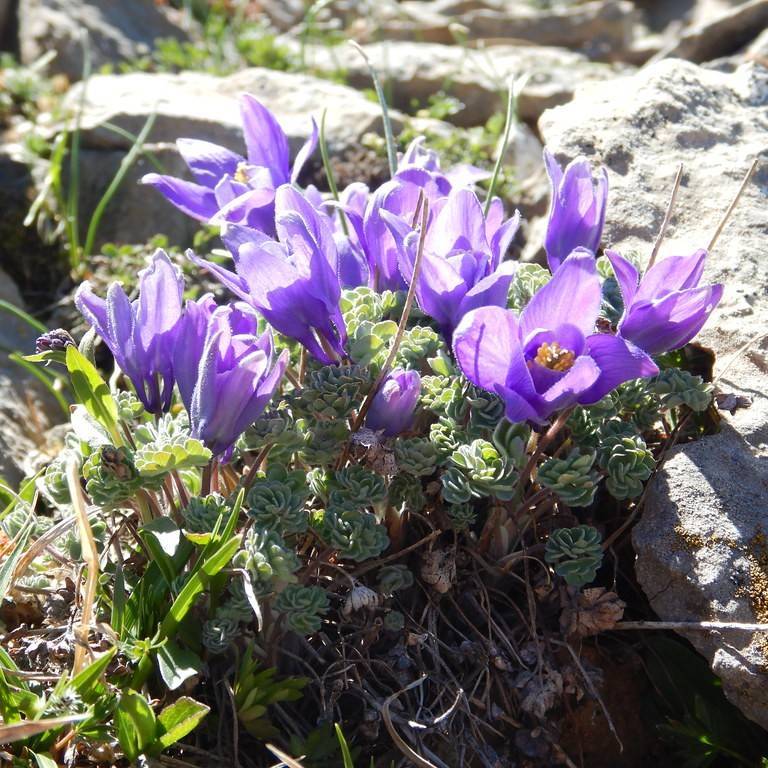
Blue Limestone Columbine
Aquilegia jonesii
Overview
Blue Limestone Columbine is a rare, compact alpine perennial named for its strict preference for calcium-rich limestone substrates in high-elevation rocky environments. Its distinctive nodding, short-spurred flowers bloom in saturated shades of blue to violet, sitting just above dense mounds of small, glaucous, dissected foliage. This slow-growing species is highly prized by rock garden enthusiasts for its diminutive size and unusual flower color, though it requires very specific growing conditions to thrive outside its native range.
Care Guide
Watering
Water regularly during the active spring and summer growing season, allowing the top 1 inch of soil to dry out completely between waterings to prevent root rot. Reduce watering drastically in fall and winter, keeping the soil barely moist while the plant is dormant to avoid rotting its shallow, sensitive root system.
Light
Thrives in full sun in cooler alpine and high-elevation climates, but benefits from light afternoon shade in warmer lowland growing conditions to prevent foliage scorch. Avoid deep, consistent shade, as it will reduce flowering and cause the compact foliage to stretch and become leggy.
Soil
Requires sharply draining, gritty, alkaline to neutral soil with high limestone content to match its native calcareous habitat; amend standard potting mix with crushed limestone, coarse sand, and gravel to improve drainage and adjust pH. Heavy, water-retentive soils are deadly to this species, as its shallow roots are highly susceptible to rot in saturated conditions.
Fertilizer
Feed very sparingly once per year in early spring with a diluted, low-nitrogen balanced fertilizer; over-fertilization causes excessive, weak foliage growth and reduces flowering. Avoid high-nitrogen formulas entirely, as they encourage soft growth that is prone to pest damage and winter kill.
Temperature
Adapted to cold alpine climates, it tolerates winter temperatures as low as -30°F (-34°C) when planted in well-drained soil, and requires a 6-8 week cold dormancy period in winter to rebloom the following season. It struggles in hot, humid summer climates above 85°F (29°C), where it often declines rapidly without consistent cooling and sharp drainage.
Pruning
Deadhead spent flower stems immediately after blooming to prevent unwanted self-seeding and encourage the plant to direct energy into root and foliage growth for the next season. Cut back any yellowed or damaged foliage in late fall to tidy the plant and reduce overwintering pest and disease habitat.
Propagation
Most reliably propagated from fresh seed sown in fall directly outdoors or in cold frames, as seed requires 8-12 weeks of cold stratification to germinate successfully in spring. Vegetative propagation via division is possible but rarely successful, as the plant has a delicate, taproot-like root system that does not tolerate disturbance well.
Humidity
Prefers low to moderate humidity levels between 30-50%, typical of its native dry alpine environment; high humidity above 60% increases the risk of fungal leaf spots and root rot. Ensure consistent air circulation around the plant at all times to reduce moisture buildup on foliage and around the root crown.
Repotting
Repot only when absolutely necessary, every 3-4 years at most, as the sensitive root system is easily damaged during disturbance. Repot in early spring before new growth emerges, using a gritty, limestone-amended potting mix, and avoid disturbing the root ball as much as possible to minimize transplant shock.
Uses & Symbolism
Primarily grown as a specialty ornamental in alpine rock gardens, trough gardens, and crevice gardens where its compact size and unusual blue flowers can be showcased. It is also used in native plant conservation gardens to support local pollinator species, including bumblebees that are adapted to access nectar from its spurred flowers.
Diseases & Pests
The most common issues are root rot and crown rot caused by overwatering or poorly draining soil, which can kill the plant rapidly if not corrected. Fungal leaf spots and powdery mildew may occur in high-humidity conditions or if foliage stays wet for extended periods, and aphids and leaf miners may occasionally feed on new growth.
Related plants
Other plants you might like if you grow Blue Limestone Columbine.