Blue Joint Reedgrass
Calamagrostis canadensis
Overview
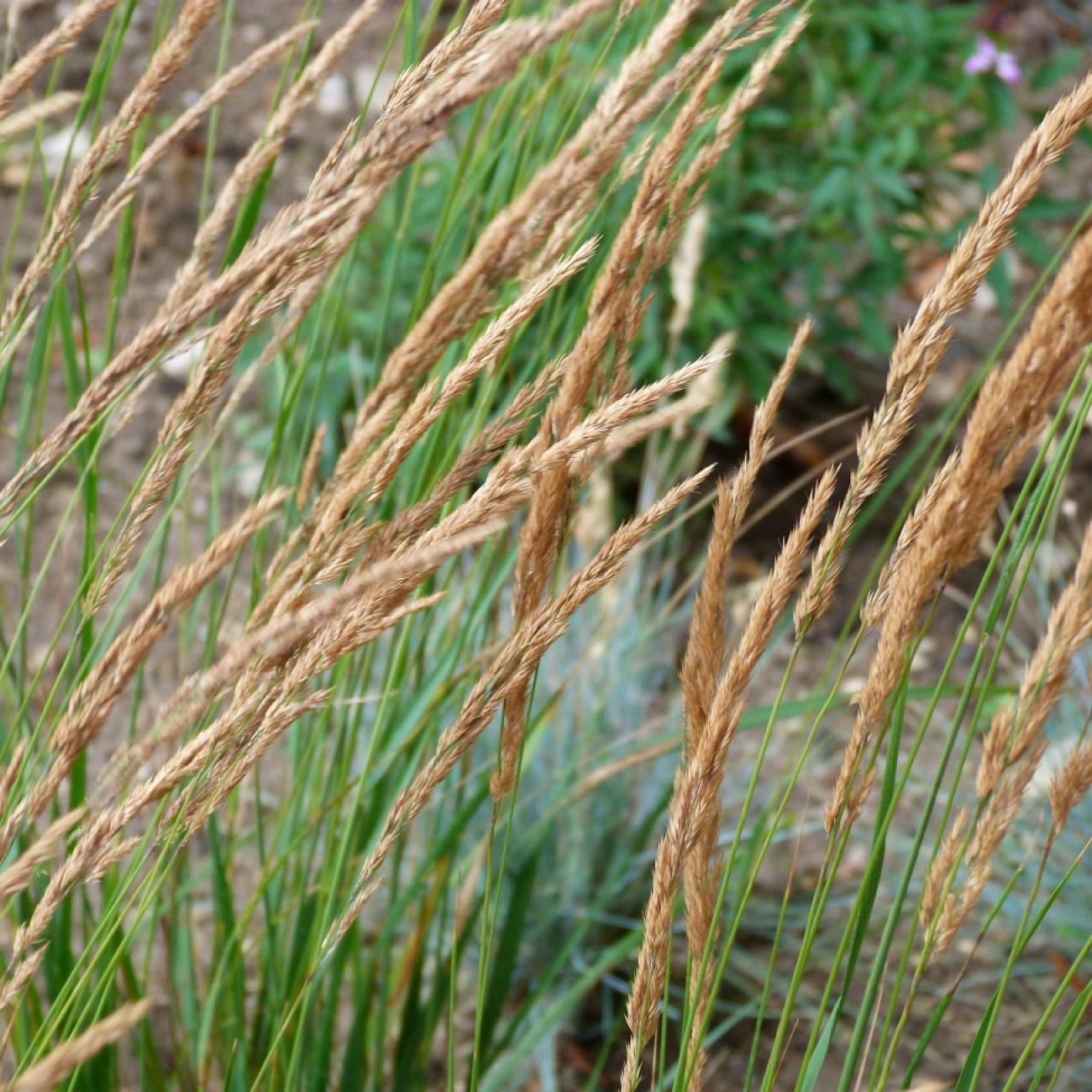
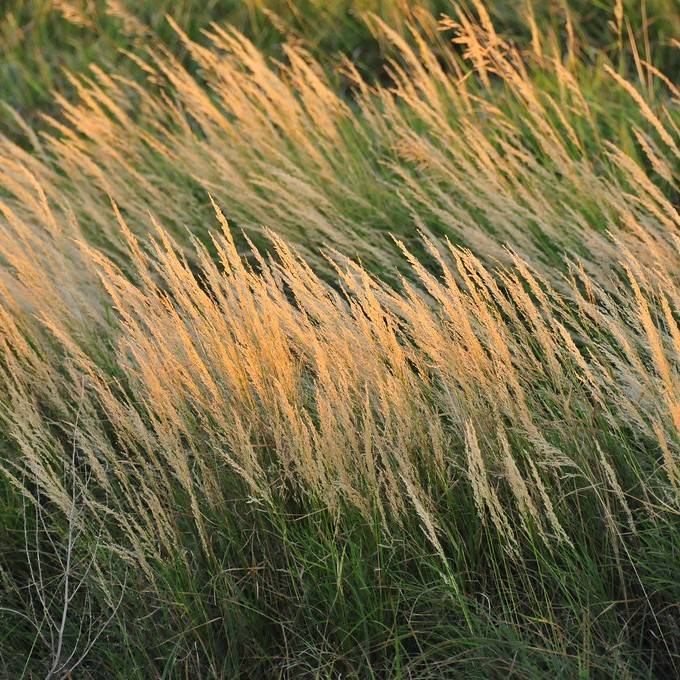
Blue Joint Reedgrass is a rhizomatous, clump-forming grass that thrives in wet, open habitats such as marshes, wet meadows, and stream banks. It produces narrow, arching blue-green foliage in spring, followed by airy, purplish-bronze panicles in mid-summer that fade to a soft tan as they mature. This adaptable grass provides critical habitat and food for wildlife, including waterfowl, pollinators, and small mammals, and is often used in restoration projects for erosion control along waterways.
Care Guide
Watering
Prefers consistently moist to wet soil, and can tolerate periodic flooding and standing water for short periods. Water regularly to keep soil from drying out completely; established plants have mild drought tolerance but perform best with consistent moisture. Avoid allowing the root zone to dry out for extended periods, especially during hot summer months.
Light
Grows best in full sun to partial shade, with at least four hours of direct sunlight daily for optimal foliage and flower production. It can tolerate full shade, though growth may be sparser and flowering may be reduced. In hotter southern portions of its range, provide afternoon shade to prevent foliage scorch.
Soil
Thrives in loamy, silty, or clay soils that are high in organic matter, with a neutral to slightly acidic pH range of 5.5 to 7.5. It tolerates poorly drained, waterlogged soils far better than most ornamental grasses, making it ideal for low-lying, wet areas of the landscape. Avoid overly sandy, fast-draining soils that cannot hold consistent moisture.
Fertilizer
Blue Joint Reedgrass has low fertilizer needs, and usually grows well without supplemental feeding when planted in nutrient-rich wet soils. If grown in poor, low-organic soil, apply a balanced, slow-release 10-10-10 fertilizer once in early spring as new growth emerges. Avoid over-fertilizing, which can lead to floppy, weak growth that loses its upright clumping form.
Temperature
A cool-season grass adapted to cold northern climates, it is hardy in USDA zones 3 through 7, and can withstand winter temperatures as low as -40°F (-40°C). It thrives in average summer temperatures between 60°F and 75°F (15°C to 24°C), and may go dormant earlier in extended heat above 85°F (29°C). Frost will kill back above-ground foliage, which regrows vigorously the following spring.
Pruning
Cut back entire clumps to 3-4 inches above the soil line in late winter or early spring before new growth emerges, to remove dead foliage and make room for fresh shoots. You can snip off spent flower panicles in late fall if desired, but leaving them intact provides winter interest and food for wildlife. No regular deadheading is required during the growing season, as the seed heads are ornamental and non-invasive in most garden settings.
Propagation
Easiest to propagate by division in early spring just as new growth begins, by digging up mature clumps and splitting them into smaller sections with at least 3-5 healthy shoots and intact rhizomes each. It can also be grown from seed, sown directly outdoors in fall or stratified for 30-60 days prior to spring sowing to improve germination rates. Seed-grown plants typically take 2-3 years to reach full mature size and begin flowering reliably.
Humidity
Tolerates a wide range of humidity levels, from moderate to very high, as it is adapted to wet, marshy environments where humidity is often elevated. It can handle average indoor humidity if grown as a container houseplant, but will benefit from occasional misting if the air is exceptionally dry. No special humidity adjustments are needed for outdoor-grown specimens.
Repotting
If grown in containers, repot every 2-3 years in early spring, moving to a pot one size larger with fresh, organic-rich potting mix that retains moisture well. Ensure the container has adequate drainage holes to prevent root rot, even though this species tolerates wet soil. Trim back any overgrown rhizomes that are circling the root ball during repotting to encourage healthy new growth.
Uses & Symbolism
Blue Joint Reedgrass is widely used in wetland restoration and riparian buffer projects to stabilize soil, reduce erosion, and filter runoff from adjacent land. It is planted as an ornamental grass in rain gardens, native plant landscapes, and water features for its fine texture, blue foliage, and persistent winter seed heads that add year-round interest. It also provides cover and nesting material for birds, forage for grazing wildlife, and larval habitat for several species of skippers and other native pollinators.
Diseases & Pests
Blue Joint Reedgrass is largely pest and disease resistant, with few serious issues in its preferred wet growing conditions. It may occasionally develop foliar rust or leaf spot in excessively humid, stagnant air with poor air circulation around the clumps. Root rot can occur if the plant is grown in poorly aerated, permanently waterlogged soil for extended periods, though it is far more tolerant of wet conditions than most grass species.
Related plants
Other plants you might like if you grow Blue Joint Reedgrass.