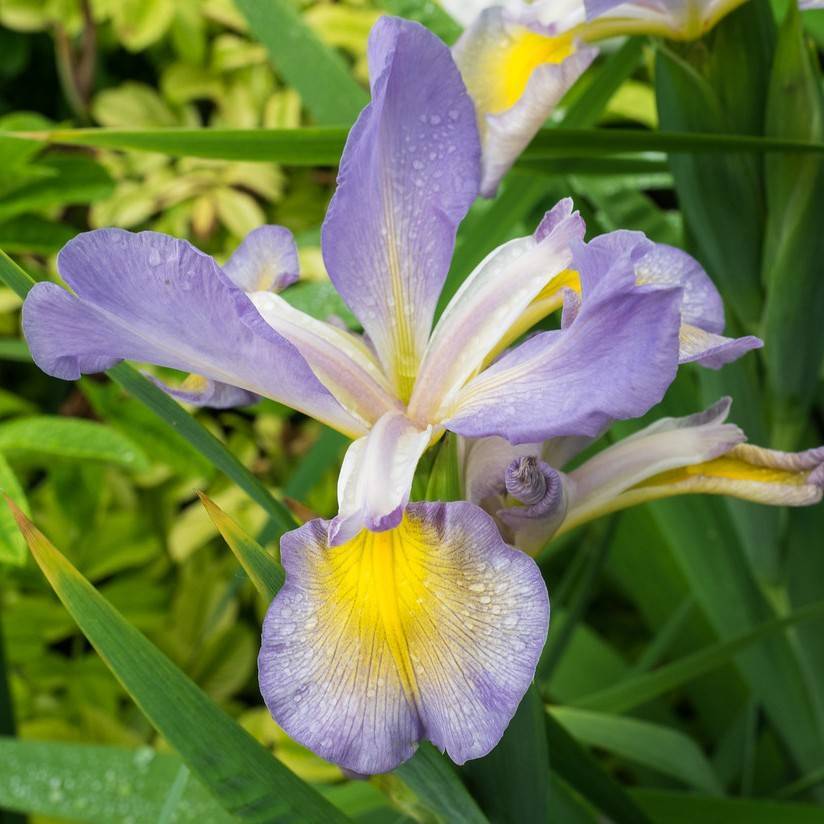
Blue Iris
Iris sibirica
Overview
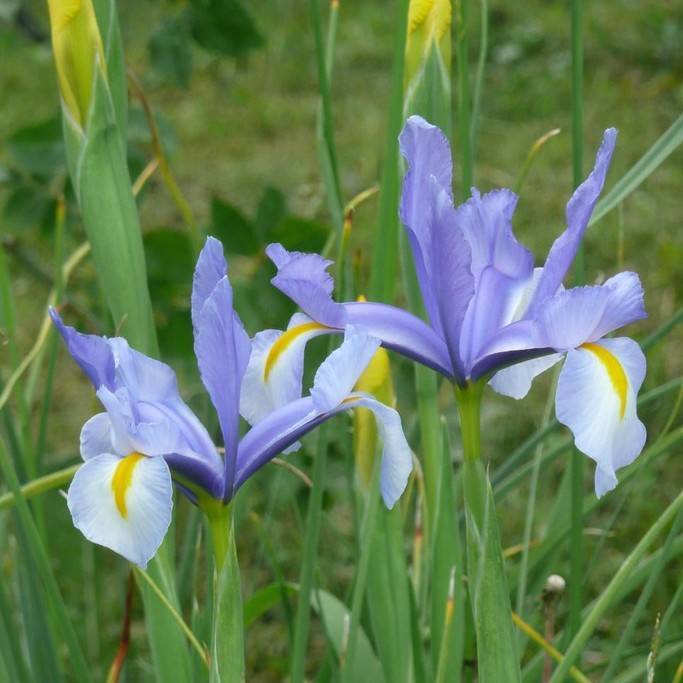
Blue Iris, commonly Siberian iris, is a low-maintenance perennial that produces elegant, ruffled blue-violet blooms atop upright, grass-like foliage in late spring to early summer. It thrives in moist conditions, making it a popular choice for rain gardens, pond edges, and damp border areas, and its dense foliage stays attractive long after blooms fade. Unlike bearded iris varieties, it lacks fuzzy beards on its lower petals, giving its blooms a smooth, delicate appearance, and it naturalizes well in suitable growing conditions to form large, eye-catching clumps over time.
Care Guide
Watering
Keep soil consistently moist, especially during active growth in spring and bloom season; avoid letting the root zone dry out completely, though established plants can tolerate short periods of drought. Water deeply at the base of the plant to avoid wetting foliage, which reduces the risk of fungal disease, and reduce watering frequency slightly in fall as the plant goes dormant.
Light
Plant in full sun to partial shade for optimal blooming; full sun, defined as 6+ hours of direct sunlight daily, produces the most abundant flower displays, while dappled afternoon shade is beneficial in hot, southern climates to prevent scorching. Too much deep shade will significantly reduce flowering and cause foliage to become weak and floppy.
Soil
Prefers rich, fertile, loamy soil with a slightly acidic to neutral pH between 5.5 and 7.0, and good drainage is essential to prevent rhizome rot, though it tolerates heavier, wetter soils better than many other iris species. Amend poor or sandy soil with compost, well-rotted manure, or leaf mold before planting to improve moisture retention and nutrient content.
Fertilizer
Apply a balanced, slow-release 10-10-10 fertilizer in early spring just as new growth emerges, and a second light application of phosphorus-rich fertilizer after blooming to support strong root development for the following year. Avoid over-fertilizing, especially with high-nitrogen formulas, which can promote excessive foliage growth at the expense of flowers and increase susceptibility to rot.
Temperature
Hardy in USDA zones 3 through 9, tolerating winter temperatures as low as -40°F (-40°C) and summer highs up to 90°F (32°C) with adequate moisture. Provide extra mulch around the root zone in the first winter after planting to insulate young rhizomes from extreme temperature fluctuations, and ensure good air circulation in hot, humid weather to prevent fungal issues.
Pruning
Remove spent flower stalks at the base after blooming finishes to prevent seed formation, which diverts energy from root and foliage growth, and tidy up yellow or brown leaf tips as needed throughout the growing season. Cut back all foliage to 2-3 inches above the soil line in late fall after the first hard frost to remove overwintering pest and fungal pathogen habitat.
Propagation
Most reliably propagated by division of mature clumps every 3 to 4 years in late summer or early fall, 4 to 6 weeks after blooming finishes; dig up the entire clump, separate healthy rhizome sections with a sharp, sterile knife, each with at least one fan of foliage, and replant immediately 1 to 2 inches deep. It can also be grown from seed, though seed-grown plants may not retain the exact flower color of the parent and will take 2 to 3 years to reach blooming maturity.
Humidity
Tolerates average ambient humidity levels between 40% and 70% typical of its native temperate range, and adapts well to both moderately dry and humid conditions as long as soil moisture needs are met. In areas with consistently high humidity above 70%, ensure plants have 12 to 18 inches of spacing between them for adequate air circulation to reduce the risk of leaf spot and other fungal diseases.
Repotting
When grown in containers, repot every 2 to 3 years in early spring before new growth begins, or after division in fall, using a fresh, rich potting mix amended with compost to improve moisture retention. Choose a pot at least 12 inches deep and wide to accommodate the spreading rhizome root system, with multiple drainage holes to prevent standing water that can cause rot, and water thoroughly after repotting to settle the soil around the roots.
Uses & Symbolism
Blue Iris is widely planted in ornamental gardens for its vibrant spring blooms, working well in border plantings, rain gardens, pond edges, and naturalized meadow areas, and its cut flowers are popular in floral arrangements for their striking color and elegant shape. Historically, some Indigenous cultures used small, carefully prepared quantities of the rhizome for medicinal purposes to treat coughs and skin conditions, though its toxicity makes unregulated use unsafe. Its dense, fibrous root system is also effective for erosion control on slopes and near water bodies.
Diseases & Pests
Common fungal diseases include leaf spot, bacterial soft rot, and rhizome rot, which typically occur in overly wet, poorly drained soil or when foliage remains damp for extended periods; these can be prevented by planting in well-drained sites, spacing plants for air circulation, and avoiding overhead watering. Aphids, iris borers, and thrips are the most common insect pests: iris borers tunnel into rhizomes causing rot and plant death, so inspect rhizomes regularly during division and remove any damaged sections, while aphids and thrips can be controlled with insecticidal soap or neem oil.
Related plants
Other plants you might like if you grow Blue Iris.
%22%2F%3E%0A%20%20%20%20%20%20%3Ccircle%20cx%3D%22920%22%20cy%3D%22180%22%20r%3D%2290%22%20fill%3D%22%23cfe8d5%22%2F%3E%0A%20%20%20%20%20%20%3Cpath%20d%3D%22M600%20590c-90-180-215-255-310-280%200%20165%20118%20296%20270%20296h40z%22%20fill%3D%22%2379b88e%22%2F%3E%0A%20%20%20%20%20%20%3Cpath%20d%3D%22M600%20590c80-150%20198-212%20302-228-8%20142-123%20255-270%20255h-32z%22%20fill%3D%22%235c9f73%22%2F%3E%0A%20%20%20%20%20%20%3Cpath%20d%3D%22M600%20610V360%22%20stroke%3D%22%234f8c64%22%20stroke-width%3D%2218%22%20stroke-linecap%3D%22round%22%2F%3E%0A%20%20%20%20%20%20%3Ctext%20x%3D%22600%22%20y%3D%22700%22%20text-anchor%3D%22middle%22%20font-family%3D%22Arial%2C%20sans-serif%22%20font-size%3D%2244%22%20fill%3D%22%23365c45%22%3E%0A%20%20%20%20%20%20%20%20Plant%20image%20coming%20soon%0A%20%20%20%20%20%20%3C%2Ftext%3E%0A%20%20%20%20%3C%2Fsvg%3E%0A%20%20)