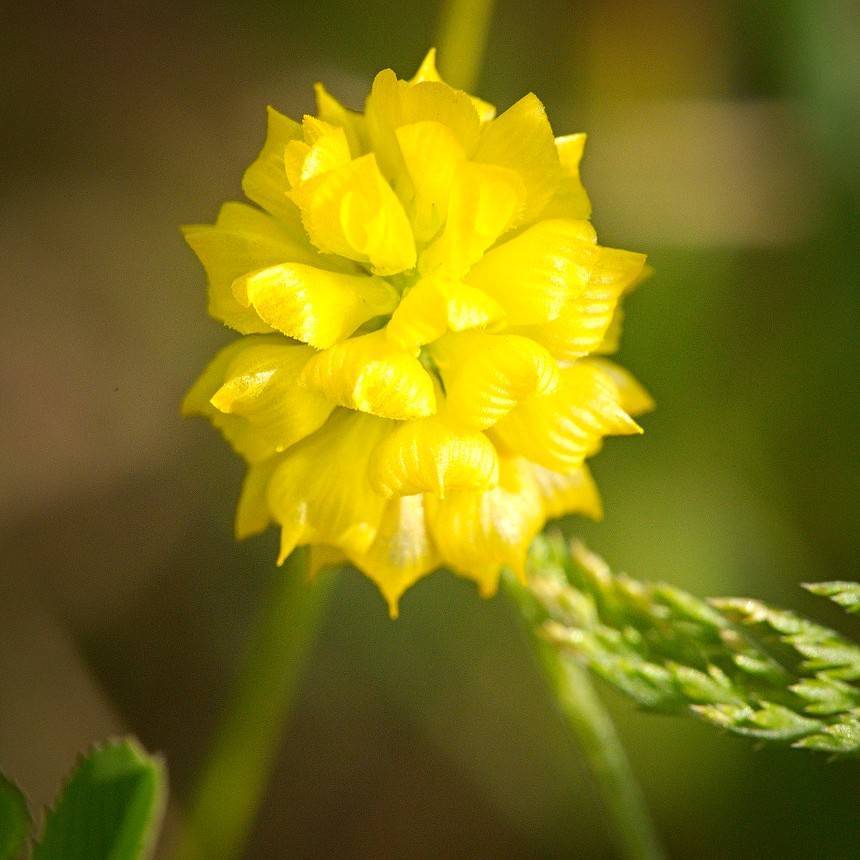
Black Medic
Medicago lupulina
Overview
Black medic is a hardy, mat-forming legume that thrives in poor, compacted soils, often acting as a pioneer species in disturbed sites. It produces dense clusters of tiny bright yellow pea-like flowers from spring through fall, followed by small, coiled black seed pods that give the plant its common name. As a nitrogen-fixing plant, it improves soil fertility by hosting symbiotic bacteria in its root nodules, making it a useful cover crop in agricultural and garden settings.
Care Guide
Watering
Black medic is highly drought-tolerant once established, requiring only occasional watering during extended dry periods; it will thrive in both moderately moist and dry soil conditions. Overwatering or waterlogged soil can lead to root rot, so it is best to allow the top several inches of soil to dry out between waterings. It will survive in low-moisture areas where many other broadleaf plants cannot persist.
Light
This species grows best in full sun, requiring at least 6 hours of direct sunlight daily to produce abundant flowers and dense foliage. It can tolerate partial shade, though growth will be sparser and flowering reduced. In heavily shaded areas, it will struggle to establish and may be outcompeted by taller, more shade-tolerant plants.
Soil
Black medic adapts to a wide range of soil types, including sandy, loamy, and heavy clay soils, and it thrives in compacted, low-nutrient soils where many other plants fail. It prefers neutral to slightly alkaline soil pH, but can tolerate moderately acidic conditions as well. Good drainage is preferred, though it can withstand occasional short periods of waterlogging.
Fertilizer
As a nitrogen-fixing legume, black medic does not require supplemental nitrogen fertilizer, as it produces its own nitrogen via symbiotic rhizobium bacteria in its root nodules. If grown in extremely poor soil, a light application of phosphorus-rich fertilizer at planting can support root development and nitrogen fixation. Excess fertilizer, particularly high-nitrogen blends, will reduce its nitrogen-fixing capacity and may encourage lush growth that is prone to pest damage.
Temperature
Black medic is adapted to temperate climates, growing actively in temperatures between 60–85°F (15–29°C), and can tolerate light frosts that do not kill its aboveground foliage. It will die back completely after a hard freeze, but self-seeds readily to return the following growing season in most regions. It can tolerate high summer temperatures up to 100°F (38°C) if soil moisture is adequate.
Pruning
Pruning is generally unnecessary for black medic, though mowing or trimming back sprawling stems can prevent unwanted spread into lawns or garden beds. Cutting plants back before seed pods mature can reduce self-seeding if you wish to limit its spread. If grown as a cover crop, it can be tilled into the soil before it sets seed to add organic matter and nitrogen to the planting area.
Propagation
Black medic is most easily propagated from seed, which can be sown directly onto bare soil in early spring after the last frost date. Seeds have a hard outer coat, so scarification (nicking the seed coat or soaking in warm water for 24 hours prior to sowing) will improve germination rates. It also self-seeds prolifically in suitable growing conditions, with seeds remaining viable in the soil for several years.
Humidity
This plant tolerates a wide range of humidity levels, growing well in both dry and moderately humid temperate climates. High humidity combined with poor air circulation can increase the risk of fungal leaf spots, so avoid overcrowding plants if grown intentionally. It does not require any supplemental humidity to thrive.
Repotting
Black medic is rarely grown in containers, but if potted, it may need repotting every 1–2 years if roots begin to grow through drainage holes or become pot-bound. Use a well-draining general-purpose potting mix, and choose a pot with adequate drainage holes to prevent waterlogging. Most gardeners treat it as a temporary annual, so repotting is often unnecessary before the plant completes its life cycle.
Uses & Symbolism
Black medic is frequently used as a nitrogen-fixing cover crop and green manure, improving soil health for subsequent plantings when tilled under. It is a valuable forage plant for livestock and wildlife, providing high-protein fodder for grazing animals, and its flowers are an important nectar source for bees, butterflies, and other pollinators. In some regions, it is used as a medicinal herb to treat minor inflammation and digestive issues, though these uses are not widely clinically validated.
Diseases & Pests
Black medic is relatively pest and disease resistant, though it may occasionally be affected by fungal diseases such as powdery mildew, leaf spot, and root rot in overly wet, poorly drained conditions. Common pests include aphids, which can suck sap from young stems and leaves, and weevil larvae that may feed on root nodules, reducing nitrogen-fixing capacity. It can also be a host for alfalfa mosaic virus, which can spread to nearby cultivated legumes such as beans and peas if not managed.
Related plants
Other plants you might like if you grow Black Medic.