Black Huckleberry
Gaylussacia baccata
Overview
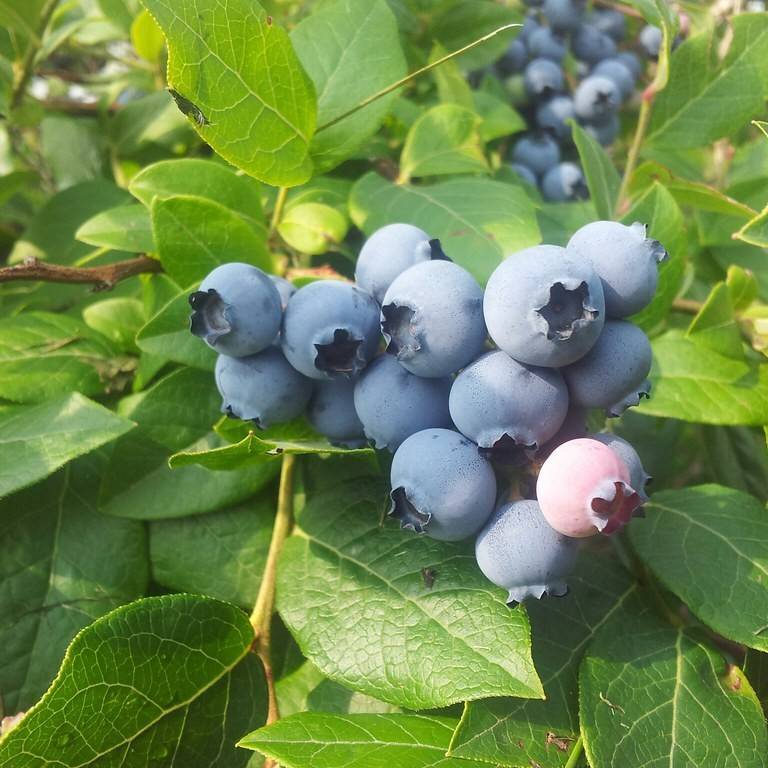
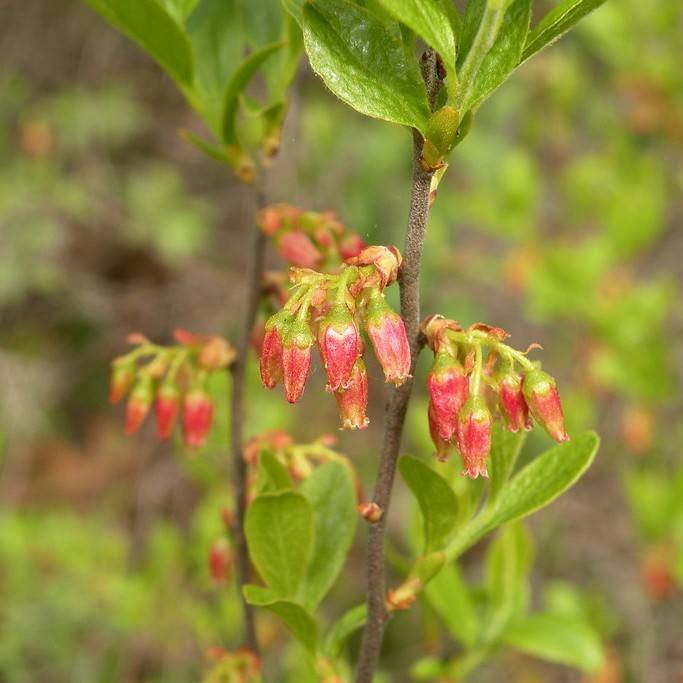
Black huckleberry is a cold-hardy deciduous shrub recognizable by its glossy, oval green leaves that turn vivid red and purple in autumn, and its small, bell-shaped pale pink spring flowers. It produces clusters of glossy, dark blue-black berries in mid to late summer, which have a sweet, slightly tart flavor distinct from related blueberries. This species spreads slowly via underground rhizomes to form dense, low colonies, making it a common understory plant in oak and pine forests across its native range.
Care Guide
Watering
Black huckleberry prefers consistently moist but well-drained soil, and is drought-tolerant once established, though prolonged dry periods will reduce berry production. Water deeply during extended dry spells, avoiding overhead watering to reduce risk of foliar fungal diseases; do not allow soil to become waterlogged, as this can cause root rot.
Light
This shrub thrives in full sun to partial shade, with full sun locations producing the heaviest berry yields. It can grow in full shade, though flowering and fruiting will be significantly reduced, and growth will be more sparse and leggy.
Soil
Black huckleberry requires strongly acidic soil with a pH between 4.0 and 5.5, and grows best in sandy, loamy, or rocky soil low in nutrients, as it is adapted to poor, low-fertility sites. The soil must be well-drained, as the plant is highly susceptible to root rot in heavy, poorly draining clay soils; amend with peat moss or pine bark fines to lower pH and improve drainage if needed.
Fertilizer
Fertilization is rarely required for black huckleberry, as it is adapted to low-nutrient soils; over-fertilization, especially with nitrogen, can damage the plant’s shallow, fine root system and reduce fruiting. If growth is extremely slow, apply a small amount of slow-release, acidic fertilizer formulated for ericaceous plants in early spring, taking care to avoid contact with the root crown.
Temperature
Black huckleberry is extremely cold-hardy, tolerating winter temperatures as low as -40°F (-40°C) in USDA hardiness zones 3 through 7. It requires a period of cold stratification over winter to produce flowers and fruit the following growing season, and does not perform well in regions with consistently hot, humid summers above 90°F (32°C) for extended periods.
Pruning
Prune black huckleberry in late winter or early spring before new growth emerges, removing any dead, damaged, or diseased branches first, as well as any crossing branches that reduce air flow in the center of the shrub. Mature plants can be rejuvenated by removing up to one-third of the oldest woody stems each year, which encourages new, more productive growth and maintains an open, productive form.
Propagation
Black huckleberry is most easily propagated via division of established rhizomatous clumps in early spring before new growth starts, as individual stems can be separated with attached roots and replanted directly. It can also be grown from seed, though seeds require 2-3 months of cold stratification to germinate, and seed-grown plants take 3-4 years to reach maturity and produce fruit.
Humidity
Black huckleberry prefers moderate ambient humidity between 40% and 60%, which is typical of its native forest understory and edge habitats. It tolerates average outdoor humidity levels in its hardiness range, but may suffer from leaf scorch in very dry, windy conditions, especially if paired with insufficient soil moisture.
Repotting
Black huckleberry is rarely grown in containers, as its spreading rhizomatous root system requires ample space to spread, and container-grown plants struggle to maintain the required acidic soil conditions long-term. If grown in a pot, use a coarse, acidic potting mix formulated for azaleas or blueberries, and repot every 2-3 years in early spring, trimming back overgrown rhizomes and refreshing the potting mix as needed.
Uses & Symbolism
The sweet, tart berries of black huckleberry are edible raw, and are commonly used in jams, jellies, pies, and baked goods, as well as being dried for use in teas and trail mixes. It is also widely planted as a native ornamental shrub for its attractive autumn foliage, and provides critical food and cover for native birds, pollinators, and small mammals, including black bears, in its native range.
Diseases & Pests
Black huckleberry is relatively pest and disease resistant, though it can be affected by common ericaceous issues such as powdery mildew, leaf spot, and root rot in poorly draining, overly wet soils. Common pests include aphids, spider mites, and blueberry maggot, which can damage foliage and reduce berry yields, though infestations are rarely severe in healthy, well-sited plants.
Related plants
Other plants you might like if you grow Black Huckleberry.