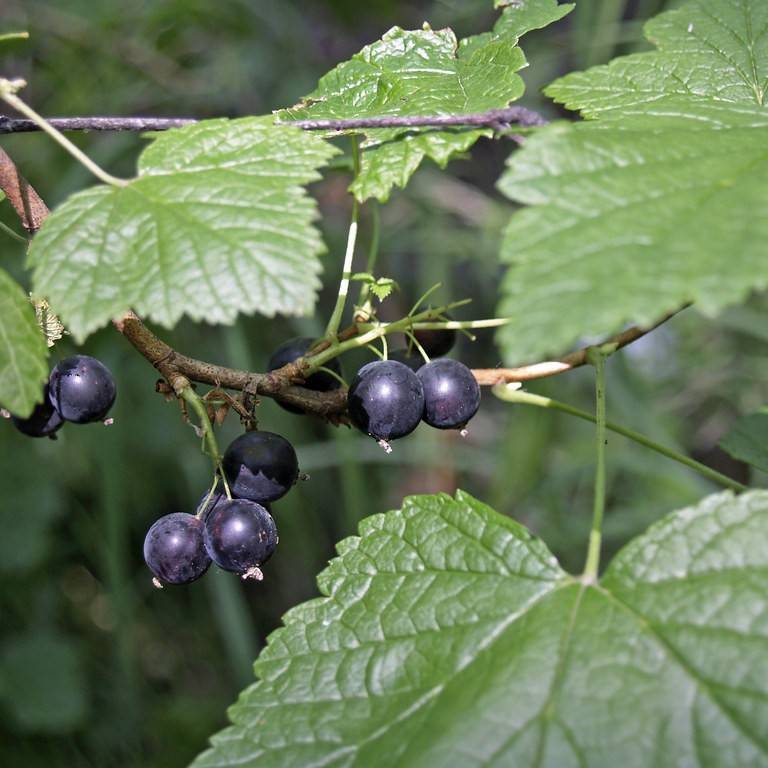
Black Currant
Ribes nigrum
Overview
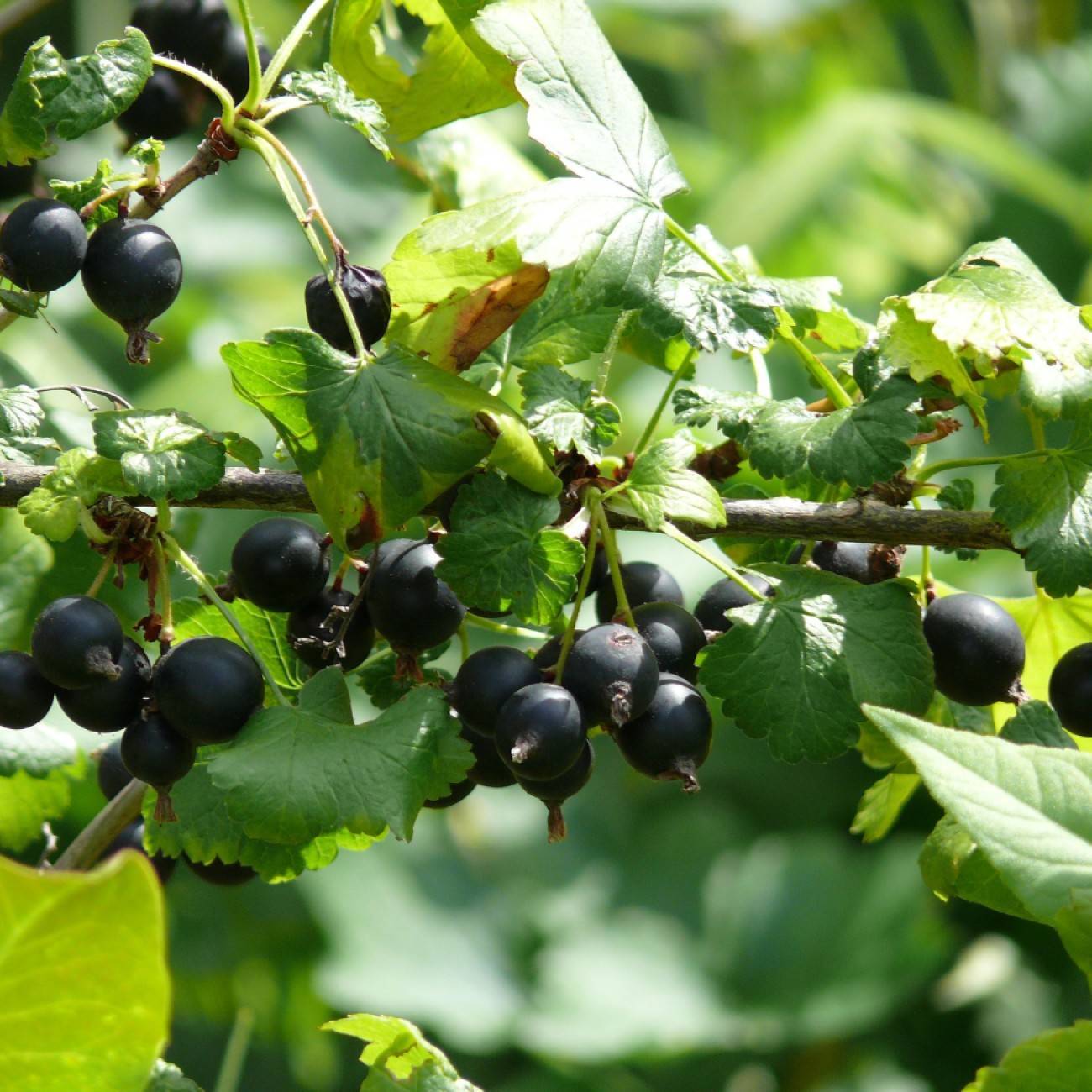
Black currant is a deciduous, woody shrub that produces clusters of small, bell-shaped pale yellow flowers in spring, followed by glossy dark purple berries in mid to late summer. The plant’s aromatic, palmately lobed leaves have a distinct, resinous scent when crushed, and its stems develop a rough, brown bark as they mature. It is widely cultivated across temperate regions for both commercial fruit production and home garden use, with many modern cultivars bred for disease resistance and higher fruit yields.
Care Guide
Watering
Black currants require consistent, even moisture, especially during fruit development, with 1-2 inches of water per week applied directly to the root zone to avoid foliar diseases. Avoid overwatering or waterlogged soil, which can cause root rot, and reduce watering frequency in late fall to prepare the plant for dormancy. Mulching around the base helps retain soil moisture and reduce competition from weeds.
Light
This shrub thrives in full sun, which promotes maximum fruit production and strong, sturdy growth, though it can tolerate partial shade, particularly in warmer climates where intense afternoon sun may scorch leaves. A minimum of 6 hours of direct sunlight daily is recommended for optimal fruiting; plants grown in heavy shade will produce sparse, low-quality berries.
Soil
Black currants prefer fertile, moisture-retentive, well-drained loamy soil with a slightly acidic to neutral pH between 6.0 and 6.5. They do not tolerate heavy, waterlogged clay soils or extremely sandy soils that dry out rapidly; amend poor soils with well-rotted compost or manure before planting to improve structure and nutrient content. Avoid planting in sites with a history of gooseberry or currant diseases to reduce pathogen exposure.
Fertilizer
Apply a balanced, slow-release 10-10-10 fertilizer in early spring before new growth emerges, spreading it evenly around the root zone and watering it in thoroughly to avoid burning shallow roots. Supplement with a high-potassium fertilizer, such as tomato feed, once flowering begins to support fruit development, and avoid high-nitrogen fertilizers late in the growing season, as they encourage soft, frost-susceptible new growth. An annual top-dressing of well-rotted compost in fall provides slow-release nutrients over the winter.
Temperature
Black currants are cold-hardy, tolerating winter temperatures as low as -40°F (-40°C) when fully dormant, making them suitable for USDA hardiness zones 3 through 8. They require a minimum of 800 to 1,600 chill hours below 45°F (7°C) during winter to break dormancy and produce fruit reliably, so they perform poorly in regions with mild, frost-free winters. Spring frosts can damage emerging flower buds, so site plants in a location protected from late cold snaps if possible.
Pruning
Prune black currants annually in late winter while the plant is dormant, removing any dead, diseased, or crossing stems first to improve air circulation through the canopy. Since the highest fruit yields are produced on 1- to 3-year-old wood, remove one-third of the oldest, darkest stems each year to encourage new, productive growth to replace aging wood. Avoid pruning young plants heavily in their first two years, allowing them to establish a strong framework of stems.
Propagation
Black currants are most commonly propagated from hardwood cuttings taken in late fall or early winter during dormancy, using 8- to 10-inch long sections of 1-year-old healthy stems planted directly in prepared nursery beds or containers. Cuttings will root readily over the winter and can be transplanted to their permanent location the following fall after one full growing season. They can also be propagated from seed, though seed-grown plants will not retain the exact characteristics of the parent cultivar, so this method is rarely used for fruiting plants.
Humidity
Black currants prefer moderate humidity levels between 50% and 70%, which supports healthy foliage and fruit development without increasing disease risk. High humidity combined with poor air circulation can promote fungal diseases like powdery mildew and anthracnose, so space plants adequately and prune regularly to allow airflow through the canopy. They tolerate brief periods of low humidity, but extended dry air may cause leaf scorch and reduce fruit size.
Repotting
Black currants grown in containers should be repotted every 2 to 3 years in late winter while dormant, moving to a pot one size larger with fresh, fertile potting mix amended with compost. Select a heavy, wide container with drainage holes to prevent the top-heavy shrub from tipping over, and prune back up to one-third of the root ball during repotting to encourage new root growth and control size. After repotting, water thoroughly and place the container in a cool, sheltered location until new growth emerges in spring.
Uses & Symbolism
Black currant berries are widely used to make jams, jellies, juices, syrups, and baked goods, valued for their tart, rich flavor and extremely high vitamin C content, with more than three times the vitamin C of oranges by weight. The leaves are used to make herbal teas and infusions, and the berries are also processed into natural food colorings, dietary supplements, and flavorings for liqueurs such as crème de cassis. In some regions, the plant is also grown as an ornamental shrub for its attractive foliage, spring flowers, and summer fruit clusters that attract pollinators and birds.
Diseases & Pests
Black currants are highly susceptible to white pine blister rust, a fungal disease that alternates between Ribes species and white pine trees, leading to severe damage or death of both hosts; many regions restrict planting black currants near white pine populations to prevent spread. Other common diseases include powdery mildew, which forms a white fungal coating on leaves and stems, and anthracnose, which causes brown leaf spots and defoliation, both of which can be managed with good air circulation, resistant cultivars, and fungicidal sprays if needed. Common pests include currant aphids, which distort new growth, and currant fruit flies, which lay eggs in developing berries, leading to maggot infestation; these can be controlled with insecticidal soaps or fine mesh netting to block adult flies from laying eggs.
Related plants
Other plants you might like if you grow Black Currant.