Black Cherry
Prunus serotina
Overview
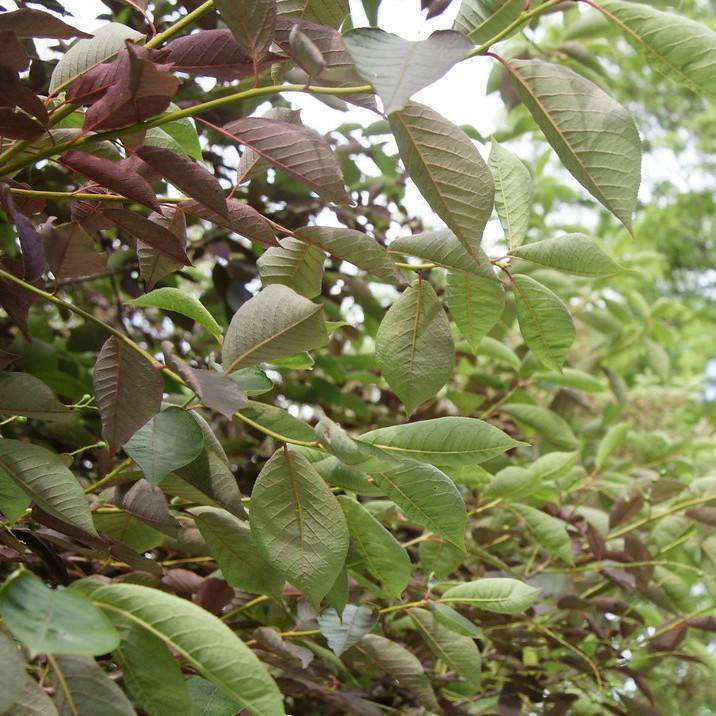
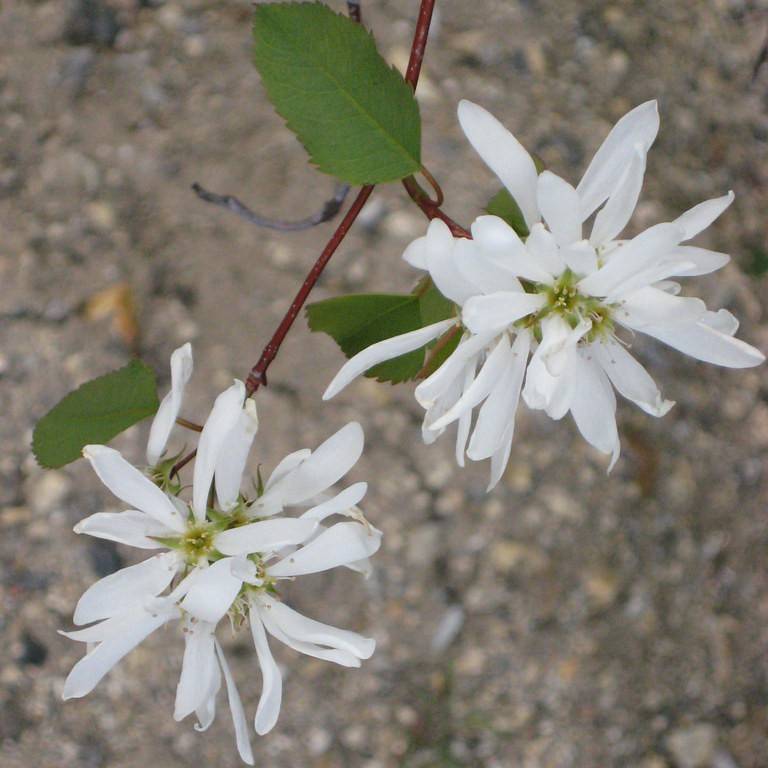
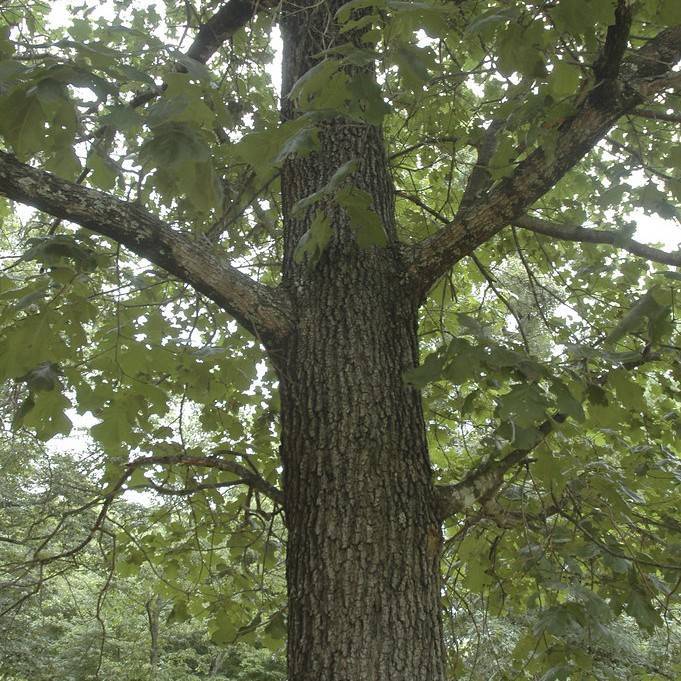
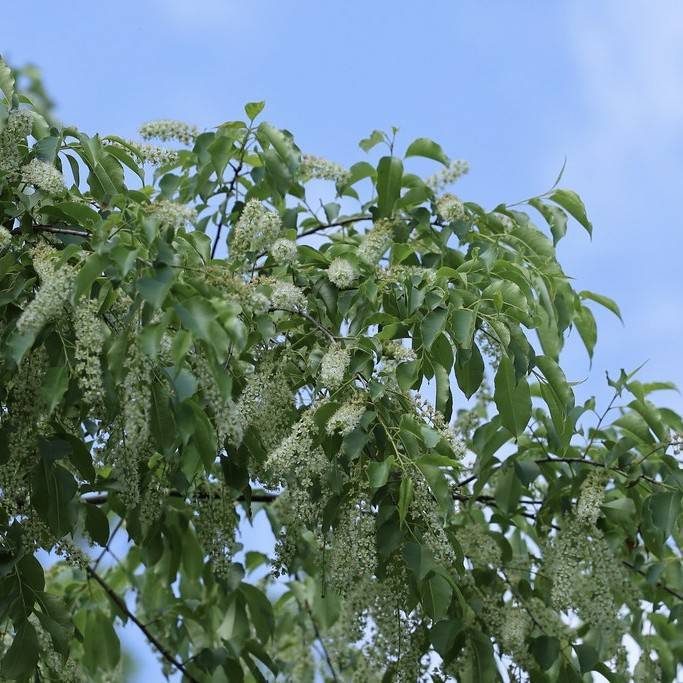
Black cherry is a prominent hardwood tree native to eastern North American forests, recognizable by its dark, scaly mature bark, glossy lance-shaped leaves that turn yellow to red in autumn, and drooping clusters of small white spring flowers. It produces abundant small, dark purple-black drupes in late summer that are a critical food source for dozens of bird species and small mammals. Prized for its strong, fine-grained reddish-brown lumber, it is one of the most valuable commercial hardwood species in the United States for furniture and cabinetry.
Care Guide
Watering
Young black cherry trees require regular, deep watering 1-2 times per week during their first 2-3 years of establishment to support root development, especially during periods of drought. Mature trees are highly drought-tolerant, only needing supplemental watering during extended periods of extreme heat or prolonged dry spells to prevent leaf drop. Avoid overwatering or planting in poorly drained sites, as excess soil moisture can cause root rot and weaken the tree’s structure.
Light
Black cherry thrives in full sun, requiring a minimum of 6 hours of direct, unfiltered sunlight per day to produce abundant flowers, fruit, and dense, healthy foliage. It can tolerate partial shade, but growth will be slower, fruit production will be reduced, and the tree may develop a more sparse, elongated canopy as it stretches toward light sources. For optimal lumber production or fruit yield, plant in an open, unshaded location with no overhead competition from larger trees.
Soil
This adaptable tree grows well in a wide range of soil types, including sandy loam, silt, and clay, as long as the site has good drainage; it prefers a slightly acidic to neutral soil pH between 5.5 and 7.0. It can tolerate moderately poor, low-nutrient soils, but growth and productivity are enhanced in deep, fertile, loamy soils with high organic matter content. Avoid heavy, waterlogged soils, as standing water for more than a few days can kill young trees and cause root disease in mature specimens.
Fertilizer
Young black cherry trees benefit from a balanced, slow-release 10-10-10 fertilizer applied once per year in early spring, before new leaf growth emerges, to support robust shoot and root development. Mature, established trees rarely need regular fertilization, as they are efficient at accessing nutrients from deep soil layers; a light application of nitrogen-rich fertilizer can be applied every 2-3 years if growth is stunted or leaf yellowing occurs. Always spread fertilizer evenly over the root zone, extending out to the drip line, and avoid piling it against the trunk to prevent bark burn and pest infestations.
Temperature
Black cherry is hardy in USDA zones 3 to 9, tolerating winter temperatures as low as -40°F (-40°C) and summer highs up to 100°F (38°C) without significant damage. It requires a period of cold dormancy (approximately 800-1,200 hours below 45°F / 7°C) during winter to break bud dormancy and produce flowers and fruit the following growing season. Young trees may need temporary frost protection for the first 1-2 years if late spring frosts are expected after new growth has emerged, as tender new shoots are susceptible to cold damage.
Pruning
Prune black cherry trees during late winter dormancy, before new growth starts, to remove dead, diseased, or crossing branches, improve air circulation through the canopy, and maintain a strong central leader structure for optimal lumber growth. Remove any suckers that sprout from the base of the trunk or root system regularly, as these divert energy from the main tree and can create a shrubby, multi-stemmed form if left unmanaged. Avoid heavy pruning of mature trees, as large open wounds are highly susceptible to fungal infection and wood-boring insect infestations that can degrade lumber quality and kill the tree over time.
Propagation
Black cherry is most commonly propagated from seed, which requires 3-4 months of cold stratification in moist sand or peat moss at 33-40°F (1-4°C) to break dormancy before sowing in spring. It can also be propagated from softwood cuttings taken in early summer, treated with rooting hormone, and placed in a misted propagation bed with bottom heat to encourage root development over 6-8 weeks. Grafting is often used for cultivated varieties to preserve specific fruit or wood traits, with rootstock typically grown from seed of wild black cherry trees for increased hardiness and disease resistance.
Humidity
Black cherry adapts well to a wide range of humidity levels, thriving in the moderate to high humidity of its native eastern North American range, where average annual humidity ranges from 60% to 80% during the growing season. It can tolerate lower humidity levels common in drier western regions if provided with adequate supplemental water, though leaf scorch may occur during periods of very low humidity combined with high heat. Good air circulation through the canopy is important to reduce humidity-related fungal diseases such as leaf spot and powdery mildew, especially in regions with high summer rainfall.
Repotting
Black cherry is a large, deep-rooted tree that is not suitable for long-term container growth, and is typically only grown in pots for 1-2 years as a sapling before being transplanted to a permanent outdoor location. When repotting young saplings, use a deep, well-draining container with a high-quality loamy potting mix, and upgrade to a pot 2-3 inches larger in diameter each year until the tree is ready for outdoor planting. When transplanting to the landscape, dig a hole twice as wide as the root ball and the same depth, backfill with native soil amended with compost, and water deeply to eliminate air pockets around the roots.
Uses & Symbolism
The dense, fine-grained, reddish-brown lumber of black cherry is highly prized for furniture, cabinetry, musical instruments, woodworking, and veneer, commanding a premium price on commercial hardwood markets. The ripe, tart-sweet dark berries are edible when fully ripe and cooked, used to make jams, jellies, pies, wines, and flavored liqueurs, though they are rarely eaten raw due to their astringent taste. Ecologically, it is a valuable native tree that supports hundreds of insect species, provides critical food for birds and wildlife, and is used in reforestation, erosion control, and native pollinator habitat projects.
Diseases & Pests
Black cherry is susceptible to a number of common pests and diseases, including black knot fungus, which causes hard, black swollen galls on branches and can kill the tree if left untreated by pruning infected branches well below the gall site. It is also targeted by the eastern tent caterpillar, which constructs large silk nests in branch crotches and can defoliate entire trees in heavy infestations, though healthy trees usually regrow leaves after the caterpillars pupate. Other common issues include cherry leaf spot, powdery mildew, wood-boring beetles, and aphids, which are generally manageable with proper cultural care, including good air circulation, regular pruning of diseased material, and avoiding overwatering.
Related plants
Other plants you might like if you grow Black Cherry.