Globe Amaranth
Gomphrena globosa
Overview
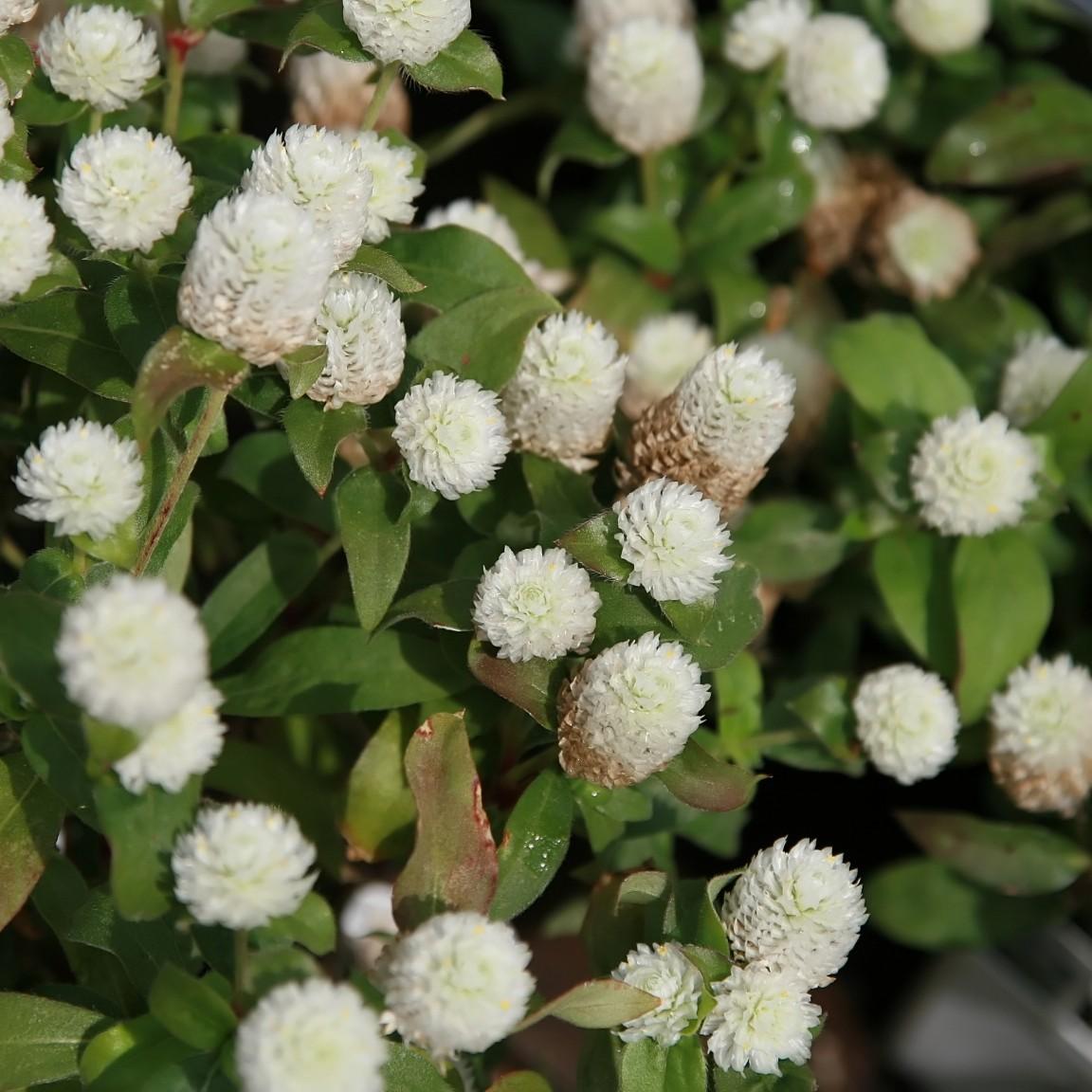
Globe amaranth is a warm-weather annual prized for its dense, spherical flower heads that retain their shape and color for months, even when dried. Its upright, branching foliage is slightly fuzzy and green, providing a neutral backdrop for its vibrant blooms that appear from early summer until the first frost. Drought-tolerant and adaptable to most garden conditions, it is a popular choice for beginner gardeners and pollinator gardens alike.
Care Guide
Watering
Water globe amaranth deeply once per week after establishment, allowing the top 1 to 2 inches of soil to dry out completely between waterings to prevent root rot. Young plants require more frequent, light watering to support root growth, but mature specimens are highly drought-tolerant and only need supplemental water during extended dry periods. Avoid overhead watering to reduce the risk of foliar fungal diseases.
Light
Grow globe amaranth in full sun, meaning a minimum of 6 hours of direct, unfiltered sunlight per day for the most abundant and vibrant blooms. It can tolerate partial shade, but plants grown in lower light will become leggy, produce fewer flowers, and are more prone to fungal issues. Indoors, place it in a south-facing window or under grow lights for 10 to 12 hours per day.
Soil
Globe amaranth thrives in well-drained, loamy or sandy soil with a neutral to slightly alkaline pH between 6.0 and 7.5. It tolerates poor, rocky, and low-nutrient soils well, as long as excess water can drain freely, making it suitable for xeriscaping and container gardens. Avoid heavy, water-retentive clay soils, as these can cause root rot in as little as a few days of saturated conditions.
Fertilizer
Globe amaranth has low nutrient needs and typically does not require regular fertilization if grown in average garden soil. For potted specimens or very poor soil, apply a balanced, slow-release 10-10-10 fertilizer once at the start of the growing season to support steady growth. Avoid over-fertilizing, as high nitrogen levels will promote excessive foliage growth at the expense of flower production.
Temperature
Globe amaranth prefers warm temperatures between 65 and 85°F (18 and 29°C) and is highly tolerant of high heat and humidity once established. It is not frost-tolerant, and exposure to temperatures below 32°F (0°C) will kill the plant instantly, so plant it outdoors only after all risk of frost has passed in spring. It can survive short periods of temperatures up to 100°F (38°C) if provided with occasional deep watering.
Pruning
Prune globe amaranth lightly in early summer to encourage bushier growth, pinching back the top 1 to 2 inches of stem tips to stimulate branching and more flower sites. Deadhead spent blooms regularly throughout the growing season to promote continuous flowering and prevent the plant from expending energy on seed production. If growing for dried arrangements, harvest flower heads when they are fully mature but still brightly colored, cutting stems to the desired length and hanging them upside down in a cool, dark, dry area for 2 to 3 weeks.
Propagation
Globe amaranth is most commonly propagated from seed, sown directly outdoors after the last frost or started indoors 6 to 8 weeks before the expected last frost date for earlier blooms. Sow seeds on the surface of moist seed-starting mix, as they require light to germinate, and keep the soil at 70 to 75°F (21 to 24°C) until germination occurs in 7 to 14 days. It can also be propagated from softwood stem cuttings taken in early summer, dipped in rooting hormone, and placed in moist, well-drained potting mix until roots form in 2 to 3 weeks.
Humidity
Globe amaranth adapts well to a wide range of humidity levels, thriving in both the dry conditions of arid regions and the high humidity of tropical and subtropical climates. Average household humidity levels of 40 to 60% are sufficient for indoor-grown specimens, and no extra misting or humidification is required. Ensure good air circulation around plants in high-humidity areas to reduce the risk of powdery mildew and other fungal diseases.
Repotting
As an annual, globe amaranth rarely needs repotting during its single growing season if planted in an appropriately sized container at the start of the season. If grown in a container that is too small, or if roots are visibly growing out of the drainage holes, repot gently into a container one size larger during the early growing season, taking care not to disturb the fragile root system. At the end of the growing season, discard the plant and refresh the potting soil for future plantings.
Uses & Symbolism
Globe amaranth is widely grown as an ornamental garden plant, used in borders, container displays, pollinator gardens, and cut flower patches for its long-lasting, colorful blooms. Its papery, colorfast flower heads are one of the most popular materials for dried floral arrangements, wreaths, and craft projects, retaining their vivid hue for years when properly dried. In traditional medicine in its native range, it is used to treat respiratory issues, inflammation, and high blood pressure, and its young leaves are occasionally consumed as a cooked green vegetable.
Diseases & Pests
Globe amaranth is relatively pest and disease resistant, but overwatering or poor air circulation can lead to fungal issues such as powdery mildew, gray mold, and root rot. Common pests include aphids, spider mites, and whiteflies, which can be controlled with insecticidal soap, neem oil, or regular blasts of water to dislodge small infestations. Slugs and snails may feed on young seedlings, so use copper tape or organic bait to protect plants in the early stages of growth.
Related plants
Other plants you might like if you grow Globe Amaranth.