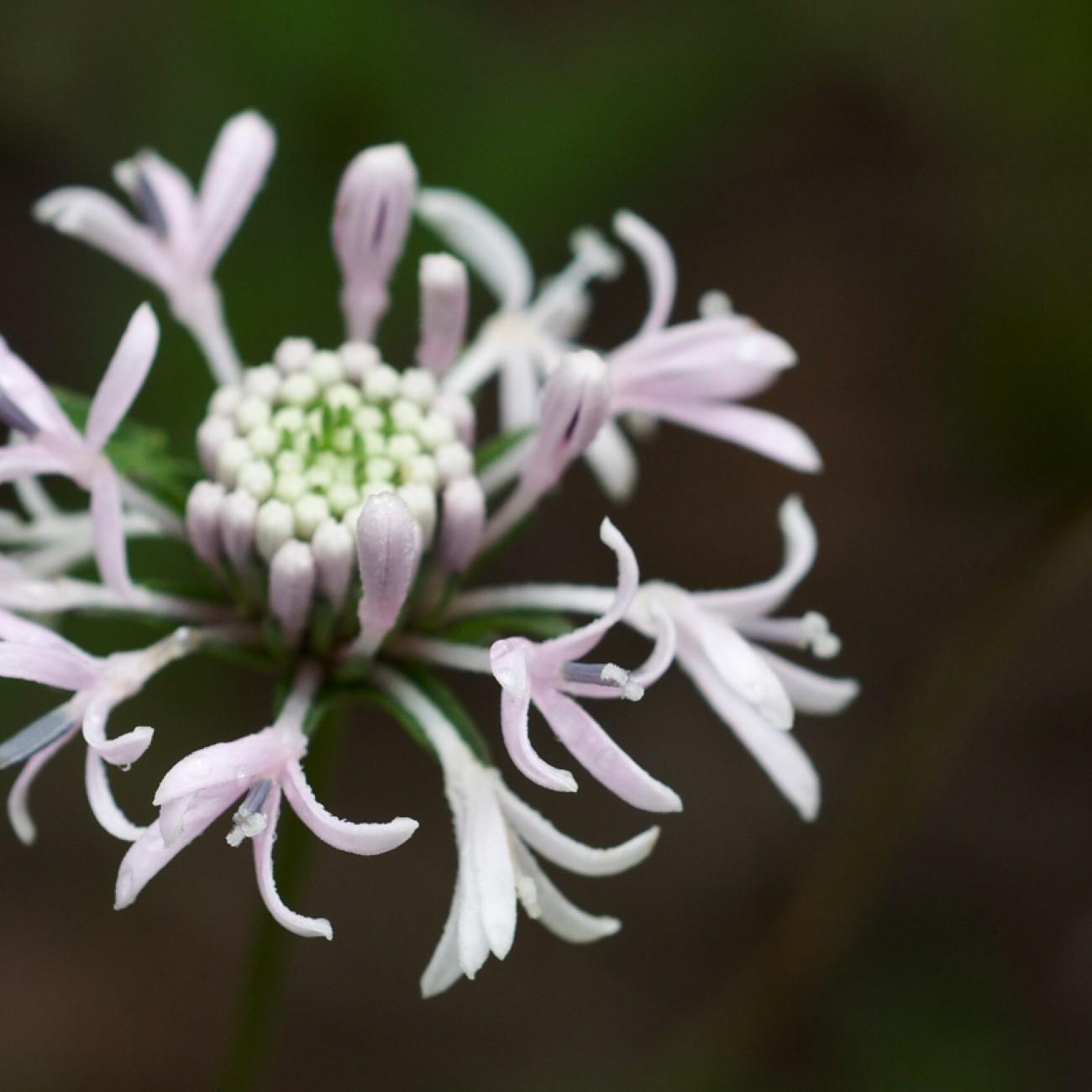
Barbara's Buttons
Marshallia caespitosa
Overview
Barbara's Buttons is a low-growing, clump-forming herbaceous perennial native to the prairies, open woodlands, and rocky slopes of the south-central U.S. It produces narrow, grass-like basal foliage and sturdy, leafless flower stalks topped with spherical, pincushion-shaped blooms that range from bright white to soft pale pink. The plant is highly valued for its ability to support native pollinators, including bees, butterflies, and beneficial wasps, throughout its blooming period.
Care Guide
Watering
Barbara's Buttons is drought-tolerant once established, requiring regular watering only during its first growing season to develop a deep root system. After maturity, water only during extended periods of extreme heat or drought, avoiding overwatering that can lead to root rot. It is well-adapted to the natural rainfall patterns of its native range, making it a low-maintenance choice for xeriscaping.
Light
This species thrives in full sun, requiring a minimum of 6 hours of direct sunlight per day for optimal growth and abundant flowering. It can tolerate very light partial shade, but too much shade will result in leggy growth and reduced bloom production. Plant in an open, unobstructed location to ensure it receives adequate sunlight year-round.
Soil
Barbara's Buttons prefers well-drained, sandy, loamy, or rocky soils with a neutral to slightly alkaline pH. It will not tolerate heavy, waterlogged clay soils, so amend dense planting areas with coarse sand or gravel to improve drainage before planting. It is adapted to poor, low-nutrient soils commonly found in its native prairie habitats.
Fertilizer
This plant rarely requires fertilization, as it is adapted to low-nutrient native soils. Over-fertilization will lead to excessive, leggy foliage growth at the expense of flower production. If planted in extremely depleted soil, apply a thin layer of compost in early spring once every 2 to 3 years to provide gentle, slow-release nutrients.
Temperature
Barbara's Buttons is cold-hardy in USDA zones 5 through 9, tolerating winter temperatures as low as -20°F (-29°C) once established. It thrives in warm summer temperatures up to 100°F (38°C) as long as it has adequate drainage and occasional moisture during extreme heat. It is well-adapted to the fluctuating temperature patterns of the south-central U.S. plains.
Pruning
Prune spent flower stalks after blooming to encourage a tidier clump appearance and prevent unwanted self-seeding if desired. Cut back dead, browned foliage to the ground in late winter or early spring before new growth emerges to promote healthy, vigorous new leaves. Avoid heavy pruning during the active growing season, as this can reduce bloom production for the current year.
Propagation
Barbara's Buttons is most easily propagated by seed, sown directly outdoors in fall or cold-stratified for 30 days before sowing in spring. Established clumps can also be divided in early spring every 3 to 4 years to maintain plant vigor and expand plantings. Seed-grown plants typically bloom in their second year of growth.
Humidity
This species prefers moderate to low humidity levels, well-adapted to the semi-arid to moderately humid conditions of its native range. It does not thrive in high-humidity environments with poor air circulation, which can increase the risk of foliar fungal diseases. Ensure plants are spaced adequately to allow good airflow around foliage in more humid regions.
Repotting
Barbara's Buttons is rarely grown in containers, but if potted, repot every 2 to 3 years in early spring before new growth emerges. Use a fast-draining, sandy potting mix and select a container with ample drainage holes to prevent waterlogging. Avoid overpotting, as this can hold excess moisture around the root system and cause rot.
Uses & Symbolism
Barbara's Buttons is a popular choice for native plant gardens, pollinator habitats, prairie restorations, and rock gardens, where its delicate blooms add soft texture and support local beneficial insect populations. It also makes an excellent cut flower, with long-lasting spherical blooms that work well in fresh floral arrangements. Its drought tolerance and low maintenance needs make it ideal for low-water xeriscaping projects in its native range.
Diseases & Pests
Barbara's Buttons is relatively pest and disease free when grown in its preferred conditions, with root rot being the most common issue caused by poorly drained, waterlogged soils. In high-humidity environments with poor air circulation, it may occasionally develop powdery mildew or other foliar fungal diseases. It has very few pest issues, though aphids may occasionally feed on young flower stalks, which can be controlled with a strong spray of water or insecticidal soap.
Related plants
Other plants you might like if you grow Barbara's Buttons.
%22%2F%3E%0A%20%20%20%20%20%20%3Ccircle%20cx%3D%22920%22%20cy%3D%22180%22%20r%3D%2290%22%20fill%3D%22%23cfe8d5%22%2F%3E%0A%20%20%20%20%20%20%3Cpath%20d%3D%22M600%20590c-90-180-215-255-310-280%200%20165%20118%20296%20270%20296h40z%22%20fill%3D%22%2379b88e%22%2F%3E%0A%20%20%20%20%20%20%3Cpath%20d%3D%22M600%20590c80-150%20198-212%20302-228-8%20142-123%20255-270%20255h-32z%22%20fill%3D%22%235c9f73%22%2F%3E%0A%20%20%20%20%20%20%3Cpath%20d%3D%22M600%20610V360%22%20stroke%3D%22%234f8c64%22%20stroke-width%3D%2218%22%20stroke-linecap%3D%22round%22%2F%3E%0A%20%20%20%20%20%20%3Ctext%20x%3D%22600%22%20y%3D%22700%22%20text-anchor%3D%22middle%22%20font-family%3D%22Arial%2C%20sans-serif%22%20font-size%3D%2244%22%20fill%3D%22%23365c45%22%3E%0A%20%20%20%20%20%20%20%20Plant%20image%20coming%20soon%0A%20%20%20%20%20%20%3C%2Ftext%3E%0A%20%20%20%20%3C%2Fsvg%3E%0A%20%20)