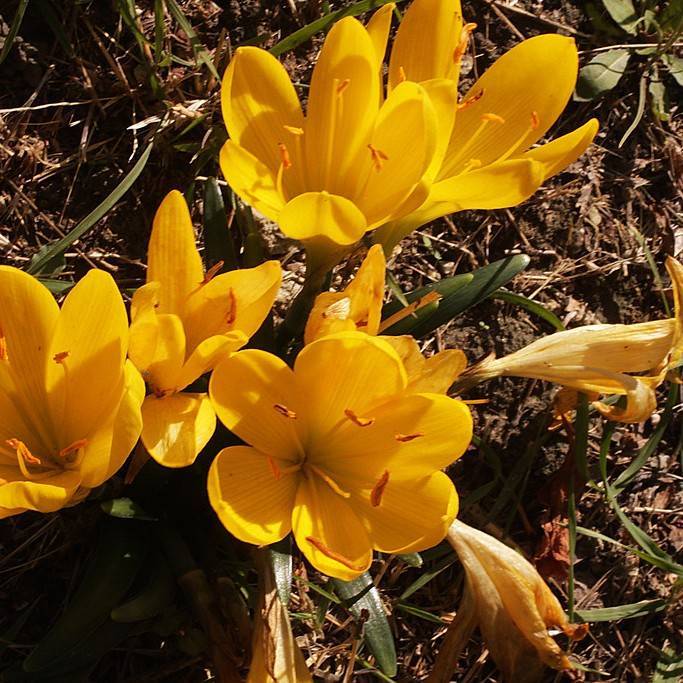
Autumn Daffodil
Sternbergia lutea
Overview
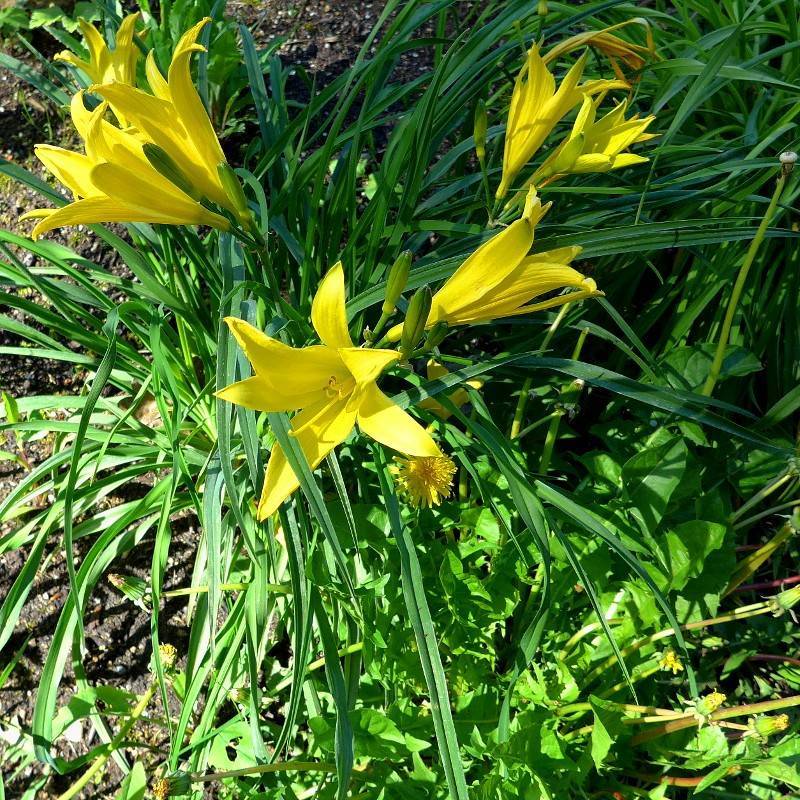
Autumn daffodil, often confused with true daffodils or fall crocuses, is a drought-tolerant bulbous perennial adapted to dry summer dormancy typical of its native Mediterranean habitat. Its glossy, golden yellow flowers appear in late summer to early fall, holding up well in cool autumn weather, while evergreen foliage persists through winter before dying back in late spring. The plant naturalizes readily in suitable climates, forming dense clumps of blooms over several years.
Care Guide
Watering
Water sparingly during fall bloom and winter foliage growth, allowing the top 2 inches of soil to dry out between waterings to prevent bulb rot. Cease watering entirely once foliage dies back in late spring, keeping bulbs completely dry during their summer dormancy period.
Light
Plant in full sun to partial shade, with at least 6 hours of direct sunlight daily during the fall and winter growing season for optimal flowering. In hotter Mediterranean climates, light afternoon shade during summer dormancy does not harm dormant bulbs.
Soil
Requires sharply drained, sandy or loamy soil with a neutral to slightly alkaline pH, as poorly drained heavy clay soils will quickly cause bulb rot. Amending planting sites with coarse sand or grit improves drainage for long-term bulb health.
Fertilizer
Apply a balanced, slow-release bulb fertilizer in early fall just as flower spikes begin to emerge, and again in early spring to support foliage growth and bulb energy storage for the next year. Avoid over-fertilizing with high-nitrogen formulas, which promote excessive foliage at the expense of blooms.
Temperature
Thrives in USDA hardiness zones 6 to 9, tolerating winter lows down to -10°F (-23°C) when bulbs are planted at the recommended depth of 4 to 6 inches. Hot, dry summer temperatures are required for successful dormancy, making the plant poorly suited to cool, wet summer climates.
Pruning
Remove spent flower stalks after blooming to prevent seed formation, which diverts energy from bulb growth. Allow foliage to die back completely on its own in late spring before trimming it away, as the leaves photosynthesize to replenish bulb energy stores.
Propagation
Propagate by dividing mature bulb clumps every 3 to 4 years in late summer, during the dormancy period before new growth emerges. Separate offset bulbs from the parent bulb and replant immediately at the same depth, spacing bulbs 3 to 4 inches apart.
Humidity
Tolerates low to moderate humidity levels, with no special humidity requirements during its active growing season. High summer humidity during dormancy increases the risk of bulb rot, so good air circulation around planting sites is recommended.
Repotting
For container-grown specimens, repot every 2 to 3 years in late summer during dormancy, refreshing the potting mix with additional grit to maintain drainage. Ensure pots have ample drainage holes, and avoid overpotting, as crowded bulbs tend to flower more prolifically.
Uses & Symbolism
Widely planted in rock gardens, border edges, and gravel gardens for its vivid fall blooms that fill seasonal gaps when most summer flowers have faded. It is also suitable for container cultivation on patios or windowsills, and its cut flowers last well in small floral arrangements. In its native range, it has historically been used in folk medicine, though its toxic alkaloids make ingestion unsafe.
Diseases & Pests
The most common issue is bulb rot caused by poorly drained soil or excessive watering during summer dormancy. Pests include narcissus bulb fly larvae, which tunnel into bulbs and cause decay, and slugs, which may feed on young foliage and flower buds in wet weather. Fungal leaf spot can occur in overly wet, crowded growing conditions, though it is rarely fatal if affected foliage is promptly removed.
Related plants
Other plants you might like if you grow Autumn Daffodil.