Asian Wild Oats
Avena fatua subsp. fatua
Overview
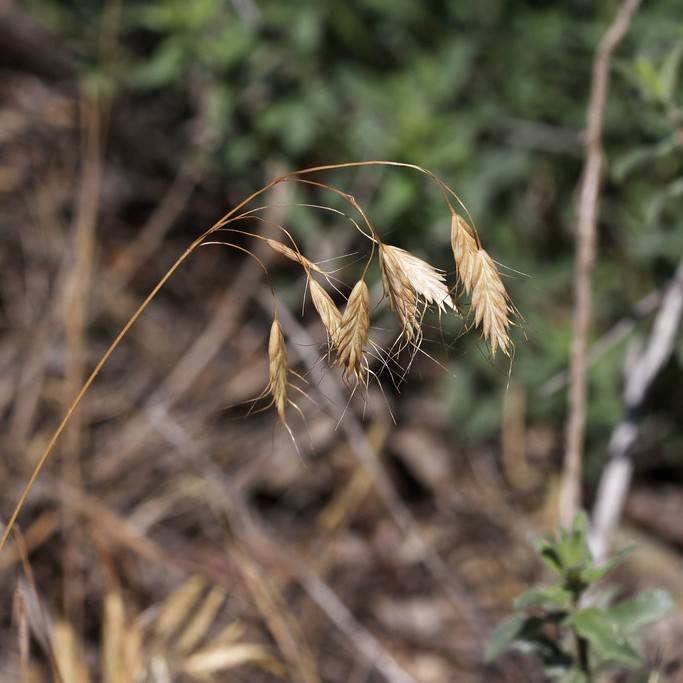
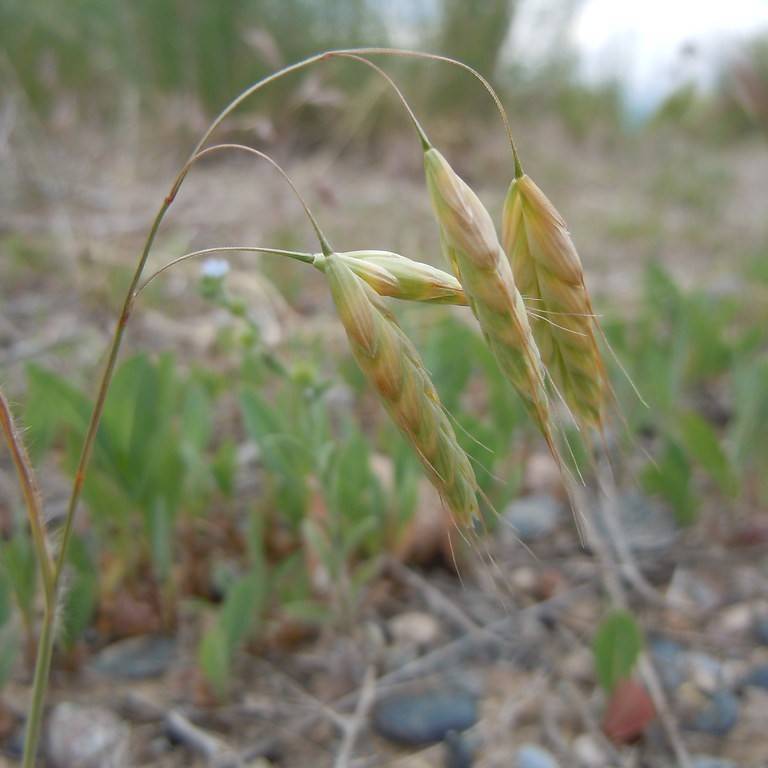
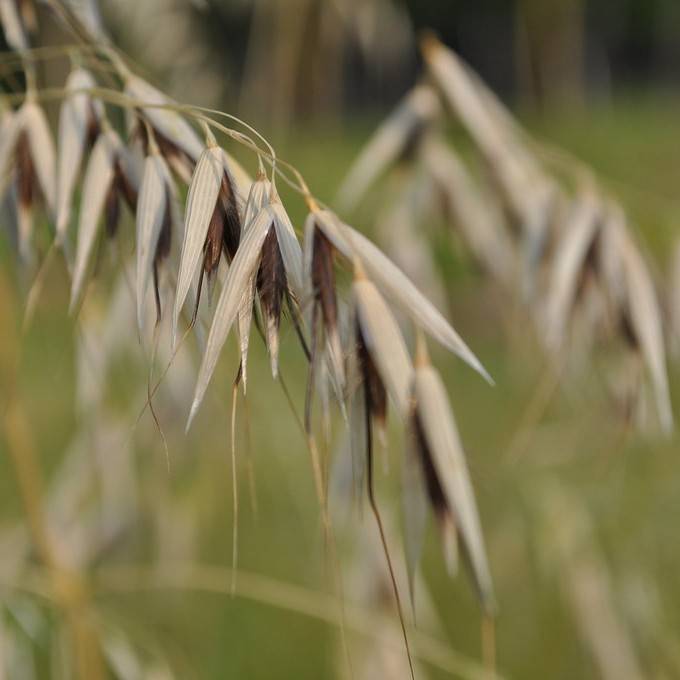
Asian wild oats are a fast-growing annual grass in the Poaceae family, closely related to cultivated oat crops. Native to temperate Eurasia, they have spread globally as a common agricultural weed, thriving in disturbed soils, crop fields, and roadside habitats. The plant produces loose, drooping panicles of spikelets with characteristic hairy glumes and twisting awns that aid in seed dispersal and burial. While often targeted for weed control, they have historical uses as a wild-harvested grain and provide forage for grazing animals and seed for birds.
Care Guide
Watering
Asian wild oats are highly drought-tolerant, requiring only occasional natural rainfall to thrive in most outdoor habitats. They prefer consistently moist but well-drained soil during germination and early growth, but established plants can survive extended dry periods without supplemental water. Overwatering or prolonged soggy soil will cause root rot and stunted growth, so avoid irrigation unless grown in extremely arid conditions.
Light
This species grows best in full, direct sunlight, requiring a minimum of 6 hours of unobstructed light daily for optimal growth and seed production. It can tolerate partial shade, but plants will be leggy, produce fewer seed heads, and have reduced vigor in low-light conditions. It is adapted to open, unshaded habitats including crop fields, pastures, and disturbed roadside areas.
Soil
Asian wild oats are extremely adaptable to a wide range of soil types, including sandy, loam, clay, and poor, compacted soils. They prefer a neutral to slightly alkaline soil pH between 6.0 and 8.0, but can survive in moderately acidic conditions as low as 5.5. Good drainage is the only critical soil requirement, as the plant cannot tolerate waterlogged root zones for extended periods.
Fertilizer
This grass species does not require supplemental fertilization to thrive, as it efficiently extracts nutrients from even poor, low-fertility soils. When grown in agricultural settings, excess nitrogen fertilization can encourage aggressive growth and increase seed production, making weed control more difficult. If cultivated for forage or seed, a light application of balanced 10-10-10 fertilizer at planting can support early establishment, but is not strictly necessary.
Temperature
Asian wild oats are adapted to temperate climates, germinating best when soil temperatures are between 40 and 70°F (4 and 21°C). Mature plants can tolerate light frosts down to 25°F (-4°C) but will be killed by hard, sustained freezes below 20°F (-7°C). They grow optimally in temperatures between 60 and 80°F (15 and 27°C), and will go to seed quickly in extended hot weather above 90°F (32°C).
Pruning
Pruning is generally unnecessary for Asian wild oats, as the plant completes its life cycle in a single growing season and dies back after producing seed. If grown as a weed in agricultural or garden settings, pulling or cutting plants before they develop mature seed heads will prevent self-sowing and reduce spread to new areas. For forage production, plants can be cut back to 6 inches above the soil line once during the early growth stage to encourage bushier, more palatable regrowth.
Propagation
Asian wild oats propagate exclusively from seed, which is produced in large quantities on mature panicles in late summer and early fall. Seeds have a natural dormancy period, and many will remain viable in the soil for up to 10 years, germinating when exposed to favorable moisture and temperature conditions. To propagate intentionally, sow seeds directly on the soil surface in early spring, lightly raking them in to ensure good contact with the soil, and keep moist until germination occurs in 7 to 14 days.
Humidity
This species is highly adaptable to a wide range of humidity levels, thriving in both dry, arid regions and humid temperate climates. It prefers average ambient humidity between 30 and 70%, but can tolerate occasional high humidity above 80% as long as there is adequate air circulation to prevent fungal leaf diseases. Extended periods of high humidity combined with cool temperatures can increase the risk of powdery mildew and rust infections.
Repotting
Repotting is not applicable for this species, as it is almost exclusively grown outdoors in ground soil as a wild, weedy, or forage plant. If grown in containers for research or ornamental purposes, plants should be sown directly in their final container to avoid root disturbance, as they do not transplant well once established. Container-grown plants will complete their life cycle in one season and can be discarded after seed set.
Uses & Symbolism
Historically, Asian wild oats were harvested as a wild grain by indigenous Eurasian communities, used whole in porridges, ground into flour, or fed to livestock as a nutrient-dense forage crop. The seeds are a valuable food source for songbirds, game birds, and small mammals, and the plant provides cover for ground-nesting wildlife in open grassland habitats. In agricultural settings, it is primarily considered a problematic weed that reduces yields of small grain crops including wheat, barley, and cultivated oats, though it is sometimes included in native grass seed mixes for pollinator and habitat restoration projects.
Diseases & Pests
Asian wild oats are relatively resistant to most pests and diseases, though they can be affected by common grass pathogens including powdery mildew, leaf rust, and stem rust in cool, humid conditions with poor air circulation. They are a host for several agricultural pests including oat aphids, cereal leaf beetles, and root-knot nematodes, which can spread to adjacent cultivated grain crops. Overly wet soil conditions can lead to root rot and seedling blight, especially in poorly drained clay soils.
Related plants
Other plants you might like if you grow Asian Wild Oats.