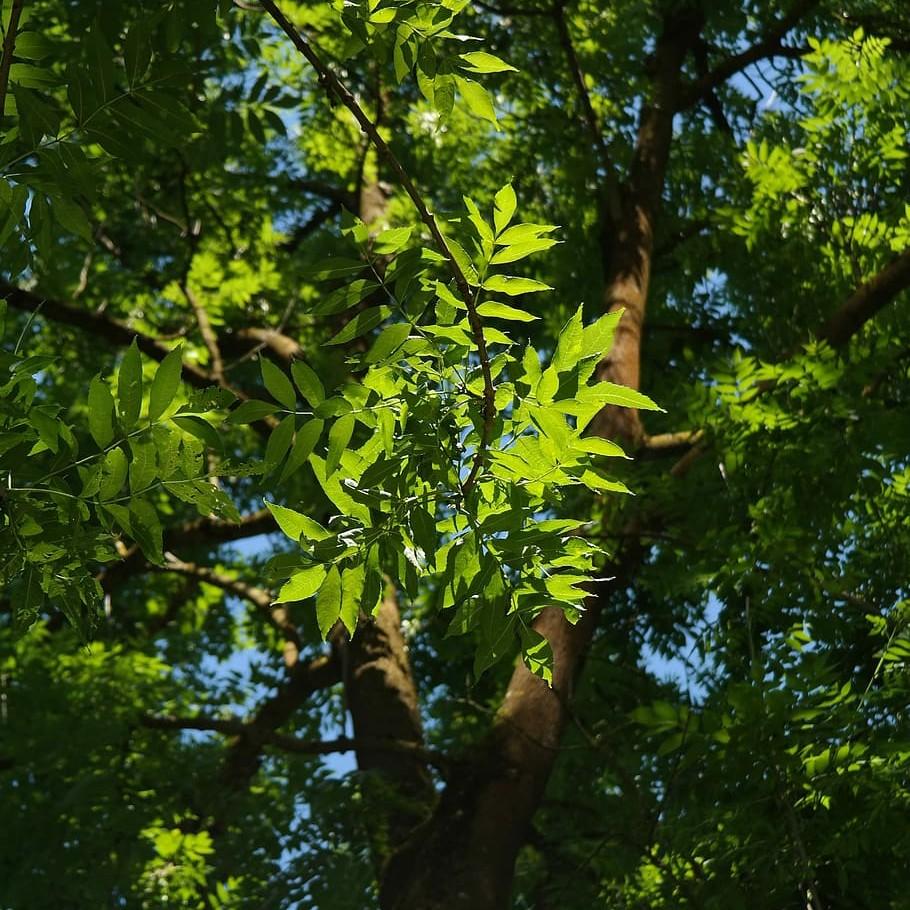
Ash
Fraxinus excelsior
Overview
Common ash is a tall, fast-growing deciduous tree recognizable by its pinnately compound leaves, gray furrowed bark, and clusters of winged samara seeds that disperse via wind in autumn. It thrives in cool, temperate climates, forming a broad, open canopy that supports a diverse range of understory flora and fauna in native habitats. Its strong, flexible wood has been used for millennia for tool handles, sports equipment, and furniture, making it one of Europe’s most economically important hardwood species.
Care Guide
Watering
Ash trees prefer consistent moisture, especially during their first 3–5 years of establishment, requiring deep watering every 1–2 weeks during extended dry periods to support root development. Mature specimens are moderately drought tolerant, though prolonged water stress can weaken their resistance to pests and disease, so supplemental watering is recommended during severe, multi-month droughts. Avoid overwatering in poorly drained sites, as soggy soil can cause root rot and stunt growth.
Light
Ash trees grow best in full sun, requiring a minimum of 6 hours of direct, unfiltered sunlight daily to develop a strong, healthy canopy and vigorous growth. They can tolerate partial shade, especially when young, but reduced light will lead to sparser foliage, slower growth, and a more narrow, upright form. Plant in an open, unshaded location away from taller competing trees for optimal performance.
Soil
Ash adapts to a wide range of soil types, including loam, clay, and sandy soils, as long as the site is well-drained and has a pH between 6.0 and 7.5, though it can tolerate slightly alkaline conditions. It prefers deep, fertile, moist soils rich in organic matter, which support its fast growth rate and extensive root system. Avoid planting in compacted, waterlogged soils, as these will cause root suffocation and increase the risk of fungal infections.
Fertilizer
Young ash trees benefit from an annual application of balanced, slow-release 10-10-10 fertilizer in early spring, spread evenly over the root zone to support new leaf and root growth. Mature, established ash trees rarely need regular fertilization, though a light application of nitrogen-rich fertilizer can be applied every 2–3 years if foliage is pale or growth is stunted. Avoid fertilizing in late summer or fall, as this can stimulate tender new growth that will be damaged by early frosts.
Temperature
Common ash thrives in temperate climates, with an ideal hardiness range of USDA zones 4 through 9, tolerating winter temperatures as low as -30°F (-34°C) when fully dormant. It prefers average summer temperatures between 60–75°F (15–24°C), though it can tolerate short periods of heat up to 95°F (35°C) if sufficient moisture is available. Late spring frosts can damage newly emerged leaves, so avoid planting in low-lying frost pockets where cold air accumulates.
Pruning
Ash trees should be pruned in late winter or early spring while dormant, to remove dead, diseased, or crossing branches, and to maintain a strong, central leader structure to prevent storm damage. Avoid heavy pruning of mature specimens, as ash is slow to seal pruning wounds, which can create entry points for fungal pathogens and ash dieback disease. Always sanitize pruning tools between cuts to prevent the spread of disease between trees.
Propagation
Ash is most commonly propagated from seed, which requires 2–3 months of cold stratification at 33–41°F (1–5°C) to break dormancy before sowing in moist, well-drained potting mix in spring. Softwood cuttings taken from young, healthy trees in early summer can also be rooted with the use of rooting hormone and kept under high humidity for 6–8 weeks until roots develop. Note that seed-grown ash may not retain the exact characteristics of the parent tree, so vegetative propagation is preferred for selected cultivars.
Humidity
Ash trees tolerate a wide range of humidity levels, thriving in average temperate humidity between 40–70% common in its native range. It can tolerate lower humidity in drier inland regions as long as soil moisture is sufficient, though very dry conditions can increase susceptibility to aphid infestations. Excessively high, prolonged humidity combined with poor air circulation can increase the risk of foliar fungal diseases like powdery mildew.
Repotting
Ash trees are rarely grown in containers long-term due to their large size and extensive root system, though saplings can be grown in large, deep pots for 1–2 years before planting out in the landscape. Repot young container-grown ash saplings every 12 months in early spring, moving to a pot 2–3 inches larger in diameter and using a well-drained, loamy potting mix amended with compost. Once the tree reaches 6 feet (1.8 m) tall, it should be transplanted to a permanent outdoor location to avoid root binding and stunted growth.
Uses & Symbolism
Ash timber is highly valued for its strength, flexibility, and shock resistance, making it the traditional material for tool handles, baseball bats, hockey sticks, furniture, and cabinetry. It is widely planted as a landscape and shade tree in parks, gardens, and urban areas for its attractive open canopy and tolerance of urban conditions, though ash dieback disease has reduced its use in recent years. Historically, its bark and leaves have been used in traditional herbal medicine for their anti-inflammatory and diuretic properties, though modern medicinal use is rare.
Diseases & Pests
The most devastating threat to ash trees is ash dieback, a fungal disease caused by Hymenoscyphus fraxineus, which causes leaf loss, crown dieback, and eventual death, with no cure for infected specimens. Common pests include the emerald ash borer, an invasive beetle whose larvae tunnel under the bark, disrupting nutrient flow and killing trees within 3–5 years of infestation in regions where it is established. Other minor issues include powdery mildew, rust, and aphid infestations, which typically cause only cosmetic damage to healthy, well-maintained trees.
Related plants
Other plants you might like if you grow Ash.