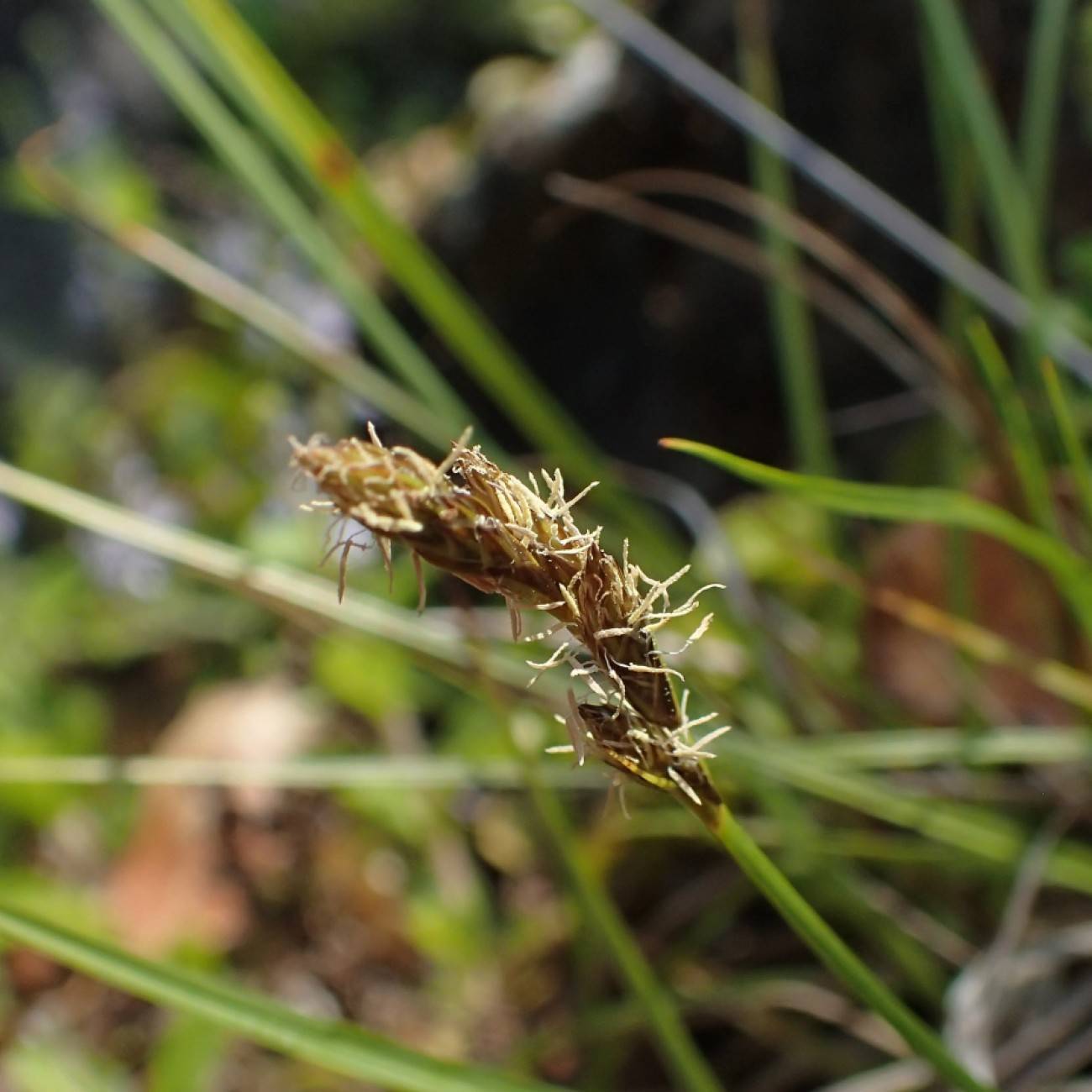
Arctic Hare's Foot Sedge
Carex lachenalii
Overview
Arctic Hare's Foot Sedge is a cold-hardy perennial sedge distinguished by its soft, hairy pale sheaths at the base of its stems, which give the plant its common hare’s foot moniker. It thrives in wet, rocky tundra, alpine meadows, and stream margins across high-latitude and high-elevation regions, forming dense, low clumps that stabilize fragile cold-climate soils. It produces small, inconspicuous brown spikelets in summer, making it a subtle, textural addition to rock gardens and cold-hardy landscape plantings.
Care Guide
Watering
Arctic Hare's Foot Sedge requires consistently moist, well-drained soil, as it is adapted to wet tundra and alpine stream edge habitats; never allow the root zone to dry out completely. Water regularly to maintain even moisture, especially during warm periods, and avoid prolonged standing water that can cause root rot in non-native growing conditions. In containers, use a pot with ample drainage holes and water when the top 1 inch of soil feels slightly dry to the touch.
Light
This species grows best in full sun to partial shade, mirroring the bright, open conditions of its native alpine and Arctic habitats. In warmer growing zones, provide light afternoon shade to protect foliage from scorching, as it is not adapted to intense, sustained heat. In indoor or greenhouse settings, place it near a south or west-facing window to receive a minimum of 6 hours of bright, indirect light daily.
Soil
Plant Arctic Hare's Foot Sedge in nutrient-poor, sandy or gravelly, slightly acidic to neutral soil that retains moisture but drains freely, mimicking its native rocky tundra substrate. Avoid heavy, clay-rich soils that hold excess stagnant water, as this can suffocate the plant’s shallow, fibrous root system. For container growing, use a mix of equal parts peat moss, perlite, and coarse sand to achieve the ideal drainage and moisture retention balance.
Fertilizer
This sedge is adapted to low-nutrient Arctic and alpine soils, so it requires very little fertilization to thrive. Apply a diluted, balanced slow-release fertilizer once per year in early spring at half the recommended strength to avoid overfeeding, which can cause lanky, weak growth. Do not fertilize in late summer or fall, as this can stimulate new growth that will be damaged by incoming cold temperatures.
Temperature
Arctic Hare's Foot Sedge is extremely cold-hardy, tolerating winter temperatures as low as -40°F (-40°C) and thriving in cool summer conditions between 50-65°F (10-18°C). It does not tolerate sustained heat above 75°F (24°C), so in warmer climates, it requires shade, consistent moisture, and good air circulation to prevent heat stress. Indoor specimens should be kept in cool rooms away from heating vents and direct, hot sunlight to maintain optimal growing temperatures.
Pruning
Prune away any dead, brown foliage in early spring before new growth emerges to keep clumps looking neat and improve air circulation around the plant. Snip off spent flower spikelets after blooming if you prefer a tidier appearance, though leaving the seed heads in place provides food for small native birds in cold regions. Avoid heavy pruning, as this can damage the dense, low-growing crown of the plant and slow its regrowth.
Propagation
The most reliable method of propagation is division of mature clumps in early spring, just as new growth begins to emerge. Gently dig up the clump, separate it into smaller sections with a sharp, sterile knife, each containing a portion of the root system and at least 3-5 healthy stems, and replant immediately at the same depth as the original plant. Propagation from seed is possible but very slow, as seeds require a 3-month cold stratification period to germinate, and seedlings take several years to reach mature size.
Humidity
This species prefers moderate to high humidity levels between 50-70%, consistent with the moist, cool air of its native Arctic and alpine habitats. In dry indoor environments, mist the foliage regularly with room-temperature water, or place the plant’s pot on a tray filled with pebbles and water to raise ambient humidity around it. Avoid placing it near dry air sources like radiators or air conditioning vents, as this can cause leaf browning and desiccation.
Repotting
Container-grown Arctic Hare's Foot Sedge only needs repotting every 2-3 years, when it becomes root-bound and growth slows significantly. Repot in early spring, moving the plant to a slightly larger pot with fresh, well-draining alpine soil mix, taking care not to damage the shallow, fibrous root system during the process. After repotting, water thoroughly and place the plant in a cool, partially shaded spot for 1-2 weeks to allow it to acclimate to its new container.
Uses & Symbolism
Arctic Hare's Foot Sedge is primarily used as a textural ornamental in alpine rock gardens, cold-climate native plant landscapes, and container gardens designed for cool, low-nutrient conditions. It is also planted for erosion control on fragile, high-elevation or high-latitude slopes, as its dense, fibrous root system stabilizes wet, rocky soil and prevents runoff. In its native range, it provides forage for small grazing mammals and ground-nesting bird habitat.
Diseases & Pests
Arctic Hare's Foot Sedge is largely pest and disease resistant in its preferred cool, moist growing conditions, but it can develop root rot if grown in poorly draining, waterlogged soil. In warm, humid conditions, it may be susceptible to fungal leaf spots, which can be prevented by providing good air circulation around the plant and avoiding overhead watering that leaves foliage wet for extended periods. Aphids and spider mites may occasionally infest stressed indoor specimens, which can be treated with insecticidal soap or neem oil sprays.
Related plants
Other plants you might like if you grow Arctic Hare's Foot Sedge.