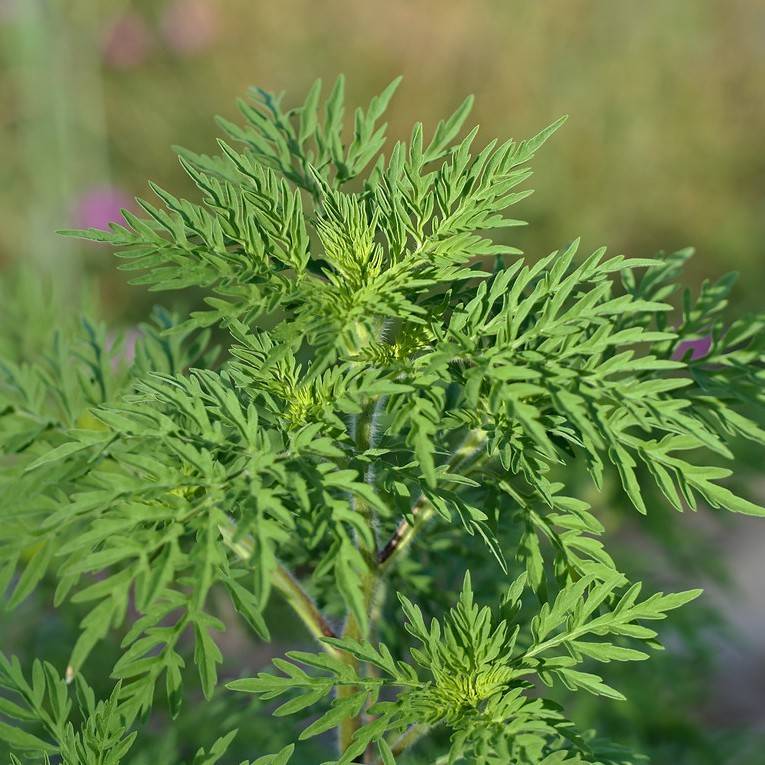
Annual Ragweed
Ambrosia artemisiifolia
Overview
Annual ragweed is an upright, branching herb with fern-like, finely divided green leaves and inconspicuous greenish flower spikes that produce copious amounts of wind-dispersed pollen. A single plant can generate over a billion pollen grains per season, leading to widespread seasonal allergic rhinitis and asthma exacerbations in sensitive individuals. It thrives in disturbed soils, including roadsides, agricultural fields, and vacant lots, often acting as an aggressive invasive species outside its native range.
Care Guide
Watering
Annual ragweed is highly drought-tolerant, requiring only natural rainfall to thrive in most temperate regions; it rarely needs supplemental watering, even in dry spells. Overwatering can lead to root rot and stunted growth, as it prefers well-drained conditions and can survive extended periods of low moisture.
Light
This species grows best in full, direct sunlight, requiring at least 6 hours of unobstructed light daily to reach full maturity and produce maximum pollen. It can tolerate partial shade but will exhibit reduced growth, sparser foliage, and lower pollen production in low-light conditions.
Soil
Annual ragweed adapts to nearly all soil types, including sandy, loamy, clay, and nutrient-poor disturbed soils, as long as drainage is adequate. It prefers a neutral to slightly alkaline pH range of 6.0 to 7.5, but can survive in mildly acidic or alkaline soils outside this range with minimal impact on growth.
Fertilizer
Fertilization is rarely required for annual ragweed, as it thrives in low-nutrient soils and will grow vigorously even in unamended, disturbed ground. Excess nitrogen from agricultural runoff or over-fertilization can encourage lusher, more robust growth and increase pollen production, worsening allergic impacts for nearby communities.
Temperature
This species grows best in temperate climates with average summer temperatures between 65 and 85°F (18 and 29°C), and can tolerate short periods of light frost early in the growing season. It will die back completely after the first hard frost in fall, dropping its mature seeds to germinate the following spring.
Pruning
Pruning is not recommended for annual ragweed if control is desired, as cutting plants back before they set seed can sometimes stimulate regrowth of new flowering stalks. For eradication, entire plants should be pulled up by the roots before flower buds open to prevent pollen release and seed dispersal, with all plant material disposed of in sealed waste bags.
Propagation
Annual ragweed propagates exclusively by seed, with seeds dropping from mature plants in fall and remaining dormant in the soil for up to 40 years before germinating when conditions are favorable. Germination occurs in early spring once soil temperatures consistently stay above 50°F (10°C), with seedlings establishing rapidly in bare, disturbed soil with little competition from other plants.
Humidity
Annual ragweed tolerates a wide range of humidity levels, from dry continental climates to humid subtropical regions, with no specific humidity requirements for healthy growth. High humidity during flowering does not reduce pollen dispersal, as the lightweight, dry pollen is adapted to travel long distances on wind currents even in moderate moisture conditions.
Repotting
Repotting is irrelevant for annual ragweed, as it is an outdoor, wild-growing species that is almost never cultivated intentionally in containers. If grown accidentally in potted plants, the entire root system should be removed and discarded before the plant reaches flowering stage to prevent pollen release.
Uses & Symbolism
Annual ragweed has very limited practical uses, though some Indigenous North American communities historically used small amounts of its leaves and roots in traditional herbal remedies for fever, insect bites, and gastrointestinal issues. It is also studied extensively by allergists and public health researchers to develop pollen forecasting models and allergy treatments for populations affected by hay fever.
Diseases & Pests
Annual ragweed is relatively resistant to most common plant diseases, though it may occasionally be affected by fungal rusts, powdery mildew, and leaf spot pathogens in overly moist, shaded conditions. Common pests include aphids, spider mites, and the ragweed leaf beetle, a biological control agent that feeds on foliage to reduce growth and seed production in invasive populations.
Related plants
Other plants you might like if you grow Annual Ragweed.