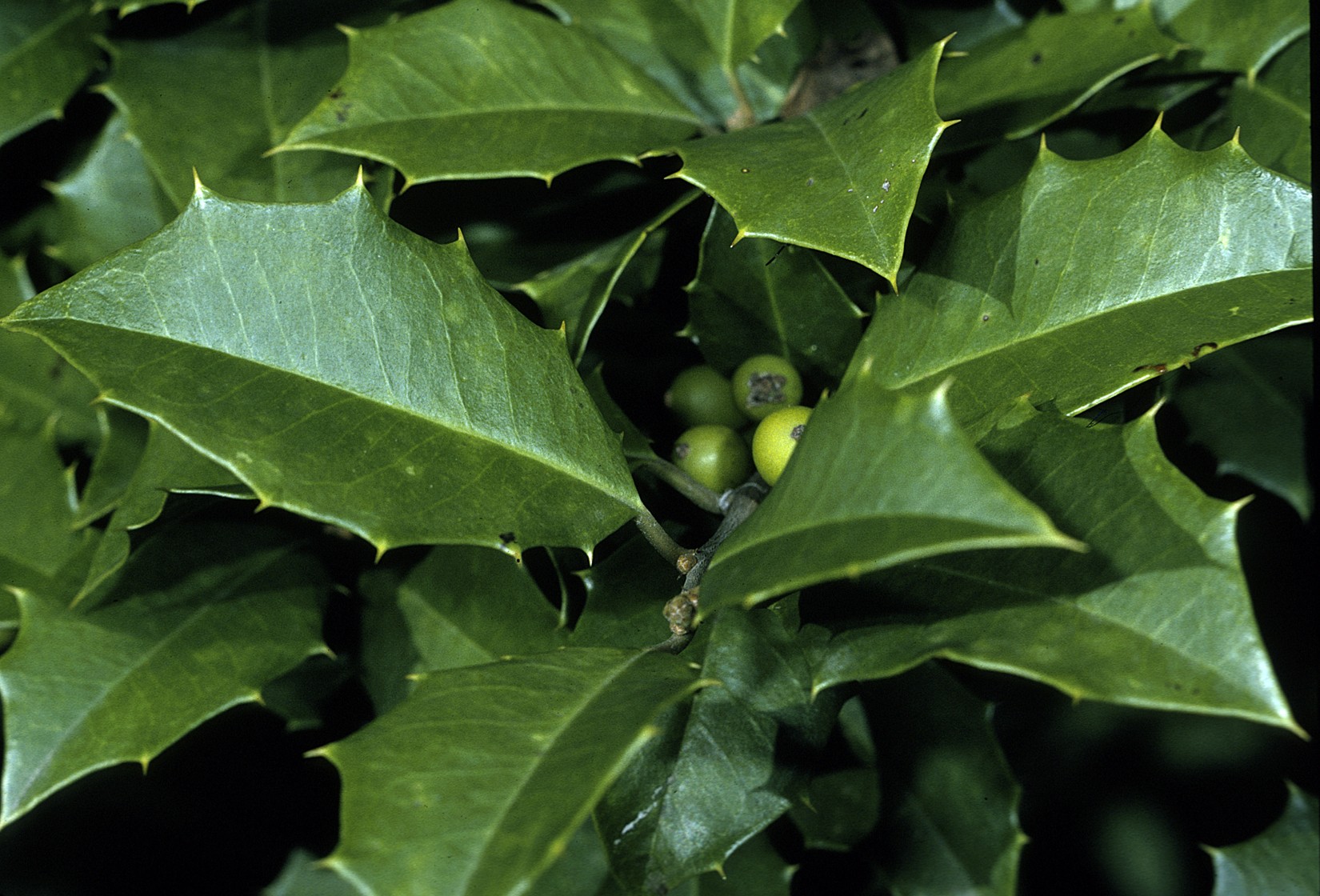
American Holly
Ilex opaca
Overview
American holly is a broadleaf evergreen tree native to eastern North American woodlands, coastal dunes, and swamp edges, prized for its year-round ornamental value. Female trees produce clusters of vibrant red berries in fall that persist through winter, providing critical food for songbirds and small mammals, while male trees produce small, inconspicuous white flowers in spring needed for pollination. Its dense, pyramidal growth habit and tolerance for pruning make it a popular choice for privacy hedges, specimen plantings, and festive holiday arrangements.
Care Guide
Watering
Water newly planted American holly deeply once or twice per week for the first two years to establish a strong root system, keeping soil consistently moist but not waterlogged. Mature trees are drought-tolerant, requiring supplemental watering only during extended periods of extreme heat or dryness to prevent leaf drop. Avoid overhead watering to reduce the risk of foliar fungal diseases.
Light
American holly thrives in full sun to partial shade, with full sun exposure encouraging the densest foliage growth and heaviest berry production on female trees. In hotter southern climates, it benefits from light afternoon shade to protect its leaves from scorching during peak summer temperatures. Too much deep shade will result in sparse, leggy growth and reduced berry yield.
Soil
This species prefers well-drained, acidic soil with a pH between 3.5 and 6.0, rich in organic matter to support healthy root development. It can tolerate a range of soil textures including sandy, loam, and clay, as long as standing water does not accumulate around the root zone. Amend heavy or alkaline soil with peat moss, compost, or pine bark fines to lower pH and improve drainage before planting.
Fertilizer
Feed American holly in early spring before new growth emerges using a slow-release, acid-forming fertilizer formulated for evergreens such as azalea or rhododendron blends. Avoid fertilizing after mid-summer, as this can stimulate tender new growth that is vulnerable to damage from late fall or winter frost. Established trees only require fertilization every two to three years, while younger, actively growing trees benefit from annual applications.
Temperature
American holly is cold-hardy in USDA zones 5 through 9, tolerating winter temperatures as low as -20°F (-29°C) once fully established. It can adapt to high summer temperatures up to 100°F (38°C) as long as it receives adequate moisture and some shade in the warmest parts of its range. Sudden temperature swings or harsh winter winds may cause leaf browning, so young trees benefit from a burlap windbreak in exposed locations.
Pruning
Prune American holly in late winter before new growth begins to shape the tree, remove dead, damaged, or crossing branches, and thin dense growth to improve air circulation. If harvesting branches for holiday decor, cut no more than one-third of the current year's growth to avoid stressing the tree. Wear heavy gloves during pruning to avoid injury from the sharp, spiny leaf edges.
Propagation
American holly is most commonly propagated from semi-hardwood cuttings taken in late summer or early fall, treated with rooting hormone, and placed in a well-drained, sterile growing medium under high humidity for 3 to 6 months until roots form. It can also be grown from seed, but seeds require 1 to 3 years of cold stratification to germinate, and seedlings will not retain the exact characteristics of the parent plant. For berry-producing plants, ensure at least one male pollinator tree is planted within 50 feet of female trees to enable cross-pollination.
Humidity
American holly adapts well to average ambient humidity levels between 40% and 70%, which are common across its native range. It can tolerate drier conditions once established, but prolonged very low humidity may cause leaf edge browning, especially on indoor potted specimens. High humidity paired with poor air circulation increases the risk of fungal leaf spots and powdery mildew, so ensure adequate space between plants for airflow.
Repotting
Potted American holly specimens should be repotted every 2 to 3 years in early spring, moving to a container only 1 to 2 inches larger in diameter than the current pot to avoid overwatering issues. Use a well-drained, acidic potting mix formulated for evergreens, and ensure the container has multiple drainage holes to prevent standing water. After repotting, water thoroughly and keep the plant in partial shade for 1 to 2 weeks to reduce transplant stress.
Uses & Symbolism
American holly is widely planted as an ornamental landscape tree for privacy hedges, specimen plantings, and wildlife gardens, as its persistent berries provide critical winter food for songbirds, deer, and small mammals. Cut branches with berries are a staple of holiday wreaths, garlands, and floral arrangements, valued for their festive evergreen foliage and bright red color. Its hard, dense wood is occasionally used for specialty woodworking projects including furniture inlays, tool handles, and decorative carvings.
Diseases & Pests
American holly is susceptible to fungal diseases including tar spot, powdery mildew, and leaf spot, which cause discoloration and premature leaf drop, especially in wet, poorly ventilated conditions. Common pests include holly leaf miners, scale insects, and spider mites, which feed on foliage and can cause stippling, curling, or yellowing of leaves if infestations are left untreated. Root rot may occur in heavy, waterlogged soil, leading to wilting, yellow foliage, and eventual plant death if drainage is not improved.
Related plants
Other plants you might like if you grow American Holly.