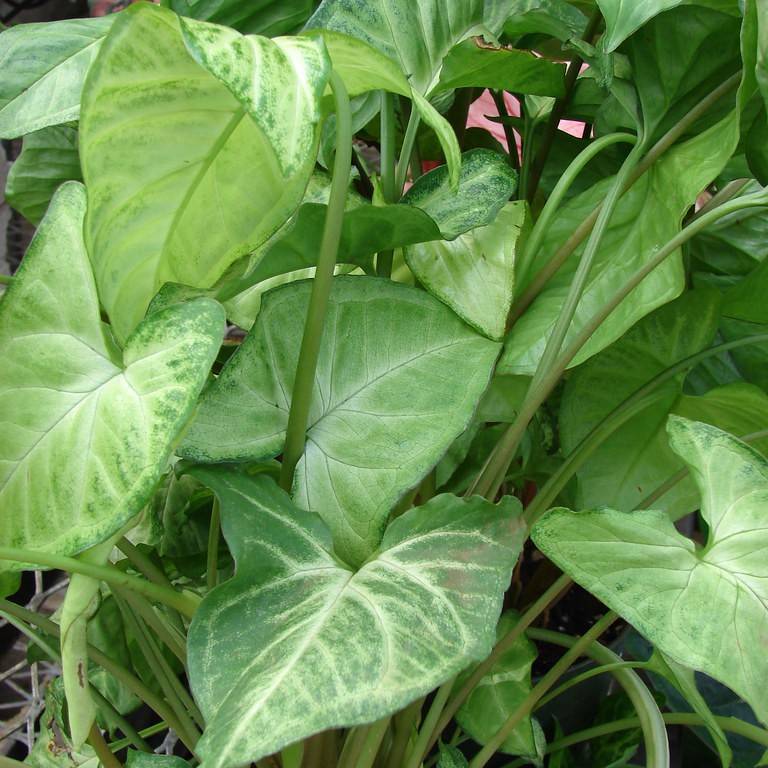
American Evergreen
Syngonium podophyllum
Overview
American evergreen, widely known as arrowhead plant or nephthytis, is a versatile tropical perennial valued for its attractive foliage that matures from simple arrow-shaped leaves to lobed, split forms as it climbs. In its native rainforest habitat, it grows as an understory epiphyte, using aerial roots to cling to tree trunks and spread across the forest floor. Cultivars are available in a range of variegated patterns, from creamy white and pink splashes to pale green marbling, making it a favorite for adding soft color to indoor spaces. It is one of the most forgiving houseplants, tolerating occasional neglect and a wide range of growing conditions.
Care Guide
Watering
Allow the top 1-2 inches of soil to dry out between waterings, typically every 1-2 weeks depending on light and temperature. Avoid overwatering, which can lead to root rot; reduce watering frequency in fall and winter when growth slows. Yellowing leaves often signal either overwatering or prolonged dryness, so adjust your schedule based on soil moisture levels.
Light
Thrives in bright, indirect light but tolerates low to medium light conditions well, making it suitable for shaded indoor corners. Variegated cultivars retain their color best with consistent bright indirect light, while solid green varieties can handle lower light exposure. Protect from direct sunlight, which will scorch leaves and cause unsightly brown patches.
Soil
Prefers a light, well-draining, nutrient-rich potting mix with a slightly acidic pH between 5.5 and 6.5. A standard houseplant mix amended with perlite, orchid bark, or peat moss to improve aeration and drainage works well for this species. Avoid heavy, compacted soils that hold excess moisture around the root system.
Fertilizer
Feed with a balanced, water-soluble houseplant fertilizer diluted to half strength every 4-6 weeks during the spring and summer active growing season. Do not fertilize in fall and winter, when the plant enters a period of slower growth and extra nutrients can build up in the soil and damage roots. Flush the soil every 3-4 months to remove accumulated fertilizer salts.
Temperature
Grows best in average indoor temperatures between 60-80°F (15-27°C). Avoid exposing the plant to temperatures below 50°F (10°C), as cold drafts and sudden temperature drops can cause leaf drop and stunted growth. Keep it away from air conditioning vents, heaters, and drafty windows during cold months.
Pruning
Prune back overgrown stems in early spring to encourage bushier, fuller growth, cutting just above a leaf node to stimulate new branching. Remove yellowed, damaged, or dead leaves as needed to maintain the plant’s appearance and prevent pest or disease issues. Wear gloves when pruning to avoid contact with the irritating sap.
Propagation
Easily propagated from stem cuttings taken in spring or summer; cut a 4-6 inch section of stem with at least 2-3 nodes, and root it in water, moist perlite, or potting mix in 2-4 weeks. Cuttings root best in warm, bright indirect light with consistent moisture, and no rooting hormone is required for successful propagation. Mature plants can also be divided during repotting to create multiple new specimens.
Humidity
Tolerates average household humidity levels between 40-50%, but thrives with higher humidity of 60-70% for faster growth and lusher foliage. Boost humidity by placing the plant on a pebble tray filled with water, grouping it with other tropical plants, or using a small humidifier near it during dry winter months. Brown leaf tips are a common sign that humidity is too low.
Repotting
Repot every 1-2 years in spring, or when roots start growing out of the drainage holes at the bottom of the pot. Select a pot that is 1-2 inches larger in diameter than the current one, with adequate drainage holes to prevent waterlogging. After repotting, water lightly and avoid fertilizing for 4-6 weeks to allow new roots to establish without damage.
Uses & Symbolism
Primarily grown as a low-maintenance ornamental houseplant, ideal for hanging baskets, tabletop displays, or trained to climb moss poles or trellises for vertical interest. It is recognized by NASA’s Clean Air Study for its ability to filter common indoor air pollutants including formaldehyde, benzene, and xylene, improving indoor air quality. In its native range, it has limited traditional medicinal uses for topical treatments, though its toxicity makes internal consumption unsafe.
Diseases & Pests
Generally resistant to most pests and diseases, but overwatering can lead to root rot, the most common issue for this species, characterized by yellowing leaves, mushy stems, and a foul odor from the soil. Common pests include spider mites, aphids, and mealybugs, which can be treated with regular neem oil applications, insecticidal soap, or wiping leaves with a damp cloth to remove infestations. Low humidity and underwatering can cause brown leaf tips, while excessive direct sunlight leads to scorched, brown leaf patches.
Related plants
Other plants you might like if you grow American Evergreen.