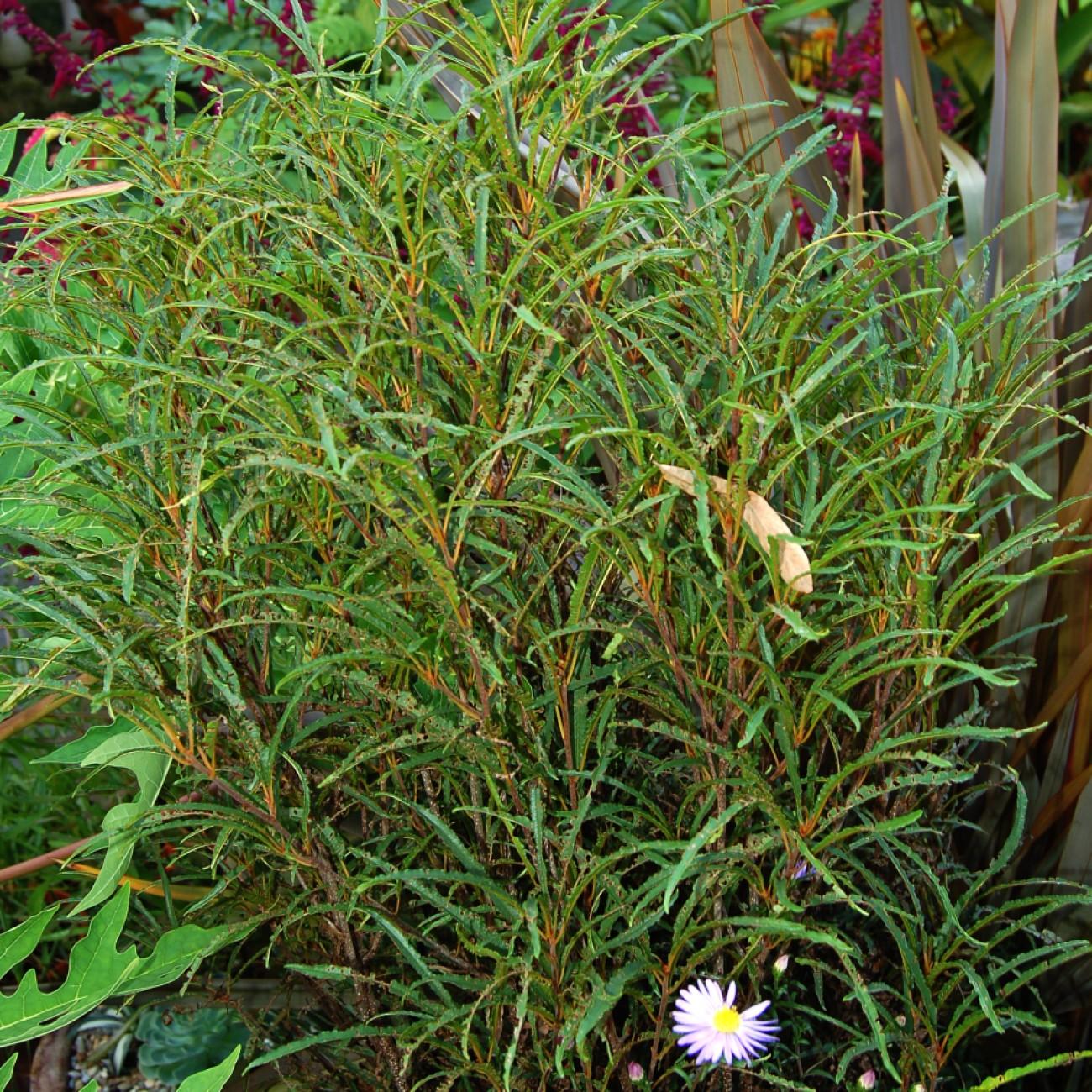
Alder Buckthorn
Frangula alnus
Overview
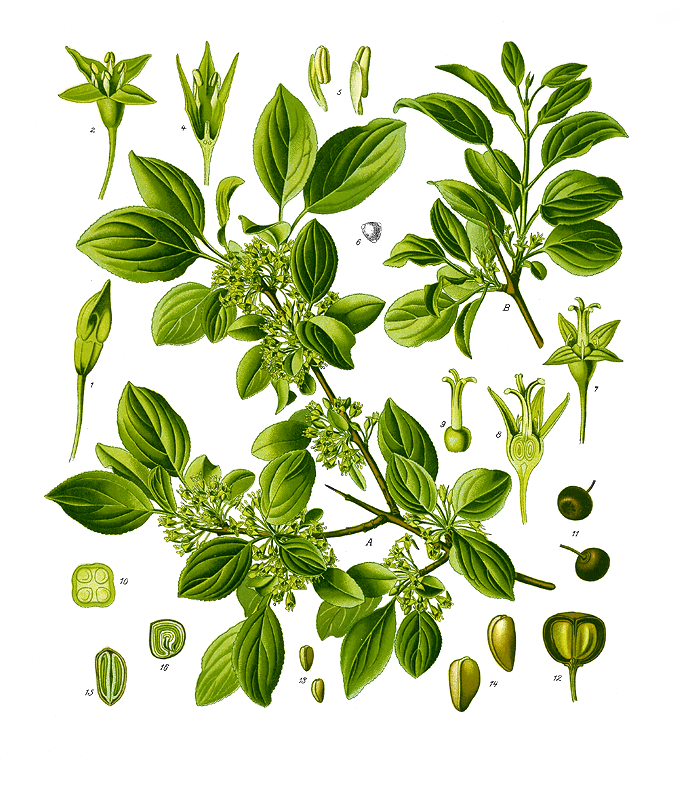
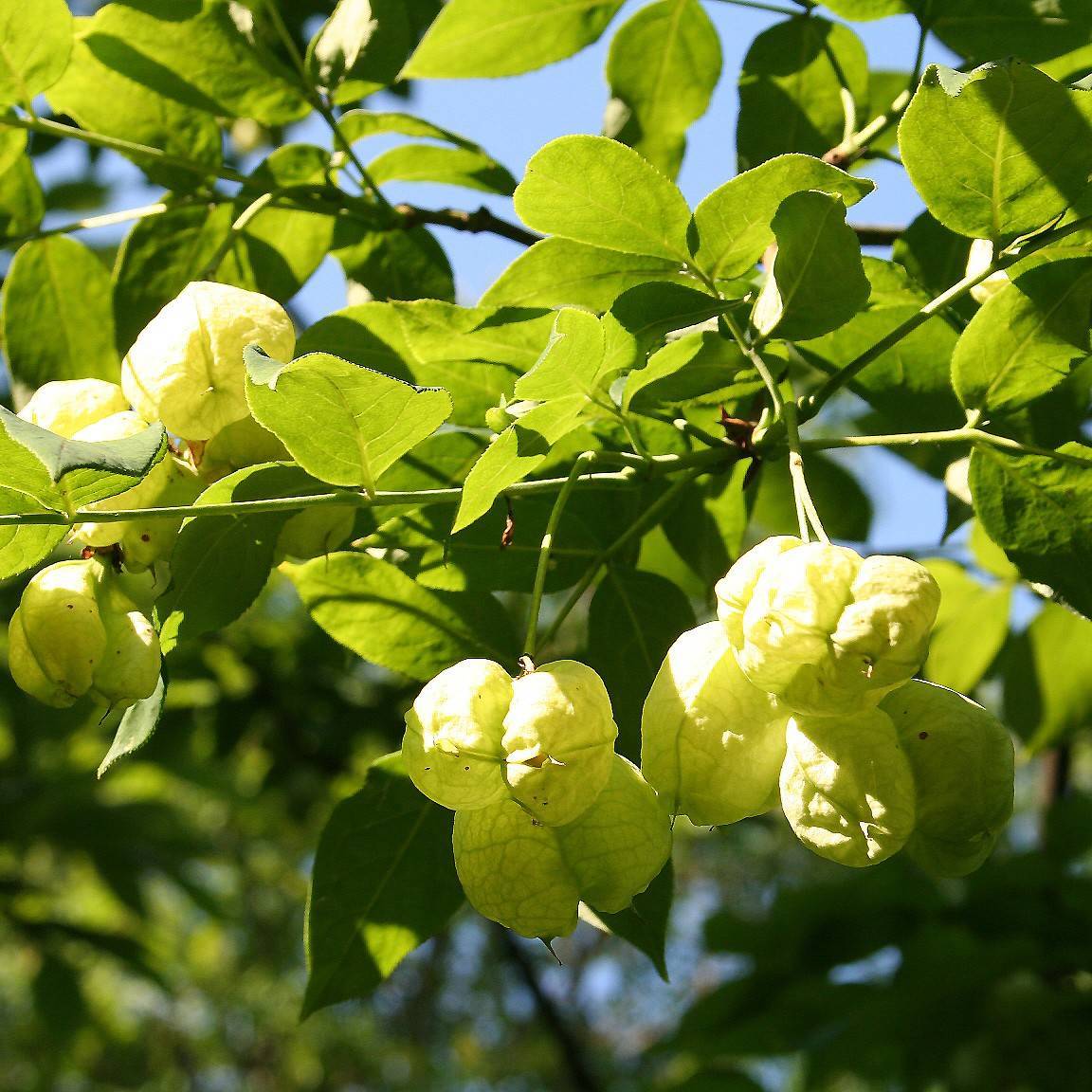
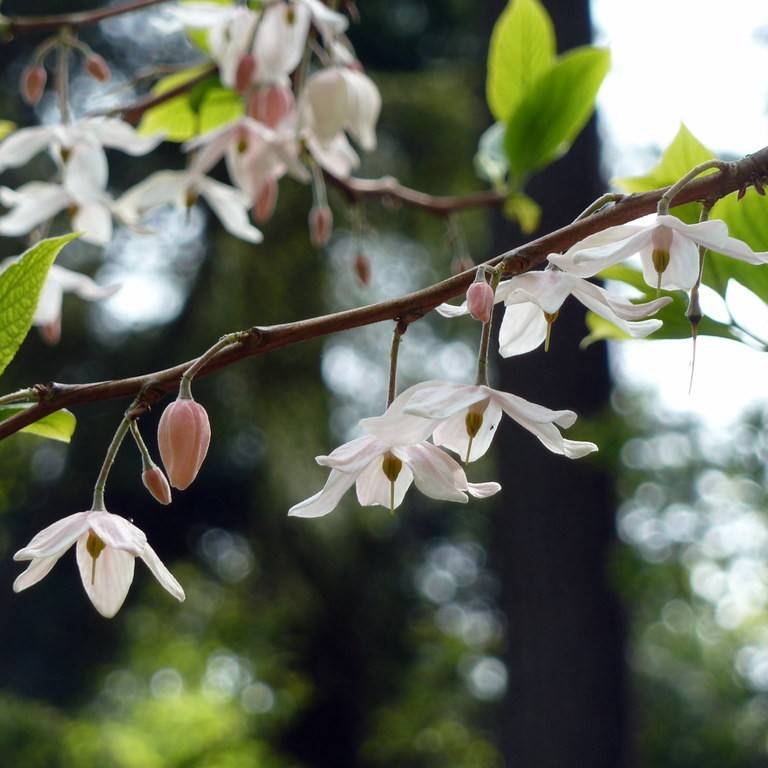
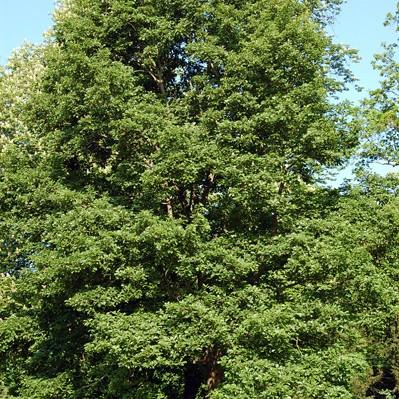
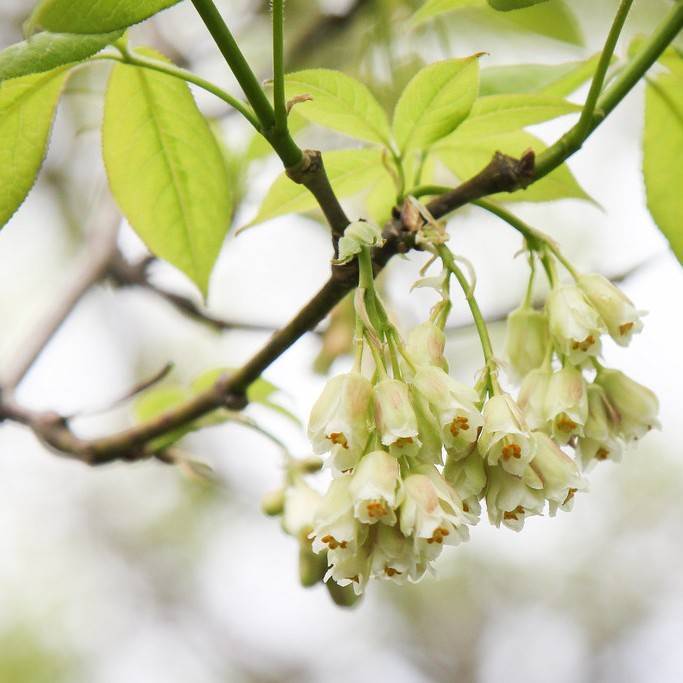
Alder Buckthorn is a hardy, multi-stemmed deciduous shrub that thrives in wet, acidic soils common to woodland edges, marshes, and stream banks. It produces small, inconspicuous greenish-white flowers in spring, followed by round berries that ripen from red to deep black in late summer, providing food for native bird species. Its smooth, gray bark and vibrant yellow fall foliage make it a low-maintenance choice for naturalized landscapes, though it is classified as invasive in some North American regions.
Care Guide
Watering
Alder Buckthorn prefers consistently moist, well-drained soil, and tolerates periodic flooding better than many other shrubs, making it ideal for rain gardens or riparian plantings. Water newly planted specimens deeply once or twice a week for the first growing season to establish a strong root system; mature plants only require supplemental watering during extended periods of drought. Avoid overwatering in heavy, poorly draining clay soils to prevent root rot, though the species is relatively resilient to occasional sogginess.
Light
This adaptable shrub grows best in full sun to partial shade, with full sun exposure encouraging denser foliage and more abundant flower and berry production. It tolerates deep shade better than most woody shrubs, making it suitable for understory plantings in mature woodlands, though growth may be sparser and fruiting reduced in low-light conditions. In hot, southern climates, provide light afternoon shade to prevent leaf scorch during peak summer heat.
Soil
Alder Buckthorn thrives in acidic, loamy, or sandy soils with high organic matter content, but it tolerates a wide range of soil types including heavy clay, chalk, and poorly drained wet soils. It adapts to pH levels from 4.5 to 7.5, though it struggles in highly alkaline conditions that can cause nutrient deficiency and yellowing foliage. Amend heavy, compacted soils with compost or peat moss at planting time to improve drainage and support healthy root development.
Fertilizer
Mature Alder Buckthorn plants rarely require fertilization, as they obtain sufficient nutrients from most natural soil environments. For young, newly planted shrubs, apply a balanced, slow-release 10-10-10 fertilizer in early spring before new growth emerges to support healthy foliage and root development. Avoid over-fertilizing, as this can lead to excessive, weak growth that is more susceptible to pest damage and winter dieback.
Temperature
This cold-hardy shrub thrives in USDA hardiness zones 3 through 7, tolerating winter temperatures as low as -40°F (-40°C) without significant damage. It prefers cool to moderate summer temperatures between 60–75°F (16–24°C), and may experience leaf scorch in prolonged temperatures above 90°F (32°C) if grown in full sun without adequate moisture. Provide a layer of mulch around the base of the plant in late fall to insulate roots from extreme temperature fluctuations in colder regions.
Pruning
Prune Alder Buckthorn in late winter or early spring before new growth begins to remove dead, damaged, or crossing branches, and to maintain the desired shape and size. For shrubs grown for naturalized habitat, minimal pruning is required; simply remove any suckers that spread beyond the intended planting area to prevent unwanted spread. If the plant becomes overgrown, you can perform a hard rejuvenation pruning by cutting stems back to 1–2 feet (30–60 cm) above the ground, which will encourage dense new growth in the following growing season.
Propagation
Alder Buckthorn is most easily propagated from seed, which requires 2–3 months of cold stratification to break dormancy; sow stratified seeds in moist potting mix in spring, and germination typically occurs within 4–6 weeks. It can also be propagated from semi-hardwood cuttings taken in mid to late summer; dip cut ends in rooting hormone, plant in a mix of peat and perlite, and keep under high humidity until roots form in 8–12 weeks. Note that plants grown from seed may take 3–5 years to reach maturity and produce flowers and berries.
Humidity
Alder Buckthorn adapts well to a wide range of humidity levels, thriving in the moderate to high humidity common to its native wetland and woodland habitats. It tolerates average indoor humidity if grown as a potted specimen, though it will benefit from occasional misting during very dry winter months to prevent leaf browning along the edges. Avoid placing potted plants near heating or cooling vents, which can cause rapid moisture loss and stress the shrub.
Repotting
If grown in a container, repot young Alder Buckthorn shrubs every 2–3 years in early spring before new growth emerges, using a slightly larger pot with drainage holes and a nutrient-rich, acidic potting mix. Mature potted specimens can be repotted every 4–5 years, or when roots begin to grow out of the drainage holes or lift the plant out of the pot. After repotting, water thoroughly and place in partial shade for 1–2 weeks to reduce transplant shock before returning to its usual growing location.
Uses & Symbolism
Historically, the dried aged bark of Alder Buckthorn was used in traditional herbal medicine as a laxative, though it is no longer recommended for internal use due to its toxic properties and potential side effects. It is a valuable species for wildlife gardens, providing nectar for pollinators in spring and berries that feed thrushes, finches, and other native bird species in late summer and fall. Its dense, multi-stemmed growth habit also makes it effective for erosion control along stream banks and in wetland restoration projects.
Diseases & Pests
Alder Buckthorn is relatively pest and disease resistant, though it can be affected by powdery mildew in humid, poorly ventilated conditions, which causes a white, powdery coating on foliage and can be treated with neem oil or copper fungicides. It may also be infested with aphids, scale insects, and caterpillars, which feed on sap and foliage; minor infestations can be removed with a strong stream of water, while severe cases may require treatment with insecticidal soap. The species is an alternate host for oat crown rust, a fungal disease that affects oat crops, so it is not recommended for planting near agricultural oat fields.
Related plants
Other plants you might like if you grow Alder Buckthorn.