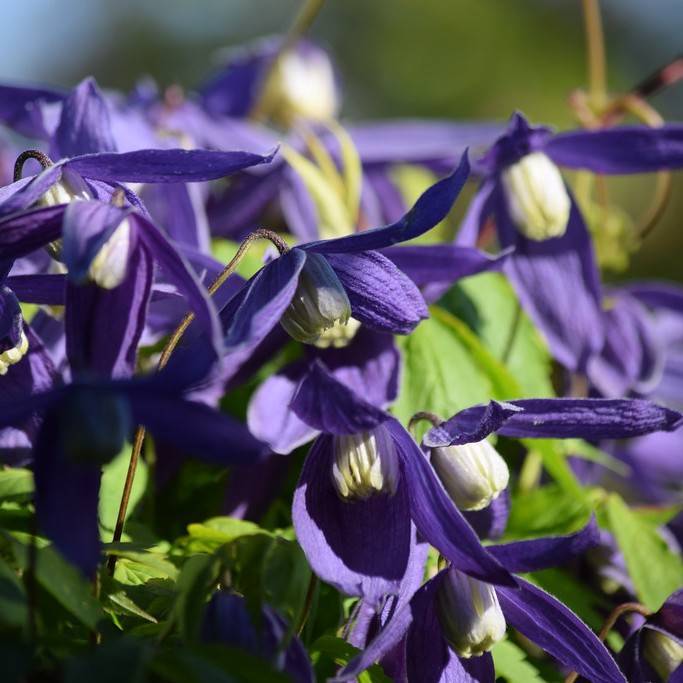
Alpine Clematis
Clematis alpina
Overview
Alpine clematis is a hardy, deciduous climber prized for its early spring bloom of nodding, bell-shaped flowers in shades of blue, purple, pink, or white, often with contrasting creamy stamens. Its slender, twining stems attach to supports via twisted leaf stalks, making it well-suited for small trellises, arbors, rock crevices, or cascading over low walls. Unlike many large-flowered clematis varieties, it blooms on previous year’s wood, requiring minimal pruning to preserve flower buds.
Care Guide
Watering
Water regularly to keep soil consistently moist but not waterlogged, especially during active growth and dry spring or summer periods. Reduce watering frequency in late fall and winter when the plant is dormant, allowing the top 1-2 inches of soil to dry out between sessions. Avoid overhead watering to minimize fungal disease risk on foliage and stems.
Light
Thrives in full sun to partial shade, with at least 4-6 hours of direct morning sun for optimal flowering. Provide light afternoon shade in hotter regions to prevent scorching of delicate foliage and extend the bloom period. As with most clematis, keep the root zone shaded with low-growing plants or a layer of mulch to keep roots cool even if upper foliage receives full sun.
Soil
Prefers fertile, well-drained, loamy or sandy soil with a neutral to slightly alkaline pH between 6.5 and 7.5. Amend heavy clay soils with compost, perlite, or aged manure to improve drainage and prevent root rot, a common issue for clematis grown in saturated conditions. Add a small amount of garden lime to overly acidic soils to adjust pH to the preferred range.
Fertilizer
Feed with a balanced, slow-release granular fertilizer (10-10-10) in early spring just as new growth emerges, to support healthy stem and bud development. Apply a second light feeding of phosphorus-rich fertilizer after blooming finishes to encourage strong root growth and bud set for the following year. Avoid high-nitrogen fertilizers, which promote excessive foliage growth at the expense of flowers.
Temperature
Hardy in USDA zones 3 through 9, tolerating winter temperatures as low as -40°F (-40°C) without extra protection in most regions. It requires a period of winter chill to break dormancy and produce consistent spring blooms, making it poorly suited for tropical or subtropical climates with no cold season. High summer temperatures above 90°F (32°C) may cause foliage wilting, so provide extra shade and water during extreme heat events.
Pruning
Alpine clematis belongs to pruning group 1, meaning it blooms on old wood from the previous growing season, so only prune immediately after flowering ends in late spring. Remove dead, damaged, or weak stems first, then trim back overgrown stems to shape the plant and control its size before new buds form for the next year. Avoid heavy pruning in fall or winter, as this will remove most of the upcoming season’s flower buds.
Propagation
Most commonly propagated via softwood cuttings taken in early summer from new, non-flowering stems, dipped in rooting hormone and placed in a well-drained propagation mix under high humidity. It can also be grown from seed, though seed-grown plants may take 2-3 years to reach flowering maturity and may not retain the flower color characteristics of the parent plant. Layering is another reliable method: bend a low-growing stem to the ground, cover a section with soil, and leave it attached to the parent plant until roots form, usually within one growing season.
Humidity
Adaptable to average outdoor humidity levels between 40% and 70%, with no special humidity requirements when grown in garden settings. High humidity combined with poor air circulation can increase risk of powdery mildew and leaf spot, so space plants appropriately to allow airflow around foliage. When grown in containers, avoid placing it in overly enclosed, humid areas that trap moisture against leaves.
Repotting
Container-grown alpine clematis should be repotted every 2-3 years in late winter or early spring before new growth emerges, using a slightly larger pot with fresh, fertile potting mix amended with compost and a small amount of lime. Ensure the pot has multiple drainage holes to prevent waterlogging, and plant the crown 2-3 inches below the soil surface to encourage strong root development and protect against winter damage. After repotting, water thoroughly and place in a partially shaded area for 1-2 weeks to let the plant acclimate before returning to its regular growing spot.
Uses & Symbolism
Widely used in cool-climate gardens as a vertical accent for small trellises, arbors, fence lines, and rock garden crevices, where its delicate spring flowers provide early season color. It is also suitable for container growing on patios or balconies, provided it has a support structure to climb. Some historic herbal uses included topical treatments for skin conditions, though its toxic properties make internal or unregulated external use unsafe today.
Diseases & Pests
Most susceptible to clematis wilt, a fungal disease that causes sudden blackening and collapse of stems; remove affected stems immediately and dispose of them away from the garden to prevent spread. Powdery mildew and leaf spot may occur in humid, poorly ventilated conditions, which can be prevented by providing adequate airflow and avoiding overhead watering. Common pests include aphids, spider mites, and slugs, which can be controlled with insecticidal soap, neem oil, or organic slug baits as needed.
Related plants
Other plants you might like if you grow Alpine Clematis.