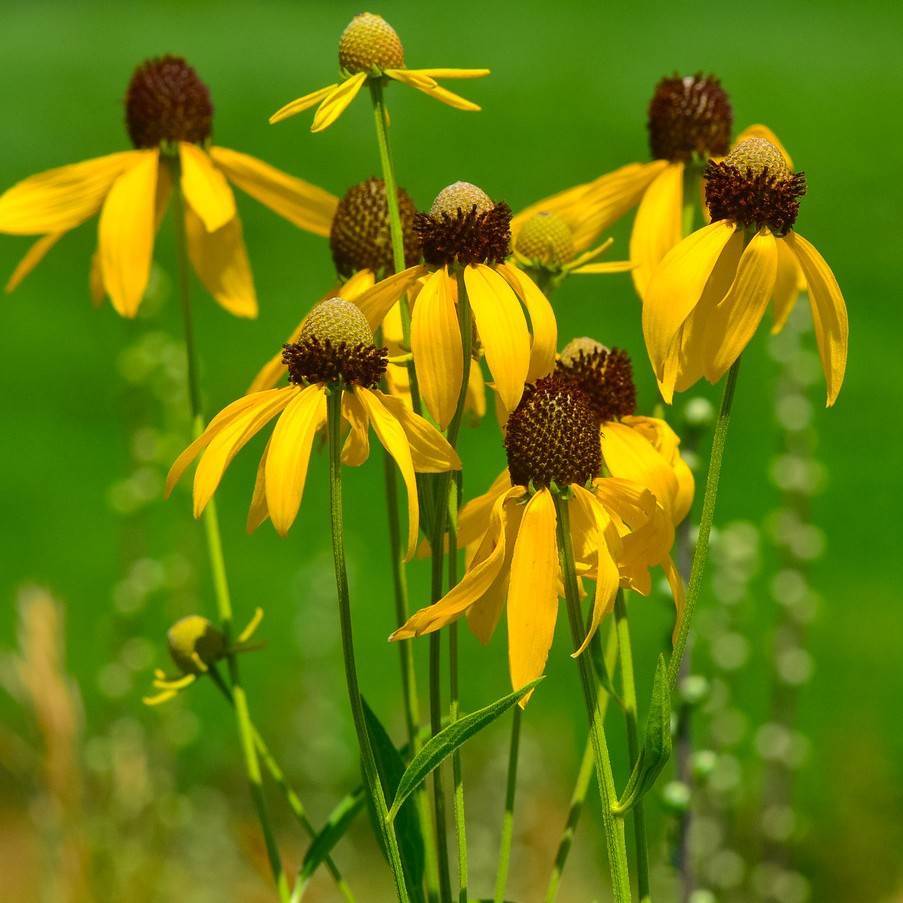
Grey Head Coneflower
Ratibida pinnata
Overview
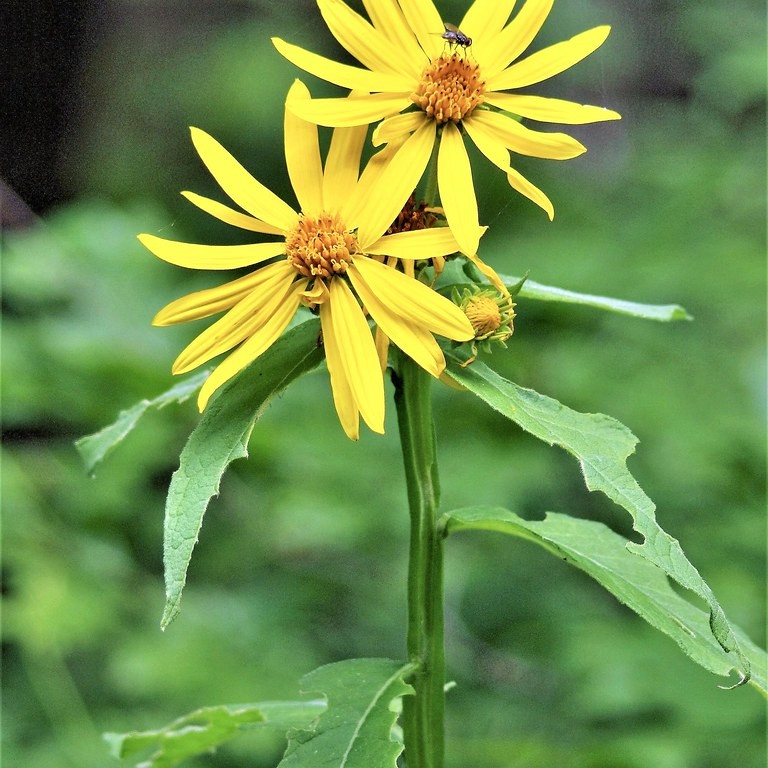
Grey Head Coneflower, also called yellow coneflower or prairie coneflower, is a robust prairie species valued for its airy, drought-tolerant growth and long bloom period. Its nodding, daisy-like flowers feature reflexed bright yellow petals surrounding a tall, grayish-brown central cone that matures to a darker, seed-rich structure in late summer. The plant’s deep taproot makes it exceptionally adapted to dry, sunny landscapes, and it is a staple of native wildflower gardens, meadows, and pollinator habitat plantings.
Care Guide
Watering
Grey Head Coneflower is highly drought-tolerant once established, requiring only occasional deep watering during extended periods of extreme heat or drought. Overwatering, especially in poorly drained soil, can lead to root rot, so allow the top several inches of soil to dry out completely between waterings. Newly planted specimens need regular, moderate watering for the first 1 to 2 growing seasons to support root development.
Light
This species thrives in full sun, requiring a minimum of 6 hours of direct, unfiltered sunlight daily to produce sturdy stems and abundant blooms. It can tolerate very light partial shade, but plants grown in shadier conditions will become leggy, flop over, and produce far fewer flowers. Full sun exposure also reduces the risk of fungal foliage diseases by improving air circulation around the plant.
Soil
Grey Head Coneflower adapts to a wide range of soil types, including sandy, loamy, clay, and rocky soils, as long as the site offers excellent drainage. It tolerates poor, low-nutrient soils and neutral to slightly alkaline pH levels, making it well-suited to challenging landscape sites where other plants struggle. Heavy, waterlogged soils are the only unsuitable growing medium, as they will quickly cause root rot.
Fertilizer
This native plant rarely requires fertilization, as it is adapted to low-nutrient prairie soils, and excessive fertilizer will cause leggy growth and reduced flowering. If grown in extremely poor, depleted soil, you can apply a light topdressing of compost in early spring once every 2 to 3 years to provide mild, slow-release nutrients. Avoid high-nitrogen synthetic fertilizers entirely, as they will prioritize foliage growth over bloom production.
Temperature
Grey Head Coneflower is extremely cold-hardy, tolerating winter temperatures as low as -40°F (-40°C) and thriving in USDA hardiness zones 3 through 9. It tolerates high summer temperatures and humidity well, as long as soil drainage remains adequate. It will die back completely to the ground after the first hard frost in fall, and re-emerge reliably from its taproot in mid to late spring.
Pruning
Minimal pruning is required for this low-maintenance plant; you can deadhead spent blooms throughout the summer to encourage additional flower production, though leaving some spent cones on the plant will provide food for seed-eating birds in fall and winter. In late fall or early spring, cut back the entire dead stem structure to 2 to 3 inches above the soil line to make room for new spring growth. Staking is rarely needed, as the sturdy stems hold up well even in wind, unless plants are grown in partial shade.
Propagation
Grey Head Coneflower is most easily propagated from seed, which can be sown directly outdoors in late fall for natural cold stratification, or stratified indoors for 30 to 60 days before sowing in spring. Established clumps can be divided in very early spring just as new growth emerges, though the deep taproot makes division more challenging than for other coneflower species. Plants will also self-seed readily in optimal growing conditions, producing new seedlings that can be transplanted to other sites when young.
Humidity
This species adapts well to a wide range of humidity levels, from the dry plains of its native range to the humid southeastern United States. High humidity is tolerated as long as plants are sited in full sun with good air circulation to prevent fungal foliage issues. Avoid planting in crowded, low-airflow locations where moisture will remain trapped on the leaves for extended periods.
Repotting
Grey Head Coneflower is rarely grown in containers long-term due to its deep taproot and large mature size, but if grown in a pot, use a deep container at least 18 inches wide and deep to accommodate root growth. Repot only when the plant shows signs of being root-bound, such as roots growing through drainage holes or reduced flowering, and do so in early spring before new growth emerges. Use a well-draining, sandy potting mix with no added water-retention polymers to prevent root rot in container settings.
Uses & Symbolism
Grey Head Coneflower is a popular choice for native wildflower gardens, prairie restorations, pollinator habitats, and roadside plantings, where it provides nectar for bees, butterflies, and hummingbirds throughout the summer. Its long-lasting, unique flowers make excellent cut flowers for fresh arrangements, and the mature seed heads are often used in dried floral crafts. The dried seed heads also provide a valuable food source for goldfinches and other seed-eating birds through the fall and winter months.
Diseases & Pests
Grey Head Coneflower is largely pest and disease resistant, with few serious issues when grown in optimal conditions. In overly wet, shaded, or crowded sites, it may develop common fungal foliage diseases such as powdery mildew or leaf spot, which can be managed by improving air circulation and avoiding overhead watering. Rare pest issues include aphids and Japanese beetles, which can be removed with a strong spray of water or treated with insecticidal soap for severe infestations.
Related plants
Other plants you might like if you grow Grey Head Coneflower.